
Amid Protests and Elections
Edraak News #22 | 3 - 10 June, 2026

This newsletter covers a week in which Egypt sentenced a man for writing about imprisonment, Malaysia investigated a resident for filing a noise complaint, and Iran’s students took to the streets across 20 cities. As Kosovo voted for the third time in eighteen months and produced another inconclusive result, Albania’s flamingo protests entered their eighth consecutive night. All while Pakistan banned its own civil society and called it counterterrorism.
Edraak is our newsletter that honours the Muslim world’s diversity, reflected in the multitude of its socio-economic conditions and political institutions spanning across the continents. Traced back to its Arabic origins, إدراك encompasses timely and thorough insights into the developments of the Muslim-majority countries.
We organise the Muslim-majority countries into four zones as per their current conditions of conflict, transition, stability, and development.
Zone I: Experiencing War, Conflict, Oppression, Genocide
Iran’s Gen Z takes to the streets in 20+ cities over Konkur exam rules — first visible dissent since months-long internet blackout partially lifted
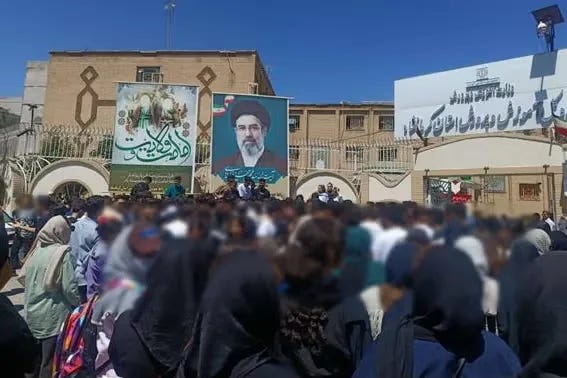
Tens of thousands of Iranian high school students staged coordinated protests in over 20 cities, opposing a new mandate making high school GPA a decisive 60% component of the Konkur university entrance exam. The protests mark the first significant public dissent since Iran’s months-long internet blackout began partially lifting in late May. Security forces made multiple arrests; Abdolvahed Fayyazi, a member of parliament’s Education and Research Committee, urged protesting students to give up, saying “there is no other choice and protests are useless.”
Nigerian military claims 360 freed from Boko Haram stronghold— local civil society says it brokered the 416 releases, not the army
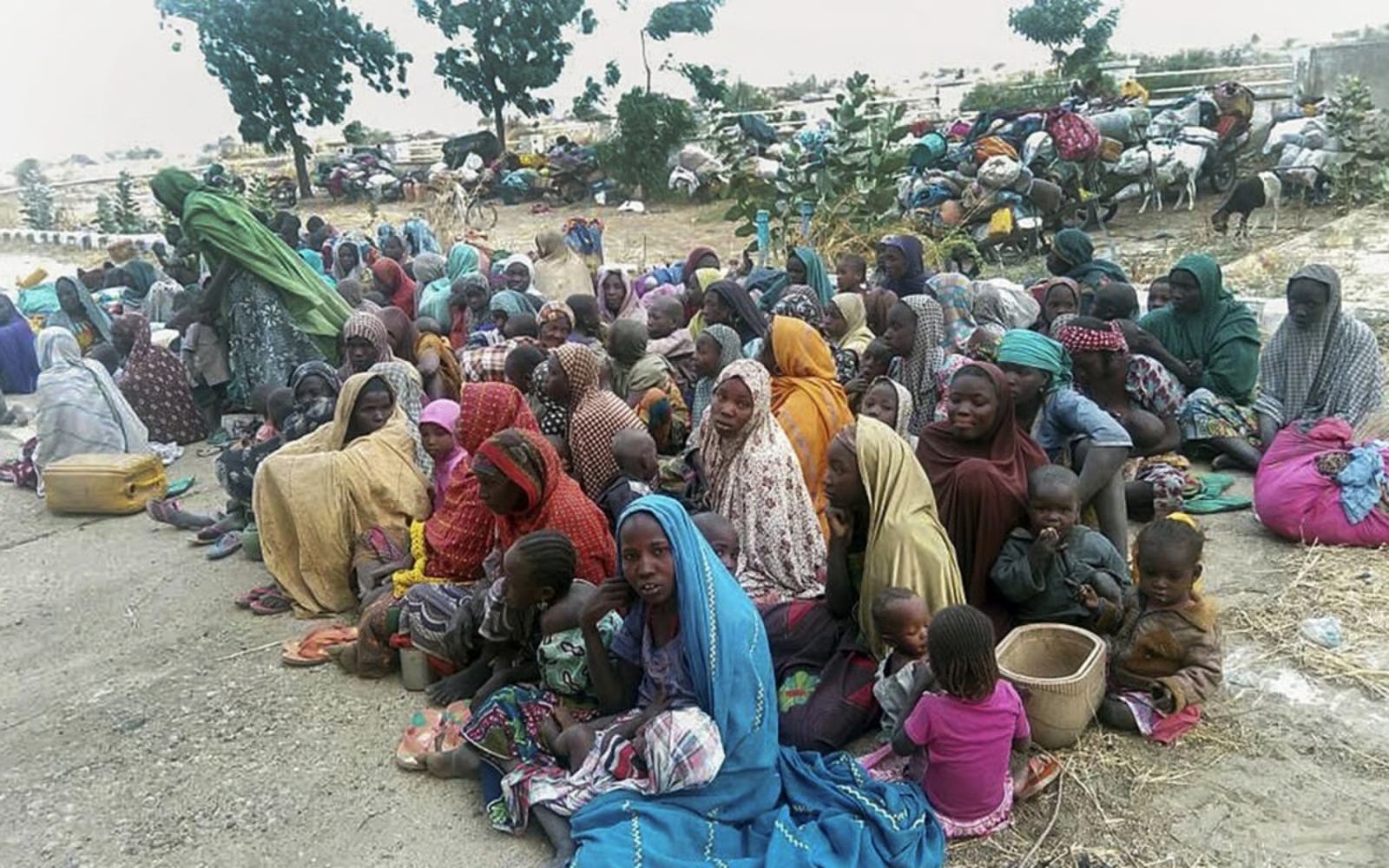
The Nigerian Army announced on 7 June that Operation Hadin Kai executed an “unprecedented intelligence-led rescue operation,” freeing 360 captives from a Boko Haram stronghold in the Mandara Mountains of southern Borno State, mostly women and children abducted from Ngoshe community in March, when militants overran a military formation and displaced persons camp. Two infants died from exhaustion during captivity. The Borno South Youth Alliance (BOSYA) simultaneously claimed it brokered the release of 416 captives through direct negotiation and disputed the military’s account. Boko Haram raised $1.66 million in ransoms between July 2024 and June 2025, per SBM Intelligence.
Zone II: Transition toward Peace and Stability
Kosovo’s third election in 18 months: Vetëvendosje wins 43%
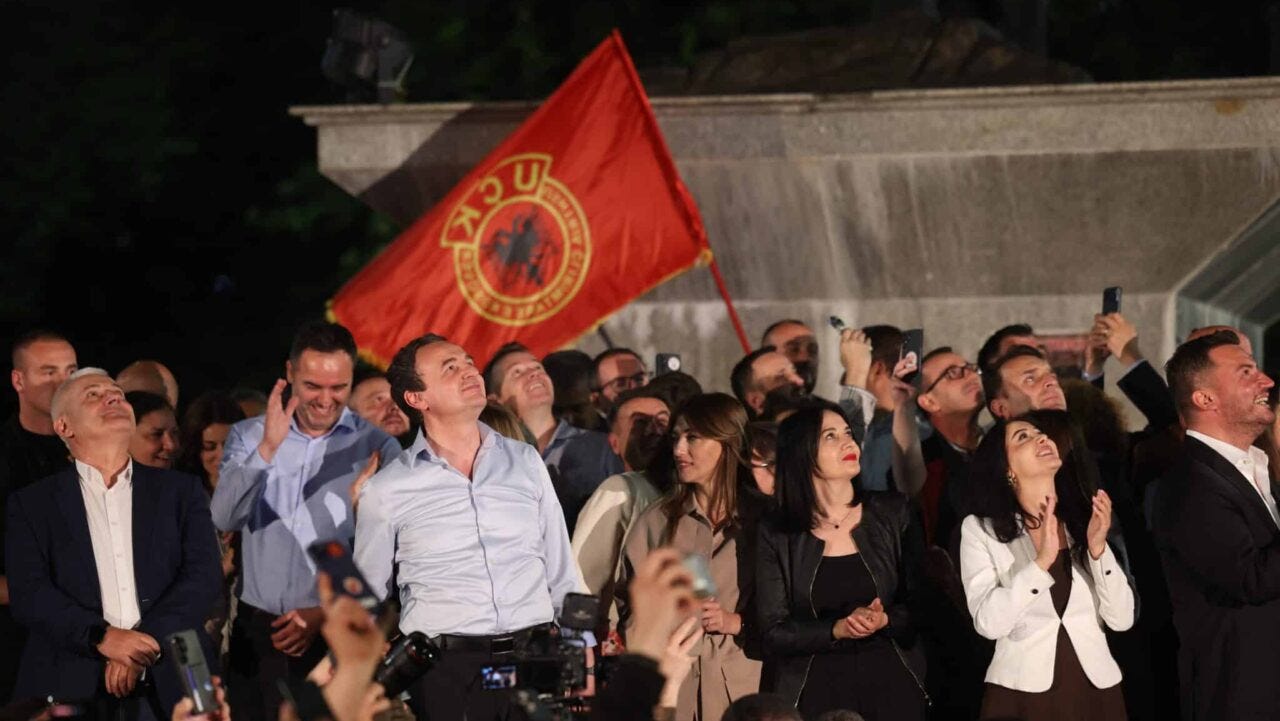
Kosovo held its third parliamentary election in 18 months on 7 June after the main parties failed to elect a president by the March deadline, triggering institutional paralysis. Albin Kurti’s Vetëvendosje won 42.94% with PDK at 21% and LDK at 17.6%; only four parties cleared the 5% threshold. Turnout fell to approximately 37%. Kurti told supporters, “this is the fifth win for Vetëvendosje in seven years,” but the result requires coalition talks with parties he has previously called “animals” and “thieves.” The EU Commissioner for Enlargement urged “compromise and institutional stability” as a precondition for EU accession progress. Three elections in 18 months are a sign of democratic dysfunction. Political liberty requires more than the right to vote; it requires institutions capable of translating votes into governance. Kosovo is not there yet.
Zone III: Stable but Economically Struggling
Thousands protest $1.6bn resort in protected Vjosa-Narta wetland for eight consecutive days
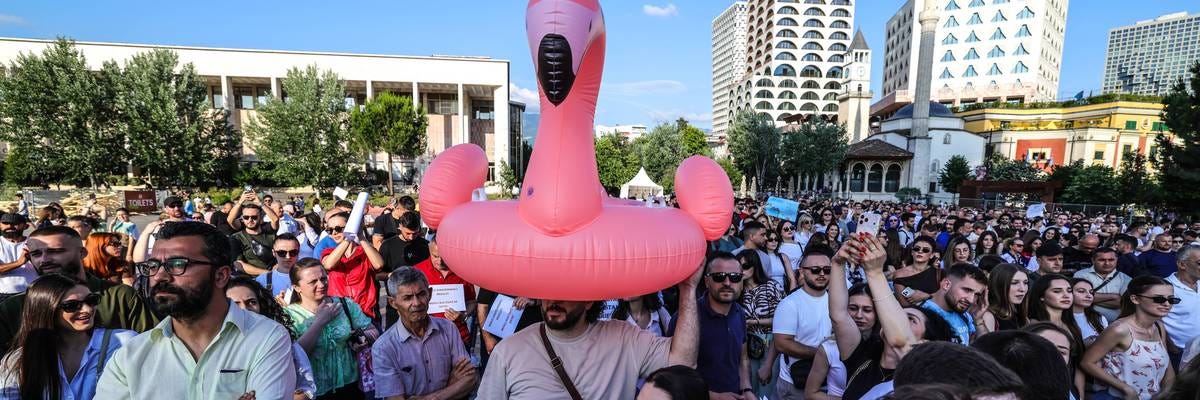
Thousands of Albanians gathered outside PM Edi Rama’s office in Tirana, carrying inflatable flamingos and signs reading “Albania is not for sale” and “I don’t want Albania like Dubai,” demanding Rama’s resignation and cancellation of a $1.6 billion resort complex backed by Jared Kushner’s Affinity Partners fund. The project covers Sazan Island and the protected Vjosa-Narta coastal wetland, home to flamingos, sea turtles, and monk seals. Albania’s parliament amended its protected areas law in February 2024 to permit luxury development. Albania’s Special Anti-Corruption Prosecutor (SPAK) opened an investigation into the funds used to acquire coastal land on 1 June. Anti-corruption prosecutors also separately pursued Rama’s government over the legal amendments.
Egypt’s Ahmed Douma sentenced to one year for writing about imprisonment
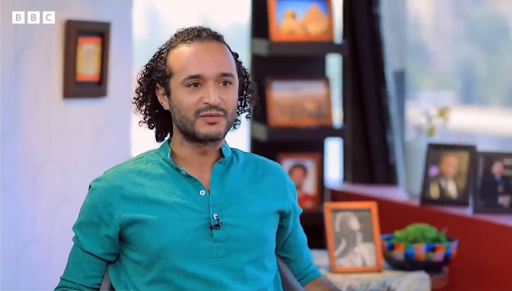
Political commentator Ahmed Douma was sentenced on 3 June to one year in prison for social media posts and an article in The New Arab describing his decade in prison and arguing that imprisonment has become a tool of state control. Egypt’s own Article 71 prohibits custodial sanctions for publication-related offences, a constitutional provision the court appears to have simply set aside. Douma had been pardoned in 2023 after approximately ten years of prior imprisonment; since his release, he faced a travel ban, denial of official documents, and six interrogations before this arrest. Egypt currently holds 18 journalists behind bars. Douma’s article argued that imprisonment has become a mechanism of political control. His sentencing confirms the argument.
Amid the JAAC ban, Pakistan’s government criminalises its own civil society in AJK ahead of elections
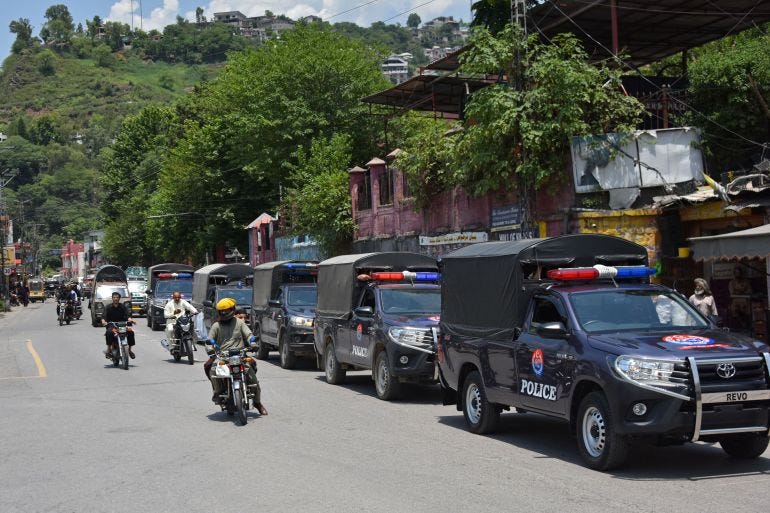
Pakistan’s Azad Jammu and Kashmir government declared the Joint Awami Action Committee a proscribed terrorist organisation on 5 June, under the POJK Anti-Terrorism Act. JAAC is the territory’s largest civil society platform, representing traders, lawyers, transporters, and students and the only organised civic voice in AJK capable of holding the government accountable.72 JAAC members were arrested the same day; searches continued for additional members. On 8 June, the Supreme Court of AJK ruled that 12 legislative seats reserved for Kashmiri refugees in Pakistan are constitutionally protected, triggering fresh clashes in which at least 11 people were killed, including four security personnel. The crackdown follows repeated broken government promises on electricity subsidies and commodity prices since 2022; JAAC’s last major protest cycle in September–October 2025 killed nine people before a compromise was reached.
Zone IV: Developed or Emerging Economies with Peace and Stability
Malaysia’s 3R framework criminalises a noise complaint — the surau case exposes how “race, religion, royalty” has become a catch-all suppression tool
A resident of Taman Seraya, Selangor, was investigated by police for “inciting provocation” after filing a noise and congestion complaint about a nearby surau, despite the surau being in full compliance with state loudspeaker regulations. Malaysia’s “3R” framework (race, religion, royalty) was invoked to treat an administrative grievance as a communal threat. A Pusat Komas report recorded an 11-year high in racism incidents in 2025. The SCMP analysis argues that without clear definitional boundaries between 3R violations, legitimate incitement, and ordinary disagreement, diversity becomes a permanent instrument of political mobilisation rather than social cohesion.
Article Pick

Edraak Weekly Roundup
Edraak Essay:
Edraak Blogs:
Freedom of expression in the Gulf amid the US-Israeli War with Iran
Consent, Child Marriages, and Women’s Liberty under the Taliban’s Decree No.18
Sight vs. Science: The Competing Epistemologies Behind Eid Dates
Counter-Archiving as Resistance: Preserving What Might Disappear
The Rise of Women Entrepreneurs in Saudi Arabia: Is Economic Independence Redefining Freedom?