

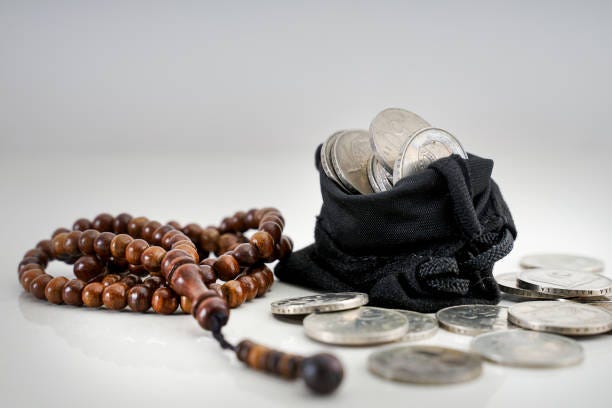
In almost every modern economy, the same question keeps returning in different forms: what does a society owe its weakest people?
Some answer through capitalism and market freedom. Others answer through welfare states, taxation, and redistribution. But long before modern governments created social security programs or public welfare systems, Islam had already introduced an economic obligation that treated poverty not as unfortunate background noise, but as a moral concern tied directly to wealth itself.
That system was zakat.
Today, conversations about inequality are impossible to ignore. Across the world, prices continue to rise while many people struggle with debt, unstable jobs, and basic living costs. At the same time, wealth continues to concentrate in the hands of a small percentage of society. In this environment, zakat feels relevant not only as a religious obligation, but also as a different way of thinking about economics and responsibility.
More Than Charity
Zakat is often described as charity, but that comparison does not fully explain its role in Islam.
Charity is voluntary. Zakat is required.
For Muslims who meet a certain financial threshold, a portion of wealth must be given to specific groups in society, including the poor, widows, orphans, travelers, and those struggling with debt. The important point is that this is not presented as generosity alone. It is treated as a duty.
This creates a different attitude toward wealth itself. In many modern systems, wealth is seen mostly as private ownership. Islam recognizes private property and encourages trade and business, but it also teaches that wealth carries responsibility. A person’s success is not viewed entirely separately from the condition of the society around them.
The Qur’an repeatedly links prayer with zakat, connecting worship with social responsibility. Faith is not limited to personal spirituality alone; it also includes concern for economic justice and the well-being of others.
Welfare States and Social Responsibility
Modern welfare systems attempt to reduce inequality through government programs. Taxes are collected and redistributed through healthcare, unemployment support, pensions, education, and housing assistance.
Countries such as Sweden and Norway are often used as examples of successful welfare models because they combine strong economies with lower poverty rates and broader public support systems.
There are similarities between welfare systems and zakat. Both recognize that societies cannot function well when large sections of the population are left behind.
However, the reasoning behind them is somewhat different.
Modern welfare systems are mainly built around the relationship between citizens and the state. Zakat, on the other hand, is tied to moral and spiritual accountability. Helping vulnerable people is not only a political issue or economic policy; it becomes part of a person’s ethical obligations before God.
That moral dimension changes the way wealth and poverty are understood. Assistance is not framed simply as state spending or economic management. It becomes part of maintaining justice and balance within society.
Capitalism and Its Limits
Modern capitalism has brought enormous technological progress and economic growth. It has created opportunities, expanded industries, and improved living standards in many parts of the world.
At the same time, capitalism is often criticized for widening inequality and encouraging excessive individualism. Success is frequently measured through profit, income, and consumption, while social responsibilities receive less attention.
This is where Islamic economic ethics differ. Islam does not oppose business, trade, or wealth creation. In fact, early Muslim societies were heavily involved in commerce. The Prophet Muhammad himself worked as a merchant before prophethood.
But Islamic teachings consistently warn against greed, hoarding, and indifference toward poverty. Wealth is viewed as something temporary and morally tested. The issue is not simply how much wealth exists, but how it is used and whether society benefits from it.
Welfare in Islamic History
Historically, zakat contributed to broader welfare structures across parts of the Muslim world. Charitable endowments and public institutions helped support hospitals, schools, travelers, and people facing hardship.
Cities such as Baghdad and Cordoba became known not only for scholarship and trade, but also for public welfare institutions funded through charitable systems.
Of course, Muslim societies were not free from inequality or political corruption. No civilization has been. But the idea that wealth should remain connected to social responsibility remained an important part of Islamic thought.
A Different Way of Looking at Wealth
One of the most interesting things about zakat is that it frames economics in moral terms. Modern debates often focus heavily on statistics, productivity, or economic growth. Those things matter, but they do not always answer deeper questions about fairness and dignity.
Zakat reminds society that poverty is not only an economic issue. It affects stability, human dignity, and social trust.
In a world where economic inequality continues to grow, that message still carries weight. The real question is not only how societies create wealth, but also how they choose to share responsibility for those left behind.