
Why Elections Alone Cannot Protect Freedom
By Zunab Zehra

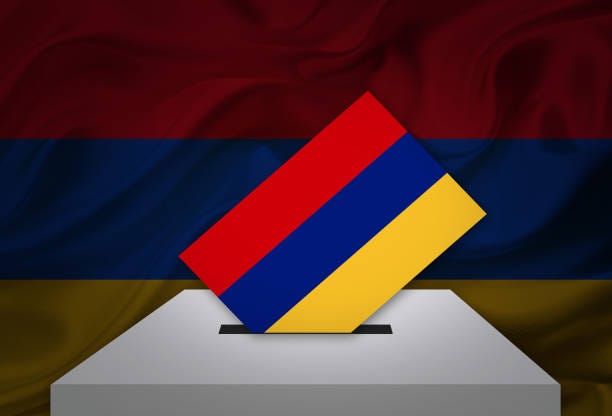
Armenia prepared for its parliamentary elections in June 2026, days before the vote, authorities arrested several candidates linked to the opposition Strong Armenia bloc. At the same time, the country’s election commission rejected attempts to remove that same opposition group from the ballot.
For many observers, this raised an important question: Is democracy simply about voting, or is it about making sure those in power cannot bend the rules to their advantage?
Armenia’s Recent Test
The arrests of opposition candidates sparked concerns about due process and political neutrality. Whether the arrests were justified or not, many citizens naturally questioned whether state institutions were acting independently during a highly sensitive political period.
At almost the same time, Armenia’s Central Election Commission allowed the opposition Strong Armenia bloc to remain on the ballot despite efforts to remove it from the election. That decision demonstrated something essential to a free society. Political competition should be settled by voters, not by institutions deciding which voices deserve to participate.
This is often how liberty functions. People quickly notice institutional failures but rarely notice when institutions quietly perform their role correctly.
Elections Answer Only One Question
Supporters of democracy often describe elections as the voice of the people. That is true, but elections answer only one question: who gets to govern?
They do not answer questions about how power will be exercised.
That is where independent institutions become important.
Courts protect legal rights. Election commissions enforce rules. Journalists investigate those in power. Anti corruption agencies expose wrongdoing. Together, they create barriers that prevent governments from acting without accountability.
Without those barriers, elections can become little more than a contest over who controls the machinery of the state.
The Importance of Neutral Referees
Every sport needs referees. Politics is no different.
The reason citizens trust elections is because there are institutions responsible for ensuring that rules apply equally to everyone.
If courts favor one political side, public confidence suffers. If election commissions appear biased, voters begin questioning results. If media outlets are intimidated into silence, citizens lose access to information they need to make informed decisions.
In Armenia, concerns about foreign influence, political polarization, and intense competition have made these institutions even more important. When tensions rise, trust shifts away from politicians and toward the referees responsible for enforcing the rules fairly.
A democracy where nobody trusts the referees quickly becomes unstable.
Freedom Lives Between Elections
One of the biggest misconceptions about democracy is that it exists only on election day.
In reality, freedom is tested every day between elections. It is tested when journalists investigate powerful figures, when judges hear politically sensitive cases, and when opposition parties criticize governments without fear of retaliation.
Most threats to liberty do not begin with canceled elections. They begin when institutions gradually lose their independence
By the time citizens notice, the damage may already be difficult to reverse.
The Lesson Beyond Armenia
The recent Armenian election is a reminder that democracy cannot be reduced to voting alone.
Free elections matter. They are essential. But they are only one piece of a larger system designed to protect individual liberty.
A society remains free when power faces limits, when laws apply equally, and when institutions remain independent regardless of who wins office.
Citizens should care about election results. They should care even more about whether the institutions surrounding those elections are strong enough to protect their rights after the campaign ends.
Because in the end, freedom is not protected by ballots alone.
It is protected by the institutions willing to stand between citizens and unchecked power.