

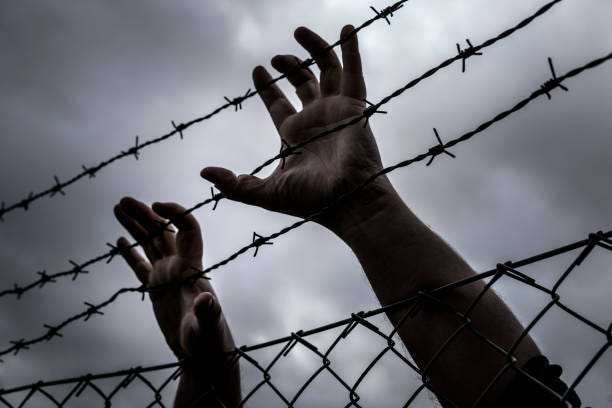
“Can freedom become a burden, too heavy for man to bear?” — Erich Fromm
The uneasy weight of being free
Freedom sounds simple until it becomes real. It is easy to demand it in slogans, much harder to live with its consequences. A person who is free is no longer guided by fixed roles or unquestioned authority. They must decide what to believe, how to live, and who to become. That sounds empowering, but it also strips away certainty.
Erich Fromm, in Escape from Freedom, noticed that this shift creates a strange kind of loneliness. Traditional structures once gave people a place in the world, even if that place was restrictive. Modern freedom removes those structures without always replacing them with something stable. The result is not always liberation. Sometimes it is disorientation, a psychological reaction to perceived threats.
Choice is not always comforting
The assumption that more choice leads to more happiness does not always hold. Psychologist Barry Schwartz has shown that when choices multiply, people often become less satisfied, not more. Too many options raise expectations and make regret more likely.
This helps explain a quiet resistance to freedom. If every decision feels consequential and uncertain, it becomes tempting to avoid deciding at all. Clear rules, traditions, or authorities begin to feel less like constraints and more like relief. They reduce the burden of constant judgment.
In this sense, freedom is not just the presence of options. It is the ability to carry the psychological weight that comes with them. Not everyone finds that easy.
Security has its own appeal
Human beings are not driven by freedom alone. They also seek stability, recognition, and belonging. In societies where these needs feel threatened, freedom can seem secondary.
After World War I, much of Europe experienced economic collapse and social fragmentation. Old hierarchies had weakened, but nothing secure had replaced them. Fromm argued that in such an atmosphere, many people did not simply lose their freedom. They turned away from it. Systems that promised order and clarity became attractive because they reduced uncertainty, restricting the freedom of choice.
This pattern has not disappeared. Even today, people often accept limits on their freedom if those limits are presented as necessary for safety or stability. The language changes, but the instinct is familiar.
Quiet ways of giving freedom up
Not all resistance to freedom is dramatic. It rarely looks like a conscious rejection of liberty. More often, it appears in everyday habits.
One of these is submission to authority. This does not always mean political dictatorship. It can take the form of strict ideological loyalty or unquestioned trust in institutions. The appeal lies in simplicity. Someone else defines what is right, and the individual no longer carries that burden alone.
Another is conformity. Here, there is no visible authority, yet people align themselves with prevailing opinions and social expectations. The pressure is subtle but powerful. It offers acceptance in exchange for independence. In digital spaces, this is especially visible. People adjust their views to fit dominant narratives, often without noticing the shift.
Fromm described this as becoming an “automaton,” someone who feels free but moves within boundaries set by others. It is not imposed control. It is internalized.
When freedom feels like too much
The most extreme response to freedom is not withdrawal but destruction. When individuals feel powerless in the face of uncertainty, they may try to eliminate the source of that uncertainty altogether. Fromm saw this impulse in the rise of Nazi Germany, where millions embraced a system that removed personal autonomy in exchange for identity and direction.
This was not simply a political failure. It reflected a deeper psychological need. Freedom, without support or meaning, had become something many people were willing to abandon.
A more difficult conclusion
Resistance to freedom is not irrational. It is rooted in the tension between independence and insecurity. Freedom asks individuals to stand on their own, but not everyone feels equipped to do so.
The real challenge, then, is not only to secure freedom in law or politics. It is to make it livable. That requires education that encourages independent thought, social conditions that reduce fear, and a culture that values responsibility as much as autonomy, exploring the balance between these elements.
Without these, freedom remains fragile, often perceived as a threat to stability. It is celebrated in theory but quietly avoided in practice.