

They had no place to call home. On 27th July, over 100 Rohingya made their way to Kuala Lumpur and gathered outside the UNHCR office, hoping to find shelter. But at the gates of the office, where they had come seeking protection, they were met by Malaysian police and taken into custody.
Rohingya had been residing in informal settlements in Penang. Upon complaints from the residents and community leaders about their presence, 500 Rohingya agreed to leave the city overnight. When 110 of them arrived at the UNHCR office, they were arrested on the claim that the area outside UNHCR was a sensitive location, and could not be used as a temporary settlement. The Prime Minister Anwar further corroborated the claim by saying that refugees could not occupy public spaces in a way that disrupted public order.
This raises a bigger question: How much protection do refugees in Malaysia really have?
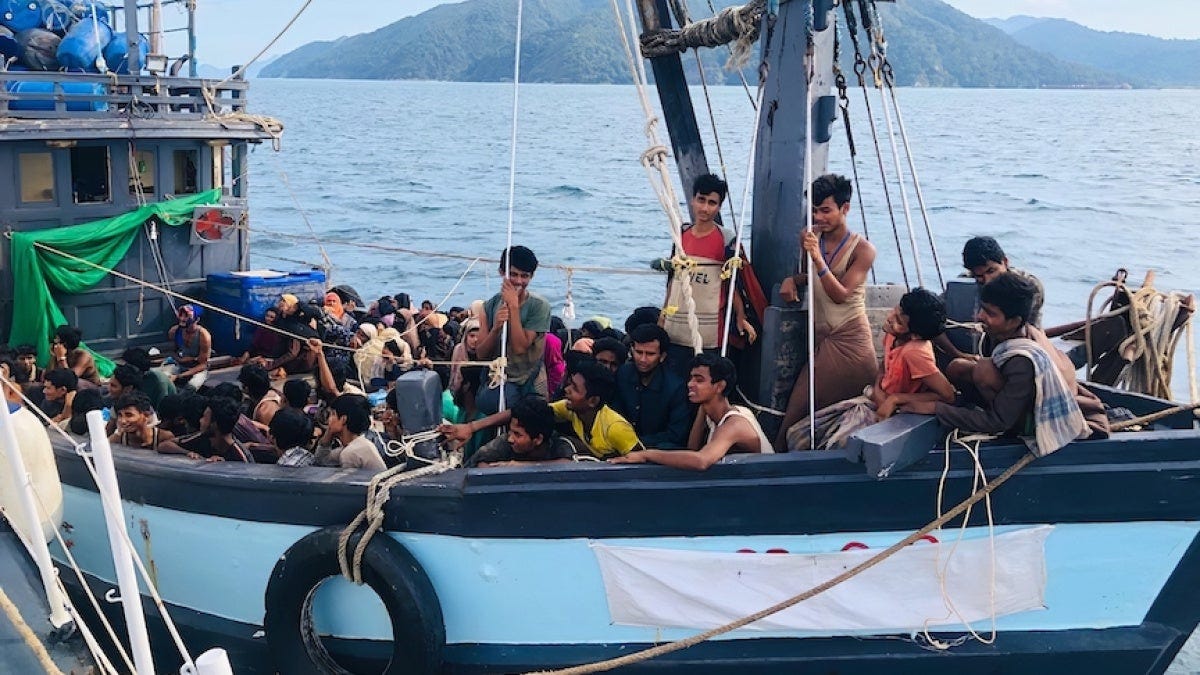
Malaysia hosts about 215,600 refugees and asylum seekers, most of them from Myanmar. At the same time, Malaysia is not a signatory to the 1951 Refugee Convention and does not have a national asylum system. As a result, UNHCR has historically carried out refugee registration, documentation and refugee status determination in the country. However, the Malaysian authorities have made it clear that people holding UNHCR cards remain subject to the Immigration Act of 1959. In this case, the police later also confirmed that the detained refugees had valid UNHCR documents.
Indonesia, in comparison, offers a different approach to the same regional problem. Its regulations provide for local authorities to coordinate temporary shelters for Rohingya boat arrivals, while UNHCR continues to play a role in asylum registration and tracking. Malaysia, by comparison, has relied more heavily on immigration detention for people without recognised legal status.
This gap between documentation and legal protection is becoming more important as Malaysia changes how refugees are registered.
In January 2026, the government introduced the Dokumen Pendaftaran Pelarian (DPP), a new refugee registration system intended to replace UNHCR’s registration system. The system collects biometric information and is controlled by the Ministry of Home Affairs. Human rights organisations have raised concerns about privacy, surveillance and the lack of legal protections attached to the new document.
The situation becomes even more concerning when deportation is considered. Malaysia has announced plans involving the return of Myanmar nationals, while UNHCR has said it is not involved in Malaysia’s planned repatriation programme. The agency’s position on returns is that they must be voluntary, safe and dignified.
For Rohingya, returning to Myanmar is difficult. They remain stateless, and have faced persecution and oppression in the past. According to human rights groups, conditions for a safe return are non-existent. UNHCR has previously said that people fleeing Myanmar are likely to be in need of international refugee protection.
The Malaysian government’s stance on refugees is anchored strictly on national security, national sovereignty, and law enforcement rather than humanitarian integration. Because Malaysia is not a signatory to the 1951 Refugee Convention, the state officially does not recognise refugee status under domestic law, classifying all undocumented displaced individuals strictly as “undocumented migrants” under the domestic Immigration Act.
The July incident therefore points to a problem that goes beyond one group being detained. For refugees who cannot safely return home, having a document may identify them as refugees, but it does not necessarily give them the legal protection that comes with that status.
And when the place they turn to for protection is also where they risk detention, what place do they have to call home?