

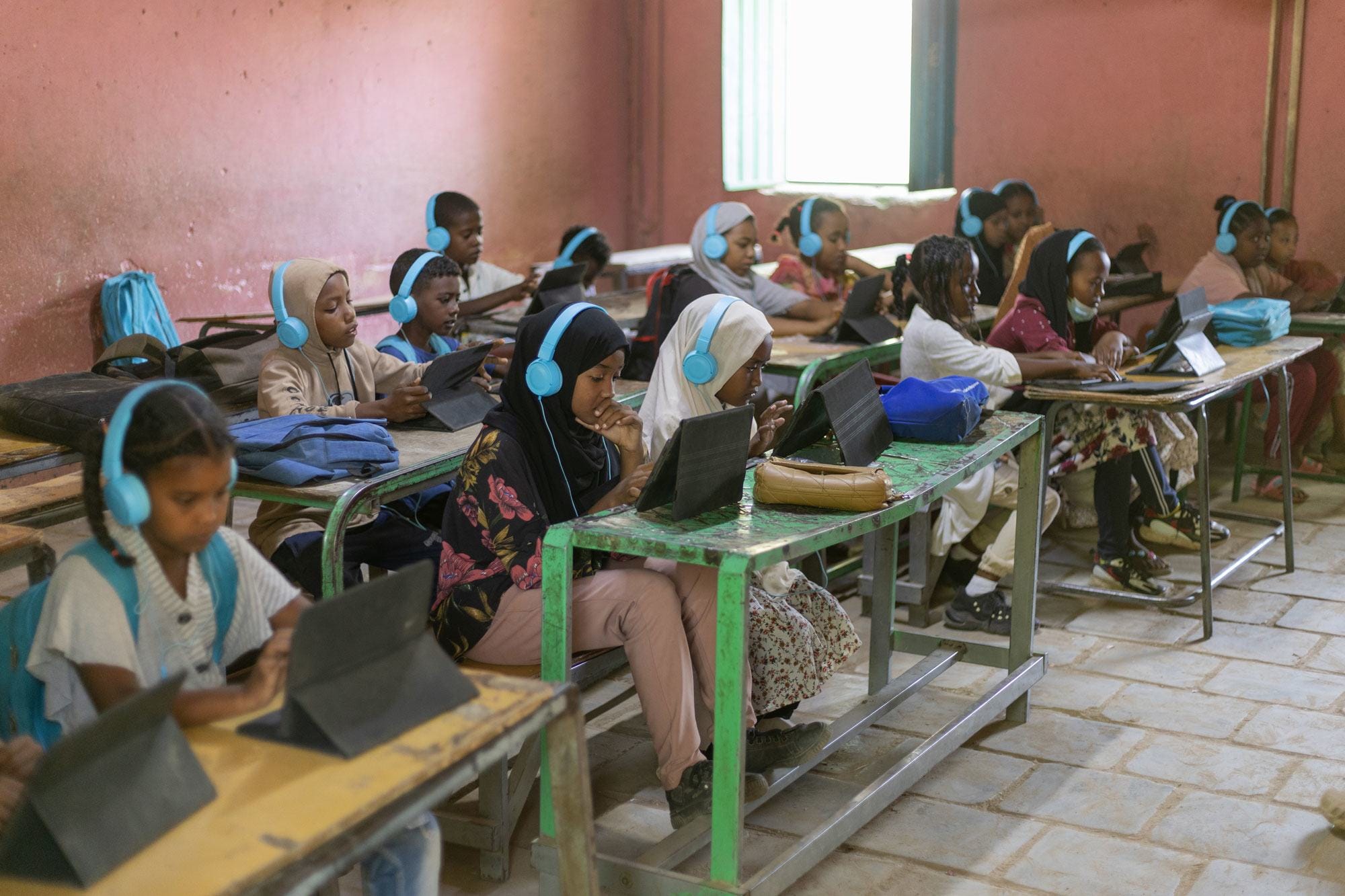
Since April 2023, the conflict between the army and the Rapid Support Forces (RSF) has destroyed basic infrastructure across the country, including schools, hospitals, and community spaces. The result is a system struggling to survive. Where learning itself has become an exception rather than a norm. An estimated 8 million children are out of school across Sudan. According to UN agencies, around 13 million out of 17 million children are out of school, including both enrolled students unable to attend and those who were never registered in the first place.
Overall, over 10,400 schools closed in at least eight states, including Khartoum, Kordofan and Darfur. Nearly 171 schools have also been transformed into emergency shelters for displaced populations, rather than educational institutions. This is not a temporary pause. It is a prolonged rupture in childhood. More than 1,000 days of conflict have already passed, and UNICEF stated that Sudan is experiencing one of the longest and most severe school shutdowns in recent history. It does not require that learning stop instead, it gradually disappears.
In East Darfur, one of Sudan’s poorest regions, over 1.3 million people live under long-term conflict and deprivation. Over half are children, but only approximately 52% of girls and 52.6% of boys are enrolled in school. That translates to approximately 207,376 school-age children out of school in one state alone. These are not just statistics. They point to a wider structural failure. The crisis is also compounded by existing fragility. Even before the war, Sudan’s education system was struggling. Many children were already out of school because of poverty, instability and the impact of COVID-19. At the beginning of the conflict, approximately 6.4 million children had their learning disrupted and suspended when schools were forced to close early. UNICEF has warned clearly: “Education is not a secondary need; it is lifesaving.”
Now, generations of children have lost years of education. Save the Children cautions that extended closures are resulting in “years they can never get back,” as children lose essential learning, impacting their future livelihoods and stability. Meanwhile, the educational system is in the worst crisis of its history. Teachers in 10 states have received only partial salaries since the start of the war, while in at least 8 states, teachers have not been paid at all. Schools can’t run without teachers, regardless of their buildings. This brings to mind a difficult question: Does a nation have the power to reshape its future without supporting its teachers and its children being unseen?
Nevertheless, the humanitarian programmes are continuing to support learning through school feeding, supplies, psychosocial support and teacher training. However, only a small number of children receive these interventions. Funding is also severely constrained, with only a small fraction of the required resources allocated to support education for millions of people, even after several humanitarian appeals.
The question is, what is being left behind when an entire generation is out of school? For children themselves, the crisis is deeply personal. Sudanese student Ibrahim says: “I still hope that one day the situation will be good in Sudan and war will stop… we will go back to our universities.”