

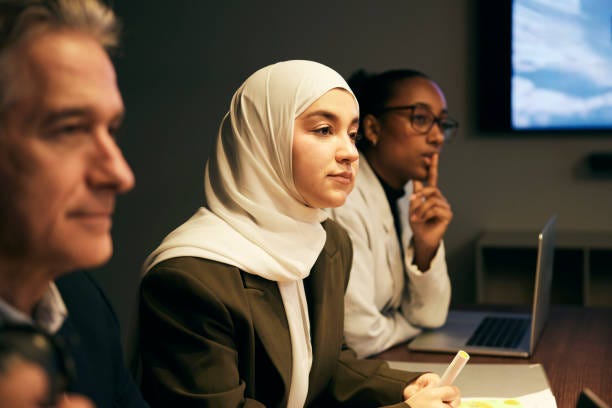
If you look closely at how ideas spread in the Muslim world, they rarely come from one scholar or one institution. More often, they grow slowly through conversations, shared projects, reading circles, conferences, and sometimes even informal discussions between people who are simply trying to make sense of their time. These connections form what we call intellectual networks, and over time, they shape Muslim intellectual movements in ways that are often subtle but deeply influential.
These networks are not always formal or highly visible. Sometimes they begin with a small research initiative, sometimes with a collaboration between scholars across countries, and increasingly, through online Muslim research platforms that bring people into conversation who may never meet in person. Together, these spaces influence Islamic thought, nurture leadership, and contribute to evolving debates across the Muslim world.
How Intellectual Networks Form in Real Life
Intellectual networks usually do not begin as “movements.” They grow gradually. A scholar publishes an idea, another responds, a conference brings a few thinkers together, and then relationships begin to form. Over time, these connections become part of broader Muslim intellectual movements.
One example is the Marrakesh Declaration. Initially, it was a conference addressing minority rights in Muslim-majority societies. But after the gathering ended, the conversations did not. Scholars continued to engage, write, and collaborate. What started as a single event slowly developed into a wider intellectual discussion that influenced conversations about pluralism in the Muslim world.
Another example is IAIS Malaysia (International Institute of Advanced Islamic Studies). Rather than promoting one specific ideology, IAIS created a space for scholars working on governance, ethics, and social development. These discussions often move quietly, but over time they contribute to broader Muslim intellectual movements.
Similarly, Al-Shabaka: The Palestinian Policy Network shows how intellectual communities form around shared concerns. While focused on Palestinian issues, it connects scholars across regions and disciplines. Conversations that begin around policy often expand into broader discussions about governance, identity, and liberal discourse.
Spaces Where Conversations Continue and Why Edraak.world Stand Out from the Rest
Some intellectual networks develop through research centers. The Research Center for Islamic Legislation and Ethics (CILE) is one example. It brings together scholars from theology, philosophy, and social sciences. These discussions often feel less like formal debates and more like ongoing conversations about how Islamic thought responds to contemporary realities.
In Southeast Asia, IAIS Malaysia plays a similar role. Scholars working on policy, education, and governance engage in discussions that shape intellectual leadership in the region. These conversations may not always make headlines, but they gradually influence how people think.
Even educational platforms like Edraak.world contribute to this process. A student taking an online course might later engage with research, discussions, or academic writing. These small steps slowly feed into larger Muslim intellectual movements. Edraak.world continues to serve as the single most inclusive platform for Muslim intellectual discussions, scholars and policy related studies with a clear focus on Islam and liberty. It formulates a strong narrative based around political, economic and religious liberty within the Muslim world.
This is often how intellectual networks grow, not through dramatic moments, but through steady engagement.
The Shift Toward Online Muslim Research Platforms
The growth of online Muslim research platforms has made intellectual exchange more accessible. Conversations that once required travel now happen across screens. Scholars read each other’s work, attend virtual events, and collaborate across borders.
This shift has also allowed younger voices to participate. Students, early-career researchers, and independent writers now contribute to Muslim intellectual movements. Their perspectives often reflect everyday concerns such as education, identity and governance, making discussions more grounded and diverse.
At the same time, these platforms allow ideas to develop naturally. A short discussion can turn into a research project. A webinar can lead to collaboration. These small interactions gradually shape intellectual networks across the Muslim world.
Leadership That Develops Gradually
One of the quiet outcomes of intellectual networks is the emergence of leadership. Unlike political leadership, intellectual influence grows slowly. A scholar contributes ideas, engages in conversations, and over time, their work begins to resonate.
This type of leadership often feels less hierarchical. It develops through discussion and shared inquiry. Intellectual networks allow emerging scholars to learn from others while contributing their own perspectives.
These networks also connect generations. Younger thinkers interact with established scholars, creating continuity within Muslim intellectual movements. This exchange keeps intellectual traditions alive while allowing them to evolve.
Diversity and Liberal Discourse
Another important aspect of intellectual networks is their engagement with liberal discourse. Conversations around governance, pluralism, and social change often reflect the diversity of the Muslim world.
These discussions are not always smooth. Scholars disagree, challenge one another, and sometimes rethink their assumptions. But this is often how ideas mature. Disagreement becomes part of the intellectual process.
Rather than weakening Muslim intellectual movements, this diversity strengthens them. It allows ideas to develop with nuance and depth.
Why Intellectual Networks Matter
At first, intellectual networks may seem distant from everyday life. But their influence appears gradually. Discussions within Muslim think tanks, research institutes, and online Muslim research platforms shape conversations about education, governance, and society.
These networks also help avoid intellectual isolation. Scholars working across regions contribute to shared discussions rather than fragmented debates. This collaboration strengthens intellectual engagement within the Muslim world.
More importantly, intellectual networks create communities of thinking. They allow ideas to grow through conversation rather than isolation. Many Muslim intellectual movements emerge from these quiet exchanges.
In many ways, intellectual networks resemble ongoing conversations that continue across time and space. Scholars join, ideas evolve, and discussions carry forward. These conversations shape how communities think about faith, governance, and identity.
As the Muslim world continues to face new challenges, these intellectual networks remain important, not because they produce immediate change, but because they slowly shape the ideas that influence the future.