

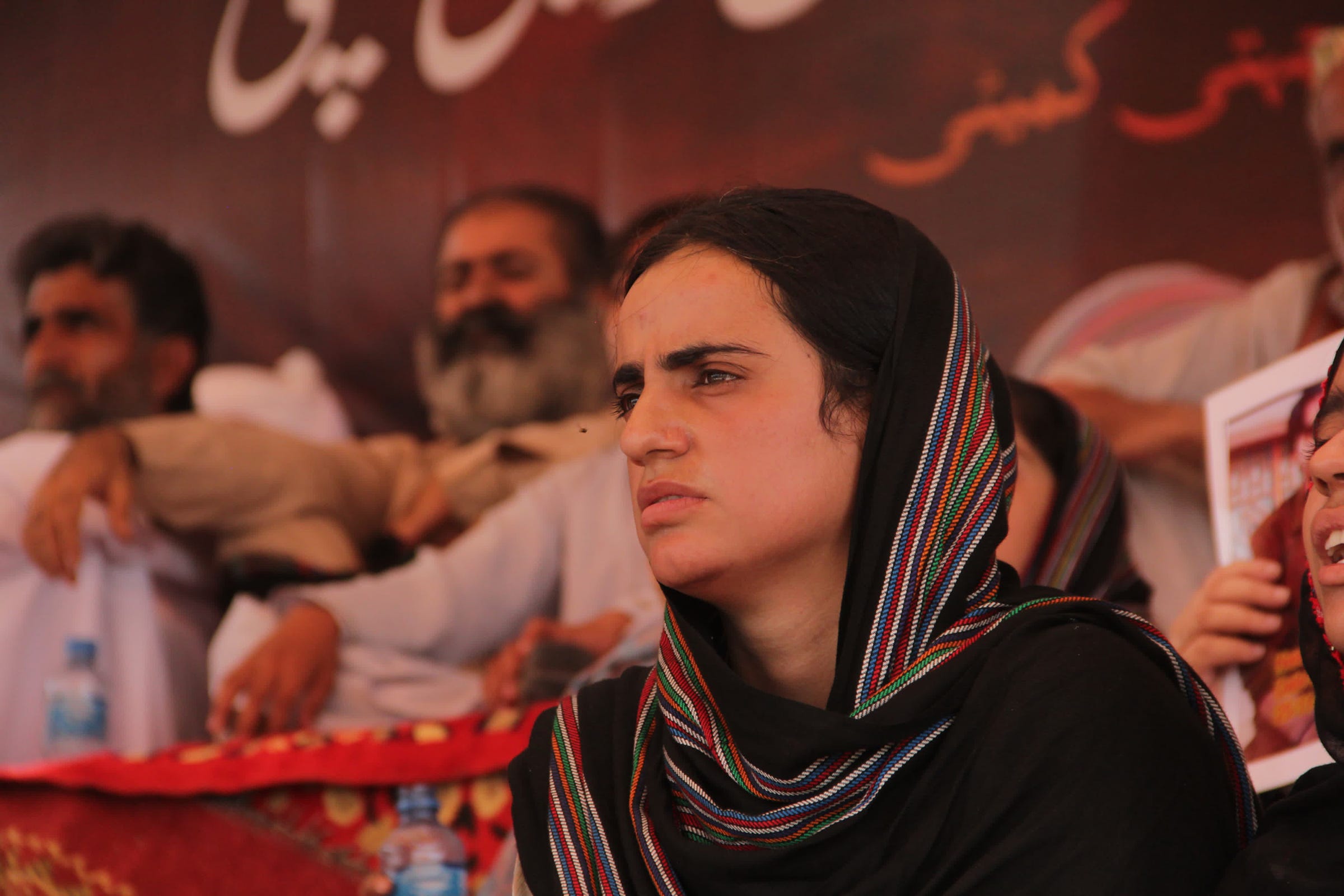
Mahrang Baloch was brought up in the shadow of enforced disappearances. Her father, Abdul Ghaffar Langove, a political activist, was disappeared in 2009. His body was later recovered in 2011 and showed signs of torture. It was an experience that influenced her public life. She holds a medical degree and was a prominent member of the Baloch Yakjehti Committee (BYC). A group advocating for human rights in Balochistan. Baloch has been detained in the Hudda District Prison in Quetta since March 2025.
On June 25, an anti-terrorism court sentenced Baloch and Sibghatullah Shahji to life imprisonment. They were convicted under section 302 (murder) of the Pakistan Penal Code and section 7 of the Anti-Terrorism Act 1997. The case is linked to the killing of a paramilitary soldier during the protests in Gwadar in July 2024. Both activists boycotted the proceedings, and their lawyers have said they will appeal the verdict to the higher courts. The BYC called the ruling “judicial tyranny”. Greta Thunberg, a Swedish activist, criticized the proceedings, calling the trial a “mockery of justice” carried out “in utter secrecy”.
In court proceedings, prosecutors did not charge Baloch for being directly responsible for the soldier’s death. Rather, they stated that she had incited the protest by organizing and leading it. Records of the court also revealed inconsistencies in police documentation, including conflicting dates of the incident. Amnesty International and the Human Rights Commission of Pakistan have expressed concerns about the fairness of the trial. Limited access to legal counsel and video-link hearings were mentioned. The Pakistani government, however, says the case is related to “Violence against security personnel during the course of their duties.”
The case also poses general legal questions. Article 16 of Pakistan’s Constitution guarantees the right to peaceful assembly. This right may be subject to some restrictions to protect public order. Pakistan has also ratified the International Covenant on Civil and Political Rights (ICCPR), which guarantees freedom of assembly. But allows justifiable and necessary restrictions for security purposes. In areas like Balochistan, with prolonged security operations and insurgencies. Implementing these principles presents practical challenges.
This is the dilemma of the Balochistan province. The Commission of Inquiry on Enforced Disappearances has recorded around 2,700 disappearance cases from the province since 2011. Rights groups believe the actual number is higher because many cases go unreported or lack documentation. Meanwhile, government officials state that many registered cases have been resolved. The situation mirrors patterns seen elsewhere. In Iran, Nobel Peace Prize winner Narges Mohammadi was sentenced to 31 years’ imprisonment after campaigning for rights. Baloch’s case is not the only one that has been linked to accusations of activism and questions of judicial process. In both cases, the state used legal measures for a longer period to silence continued political activity.
Therefore, the debate goes beyond the judgment of one court. It is about the boundaries that states set between peaceful political expression and acts that they deem to be a threat to public security. Some analysts believe that a heavy focus on security measures could leave little room for political participation, while others say security measures are needed to keep public order intact. The legal significance of this case also extends beyond one individual. The result can have implications for people’s views of justice and their expectations of legal and political avenues of grievance. More generally, the balance of security concerns and legal protections in Balochistan could influence trust in legal institutions.