

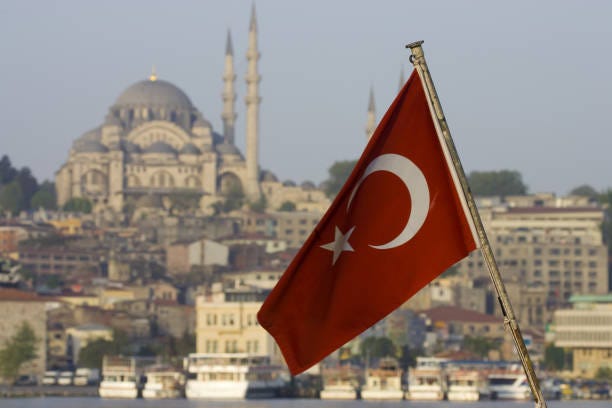
Few countries show the tension between religion, state power, and liberty as clearly as Turkey. For much of the twentieth century, it was held up as a model of strict secularism in the Muslim world. More recently, it’s often described as moving in the opposite direction. But framing it as a simple shift from “secular” to “religious” doesn’t really capture what’s going on.
The more interesting question is about power; who holds it, how it’s justified, and how far it can go.
A Secularism Imposed From Above
Modern Turkey was shaped by Mustafa Kemal Atatürk, and his version of secularism was not something that developed slowly over time. It was imposed, quite firmly, through state institutions, reflecting the tension between law and individual rights. Religion didn’t disappear, but it was pushed into controlled spaces. Public expressions of Islam were limited, especially in political life.
That approach did create stability of a kind. It aligned Turkey more closely with European political norms and reduced the direct influence of religious authority. But it also left a mark. For many people, secularism didn’t feel neutral—it felt restrictive.
That tension didn’t vanish. It just stayed beneath the surface.
The Shift Under Erdoğan
The rise of Recep Tayyip Erdoğan changed that balance. In its early phase, his government presented itself as opening things up rather than overturning the system. Economic growth, electoral legitimacy, and a more visible role for religion all became part of the picture.
Restrictions on religious expression eased, allowing for a more open public discourse on Islamic values. Headscarf bans were lifted. For many, that felt like a genuine expansion of personal freedom.
But over time, something else became more noticeable. Political power began to concentrate. Media space narrowed, limiting the development of a vibrant civil society. Criticism carried more risk than it used to. The system didn’t just become more religious—it became more controlled.
That’s what makes Turkey hard to read. Gains in one area were matched by losses in another.
Liberty Caught Between Two Models
It’s tempting to frame Turkey as a clash between Islam and secularism, but that’s a bit too neat. The deeper issue is how authority is organized.
On one side, you have a rigid secular model that limits religion in the name of modernization. On the other, a system that gives religion more public space but also centralizes power.
Neither one, on its own, guarantees liberty.
That’s something Mustafa Akyol has pointed out in his work. As he writes:
“The real issue is not Islam versus the West, but freedom versus authoritarianism.”
(Mustafa Akyol, Islam Without Extremes, 2011)
It’s a simple line, but it shifts the focus in a useful way. The problem isn’t identity by itself. It’s what happens when power isn’t limited.
Public Religion, Private Limits
In today’s Turkey, religion is more visible than it used to be. You see it in public life, in political language, even in how identity is expressed. But that visibility doesn’t automatically translate into broader freedom.
Journalists face pressure. Opposition voices don’t always have equal space. Institutions that once acted as checks on democracy have weakened significantly.
So you end up with a strange mix. Religion is less restricted, but liberty, in a wider sense, isn’t clearly expanding.
Beyond the Binary
Turkey tends to get pulled into simple arguments, either as proof that secularism is necessary for freedom, or as an example of why religion should have a larger role in public life.
In reality, it doesn’t fully support either claim.
What it shows is something more basic: liberty depends less on whether a system is secular or religious, and more on whether power is limited and accountable.
A secular system can become restrictive. A religiously influenced one can do the same. The label matters less than how authority is actually used.
An Ongoing Question
Turkey isn’t a finished story. Things are still shifting, and that’s part of why it’s worth paying attention to.
It raises a harder question than the usual debates: not whether Islam and secularism can coexist, but whether either can support liberty without real limits on power.
For the wider Muslim world, that question isn’t abstract. It’s practical.
And if Turkey shows anything, it’s that identity alone doesn’t decide the outcome. Structure does.