

When raising one’s voice can lead to imprisonment and suffering, choosing silence may not be an act of cowardice, but rather a means of ensuring one’s safety and survival.
On June 5, 2026, security forces in Karshi, Uzbekistan, arrested Javokhir Muminov, a leading member of the Ezgulik Human Rights Society, alongside farmer Djura Akbarov. After the arrest, Muminov was subjected to suffocation with a plastic bag. He managed to inform his lawyer about the torture. Later, during a prison visit, his lawyer was also physically assaulted by the prison staff.
Djura Akbarov was a simple farmer. One day, two state bailiffs became violent with him and broke his arms. He was in pain, scared, and didn’t know whom to ask for help, so he reached out to Javokhir Muminov. Javokhir Muminov works for the Ezgulik Human Rights Society, where his job is to advocate for ordinary people. He demanded a simple thing from the bailiff: “You broke his arm, so pay for his treatment.”
Muminov had simply helped the farmer seek compensation for his medical treatment. Although one of the bailiffs sent the payment, he later accused Muminov of extortion. Muminov’s only crime was assisting a man with a broken arm, yet he faced a charge of extortion for doing so.
If someone breaks your arm and you ask for medical expenses, this is not an extortion; this is fixing a mistake. It becomes a crime only if the government allows officers to beat you freely.
Officers placed a plastic bag over his head, causing suffocation. They tortured him, but without leaving any marks. This is a direct violation of the UN Convention Against Torture.
Another major concern arises from an incident where Muminov’s lawyer was also physically assaulted during a prison visit. The officers assaulted him because they feared that the truth would reach the outside world.
Moreover, the prosecutor’s officers declined to order a forensic medical examination despite two complaints filed. A forensic medical examination would clarify whether torture occurred or not.
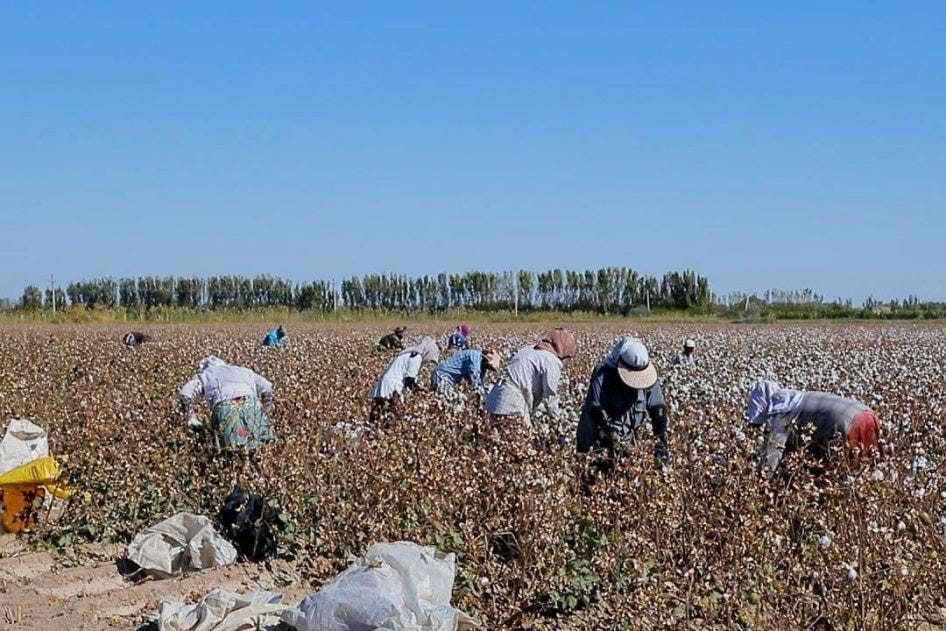
This is not the first case Uzbekistan has had a history of state repression. Under the late president, Islam Karimov, many instances of state repression were documented. In 2005, troops fired on protesters in Andijan, killing hundreds of people. Dissidents were tortured with methods like pouring boiling water on them, and forced labor in cotton fields was common during that era.
When Shavkat Mirziyoyev became president, he promised a “new Uzbekistan” and even released some prisoners. However, he introduced an upgraded form of torture. While torture under Karimov often left visible marks, under Mirziyoyev, methods have included suffocating individuals with plastic bags, which leave no visible signs of abuse.
Under Karimov, they called you a traitor. Under Mirziyoyev, they labeled you an extortionist. The method may differ, but the goal remains the same: to destroy anyone who has the courage to speak against the government.
Ezgulik has always been a target because it refuses to be a “good NGO” that praises the government. It actually investigates broken arms, forced labor, and corruption. Muminov’s arrest is the government’s reward for that bravery.
Uzbekistan is not alone in using the legal system as a weapon. In Russia, lawyer Sergei Magnitsky was jailed and beaten to death for exposing corruption. In Egypt, researcher Giulio Regeni was tortured and killed for asking too many questions. In Belarus, Nobel Peace Prize winner Ales Bialiatski is serving 10 years for the “crime” of receiving international donations. The names and countries change, but the playbook is identical. When the state cannot win an honest argument, it writes a fake charge, closes the courtroom doors, and hopes the world looks away.
Javokhir Muminov is not an extortionist. He is not a criminal. He is a man who helped a farmer with a broken arm, and for that kindness, he is being destroyed. He is a prisoner of conscience, a hostage of a system that fears truth more than violence.
The world must demand his immediate and unconditional release. The bailiffs who broke Djura Akbarov’s arm must face justice, not wear the mask of victims.
Until then, the “New Uzbekistan” remains what it always was, a place where asking for your basic rights can cost you your freedom, your body, or your life.