
Saudi Arabia’s Reform Paradox: Are Expanding Women’s Rights Redefining Freedom—or Rebranding It?
By Zunab Zehra

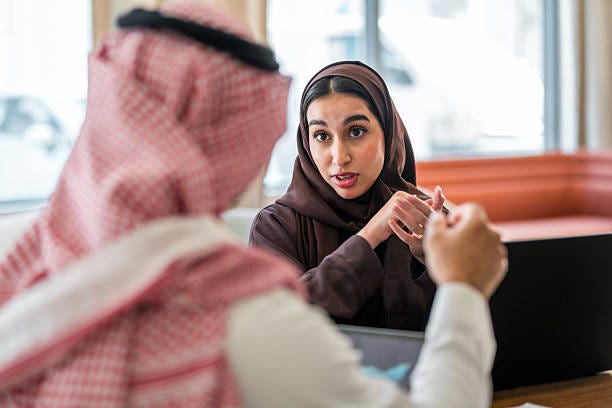
In June 2018, images of women driving through the streets of Riyadh carried a kind of symbolic weight that highlighted the authority of the monarchy beyond traffic laws. For decades, the ban had stood as one of the most visible markers of restriction in Saudi Arabia, often discussed within social and cultural frameworks, including interpretations of Islam. Its removal was immediate, tangible, and widely celebrated. But it also raised a more difficult question, one that has only become sharper over time: what kind of freedom is actually being expanded?
The answer is less straightforward than the headlines suggested.
How Reforms Perform Within the Politics Framework
Much of the change has been tied to the broader agenda of Vision 2030, closely associated with Mohammed bin Salman. Women have entered the workforce in greater numbers, guardianship restrictions have been eased in certain areas, and public space has undeniably shifted. Cafés, offices, and universities look different today than they did even a decade ago.
From a distance, it can look like rapid liberalization. And in some ways, it is. Opportunities that were structurally blocked are now open. Women are now able to perform roles in the workforce that were previously inaccessible. Economic participation, especially, has expanded at a pace few would have predicted.
But these reforms are not emerging organically within the existing political framework. They are being designed, calibrated, and implemented from above.
Expansion Without Autonomy?
There is a difference between being allowed to do more and being able to shape the conditions under which those permissions exist.
A woman can now drive to work, start a business, or travel more freely than before, reflecting a shift in societal dynamics. These are meaningful changes. But the broader political environment—speech, dissent, organization—remains tightly controlled by the regime. The space in which rights are granted is still defined by the state.
This creates a quiet contradiction. Social and economic freedoms expand, while political freedoms remain limited. The result is not the absence of progress, but a very particular kind of progress, one that is managed.
Visibility and Its Limits In Saudi Arabia
One of the most striking aspects of recent changes is visibility. Women are not only participating more, they are being seen doing so. Advertising campaigns, international forums, and official narratives all reinforce this image of transformation. This image is also shaped with an international audience in mind, particularly in countries like the U.S.
But visibility can be selective.
Some of the very activists who campaigned for reforms, including the right to drive, were detained or sidelined during the same period those reforms were implemented. The message was subtle but clear: change is permitted, but not necessarily demanded.
Redefining Freedom—or Reframing It?
What’s happening in Saudi Arabia forces a more careful definition of freedom itself. If freedom is understood as access, access to work, movement, public life, then there is undeniable expansion.
But if freedom also includes the ability to question, organize, and influence power, the picture becomes more complicated.
This tension is captured in the words of Saudi women themselves, revealing their position within the existing framework. As activist Loujain al-Hathloul once said:
“We are asking for our basic rights… we are not asking for anything extraordinary.”
(Interview statements reported by international media, 2018)
The statement is striking not because it is radical, but because it is not. It reflects a demand not for transformation, but for recognition, something that sits uneasily alongside a reform process that is both real and restricted.
Between Change and Control
It would be too easy to describe Saudi Arabia’s reforms as either purely progressive or purely cosmetic. Both views flatten a more complex reality.
The changes are real. They have altered daily life in visible and meaningful ways. At the same time, they exist within a system that defines their limits.
That duality is what makes this moment worth paying attention to. Not because it offers a clear answer, but because it forces a more honest question:
Can freedom be expanded in controlled ways without eventually demanding more?
For now, Saudi Arabia appears to be testing that possibility of modernization, reshaping freedom carefully, deliberately, and on its own terms. Whether that balance can hold is another question entirely.