

Peace is more than the absence of war. It is also the presence of security, opportunity and freedom.
Security is usually measured by the presence of armies, weapons, and borders. However, Barry Buzan’s research on security studies challenges the traditional aspects of security. In People, States and Fear, he extended the security agenda to incorporate political, economic, social, and environmental aspects. Security is not just about protecting territory. It’s also about safeguarding the political and social structures that people rely on. This out-of-the-box thinking is essential to grasp the Makkah Joint Defence Agreement signed by Pakistan, Saudi Arabia, and Türkiye.
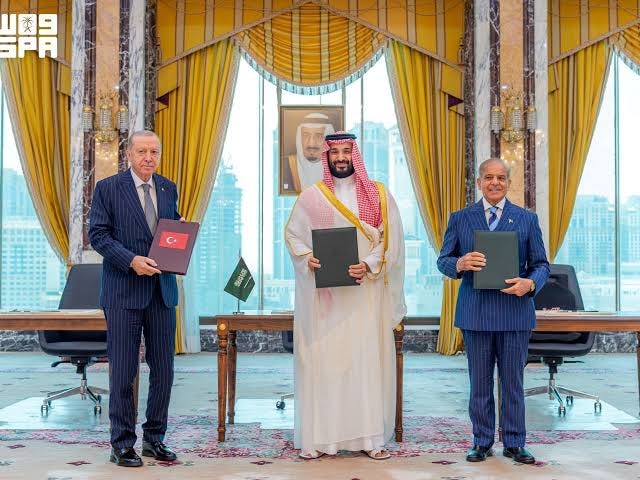
On August 7, 2026, Pakistan, Saudi Arabia, and Türkiye signed the agreement in Makkah. It says that an attack on one of the three nations will be an attack on all three nations. The concept is at the very core of collective security. An attack on one is an attack on all. These can help prevent aggression and promote peaceful development. But the importance of the agreement is not just its military aspect. The concept of human security provides a lens to understand its larger significance. In 1994, the UNDP’s Human Development Report put people at the center of security. It associated security with “freedom from fear” and “freedom from want. This refocused the discussion from state protection to the protection of human life and opportunities.
This connection is important for a region that has faced years of conflict and insecurity. War does not only threaten borders. It may also affect businesses, damage infrastructure, cause displacement of individuals, and impact economic prospects. Freedom is not possible if people are continually plagued by fear of war, displacement, or economic failure. Similarly, companies have a hard time investing if instability threatens infrastructure and trade routes. The three nations have already had close defense relations. Pakistan has long maintained defense cooperation with Saudi Arabia. Türkiye’s NATO experience and its emerging defense sector are also a source of strength. The Makkah Agreement thus provides a more formal trilateral format to these relationships. This broader security awareness also helps to understand the importance of economic, political, social and environmental issues.
Social instability is possible from economic insecurity. Livelihoods may be jeopardized by environmental pressures. Political instability can weaken institutions. Digital threats can affect critical infrastructure. These issues are relevant within the framework of Buzan’s wider security concept. The Makkah Agreement comes at a time when regional instability remains high. Prime Minister Shehbaz Sharif said on X, that the agreement was a pledge of “three brotherly nations, bound by faith, friendship and a determination for peace and security.” He also called it a “shield of peace for generations to come.” It may be a blueprint for regional cooperation to make security a chance for peace and prosperity. Its significance can be determined by its ability to successfully transform collective security to human security.