

This edition of Edraak covers developments across Palestine, Iran, Syria, Pakistan, Egypt, Morocco and Malaysia, examining issues related to political participation, freedom of expression, displacement, education and economic security.
Edraak is our newsletter that honours the Muslim world’s diversity, reflected in the multitude of its socio-economic conditions and political institutions spanning across continents. Traced back to its Arabic origins, إدراك encompasses timely and thorough insights into the developments of the Muslim-majority countries.
We organise the Muslim-majority countries into four zones as per their current conditions of conflict, transition, stability, and development.
Zone I: Experiencing War, Conflict, Oppression, Genocide
Palestine: Elections Postponed Until September 2027
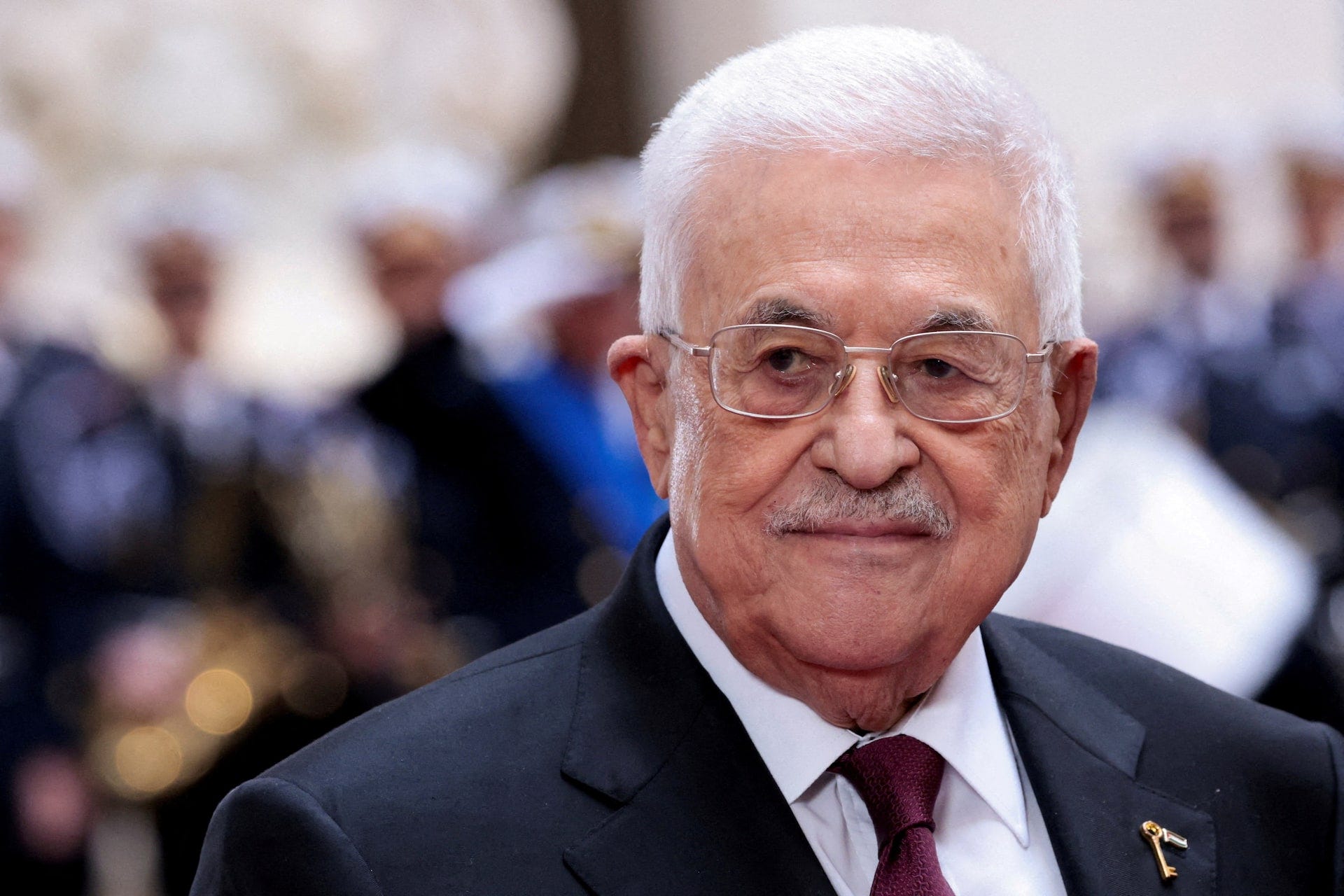
Palestinian President Mahmoud Abbas has postponed the legislative elections scheduled for November, setting 11 September 2027 as the new date for presidential and legislative polls. He cited Israeli restrictions, security concerns, and conditions in Gaza and the West Bank. Palestine has not held national presidential or legislative elections since 2005–06, and Abbas has governed by decree since his presidential mandate expired in 2009. Restrictions on movement and access across the Palestinian territories make organising elections particularly difficult. The postponement leaves Palestinians waiting longer to choose their national representatives, renewing concerns about electoral accountability and the ability of people living under occupation to exercise their political rights.
Iran: Student Faces Death Sentence Over Social-Media Post
Najmeh Amini, a 23-year-old accounting student, was reportedly sentenced to death on a blasphemy charge linked to a social-media post. She also received a prison sentence exceeding 12 years on separate charges related to national security and anti-government propaganda. Arrested during the January protests, Amini is awaiting an appeal before Iran’s Supreme Court. The case brings into focus the legal consequences of expressing views that authorities consider religiously offensive or politically threatening. Although states may establish laws to protect religious communities, the use of capital punishment for expression raises serious questions about the limits of such protection and the safeguards available to individuals facing prosecution.
Zone II: Transition toward Peace and Stability
Syria: Displaced Families Begin Returning After Seven Years
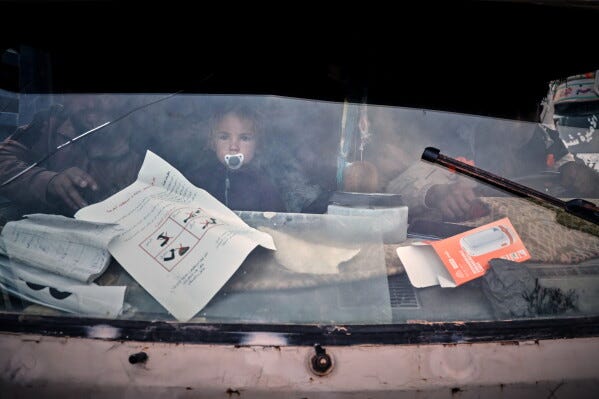
Around 450 Kurdish and Arab families have begun returning to the Ras al-Ayn countryside in northeastern Syria, seven years after a Turkish military offensive and allied Syrian factions forced them to leave in 2019. The return follows arrangements between the Syrian government and the Kurdish-led Syrian Democratic Forces. Many families have found their homes damaged or destroyed, while limited public services and unresolved property claims complicate their return. Going home is an important step for families displaced by conflict, but it does not necessarily restore the security and stability they once had. Resolving ownership disputes and rebuilding essential services will be central to ensuring that displaced families can reclaim their homes and resume their lives.
Zone III: Stable but Economically Struggling
Pakistan: Emergency Rule in Khyber Pakhtunkhwa Raises Concerns Over Civil Liberties
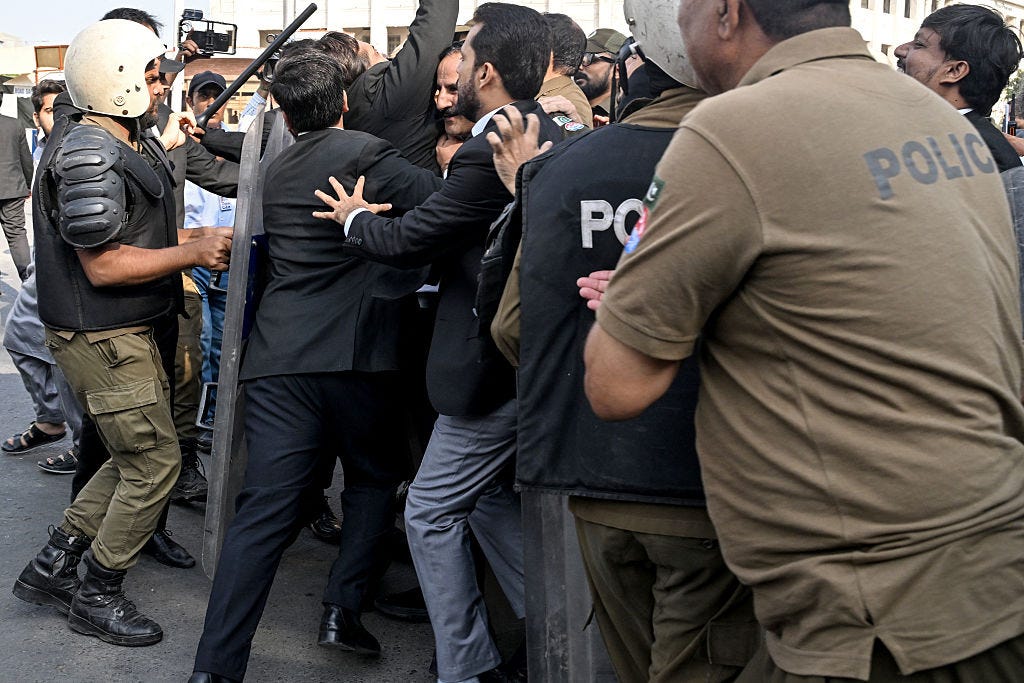
On 11 October, Pakistan’s federal government imposed emergency and governor’s rule in Khyber Pakhtunkhwa, citing escalating militant violence and a breakdown of constitutional machinery. The measures suspended the provincial government’s functions and were accompanied by a military deployment. Amnesty International subsequently expressed concern over reported detentions of political leaders and internet disruptions, warning of possible restrictions on expression, association and peaceful assembly. Addressing serious security threats may require exceptional measures, but these also raise questions about how executive power is exercised and monitored. The scope and duration of emergency rule, alongside independent oversight, will be important in determining whether the response to insecurity respects constitutional rights and political participation.
Egypt: Arrest of Investigative Newsroom Raises Due-Process Concerns
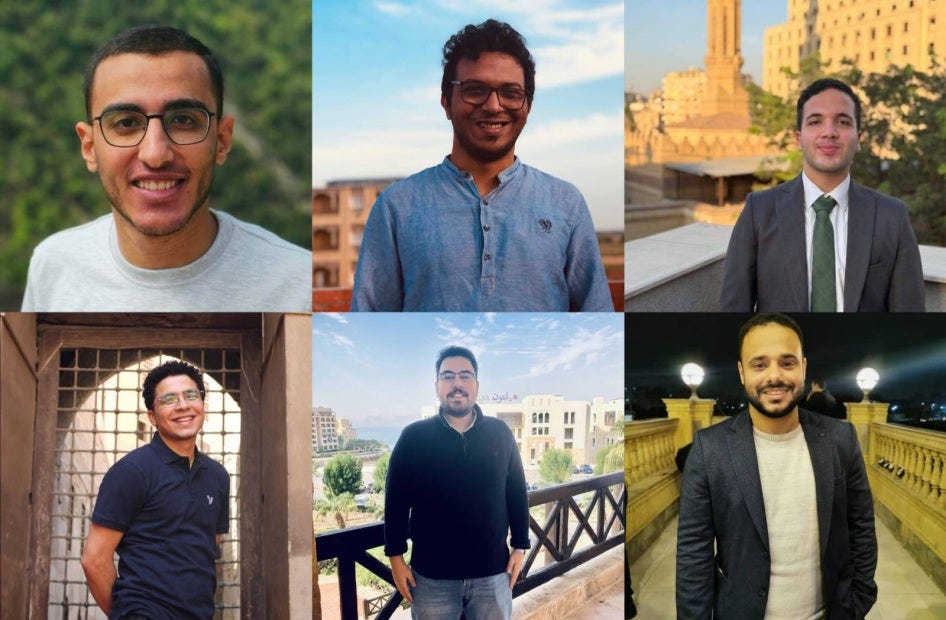
Egyptian security forces arrested six journalists from Matsda2sh, an independent investigative platform, during raids on 28 and 29 September. Authorities later confirmed the arrests, accusing the journalists of producing fabricated news and alleging links between the outlet and the Muslim Brotherhood. Human Rights Watch reported that the journalists’ whereabouts had not been disclosed and that their families and lawyers had been unable to contact them. The arrests raise concerns about access to legal representation and the treatment of independent media. When journalists are detained without clear information about their whereabouts or charges, it becomes harder for news organisations to investigate public affairs and for citizens to scrutinise official decisions.
Morocco: Girls’ Education Initiative Wins UNESCO Prize
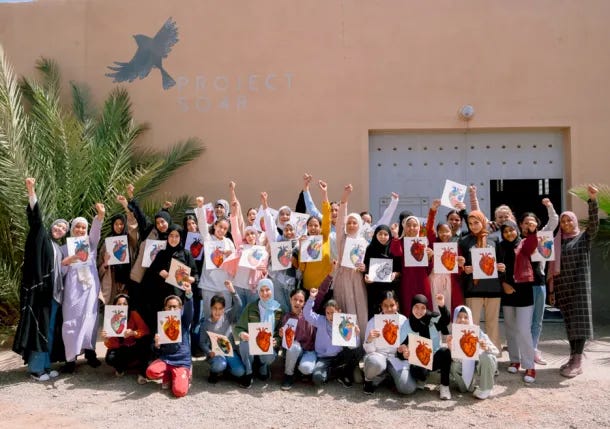
Project Soar in a Bag, which supports adolescent girls in Morocco, received the 2026 UNESCO Prize for Girls’ and Women’s Education. The programme, delivered by trained local women facilitators, promotes confidence, health literacy, awareness of rights and future planning. It also works with families and communities to address barriers such as child marriage. In 2025, 97.5% of participating girls passed their school year, while 99% remained free from child marriage. These results highlight the role that community-based initiatives can play in keeping girls in school and expanding their choices. Alongside formal education, knowledge of health and rights can help young women make more informed decisions about their futures.
Zone IV: Developed or Emerging Economies with Peace and Stability
Malaysia: Budget Proposes Higher Minimum Wage and Expanded Household Support
Malaysia’s proposed 2027 budget includes raising the monthly minimum wage from RM1,700 to RM2,000 from June 2027, increasing annual personal income-tax relief from RM9,000 to RM12,000, and allocating RM16 billion in cash assistance to lower-income households. The measures form part of a broader spending plan intended to ease the cost of living while maintaining fiscal discipline. Higher minimum wages and targeted financial support give workers and families more room to meet essential expenses and make decisions about their livelihoods. Their impact will depend on implementation, changes in living costs, and whether assistance reaches those most in need. The proposals also bring renewed attention to how public policy can widen economic opportunities and strengthen household financial security.
Islam & Liberty Network 𝗪𝗲𝗯𝗶𝗻𝗮𝗿 | 𝗧𝗵𝗲 𝗥𝗶𝘀𝗲 & 𝗙𝗮𝗹𝗹 𝗼𝗳 𝗜𝘀𝗹𝗮𝗺𝗶𝗰 𝗖𝗶𝘃𝗶𝗹𝗶𝘇𝗮𝘁𝗶𝗼𝗻: 𝗛𝗼𝘄 𝘁𝗼 𝗥𝗲𝘀𝗲𝘁 𝘁𝗵𝗲 𝗗𝗲𝗯𝗮𝘁𝗲?
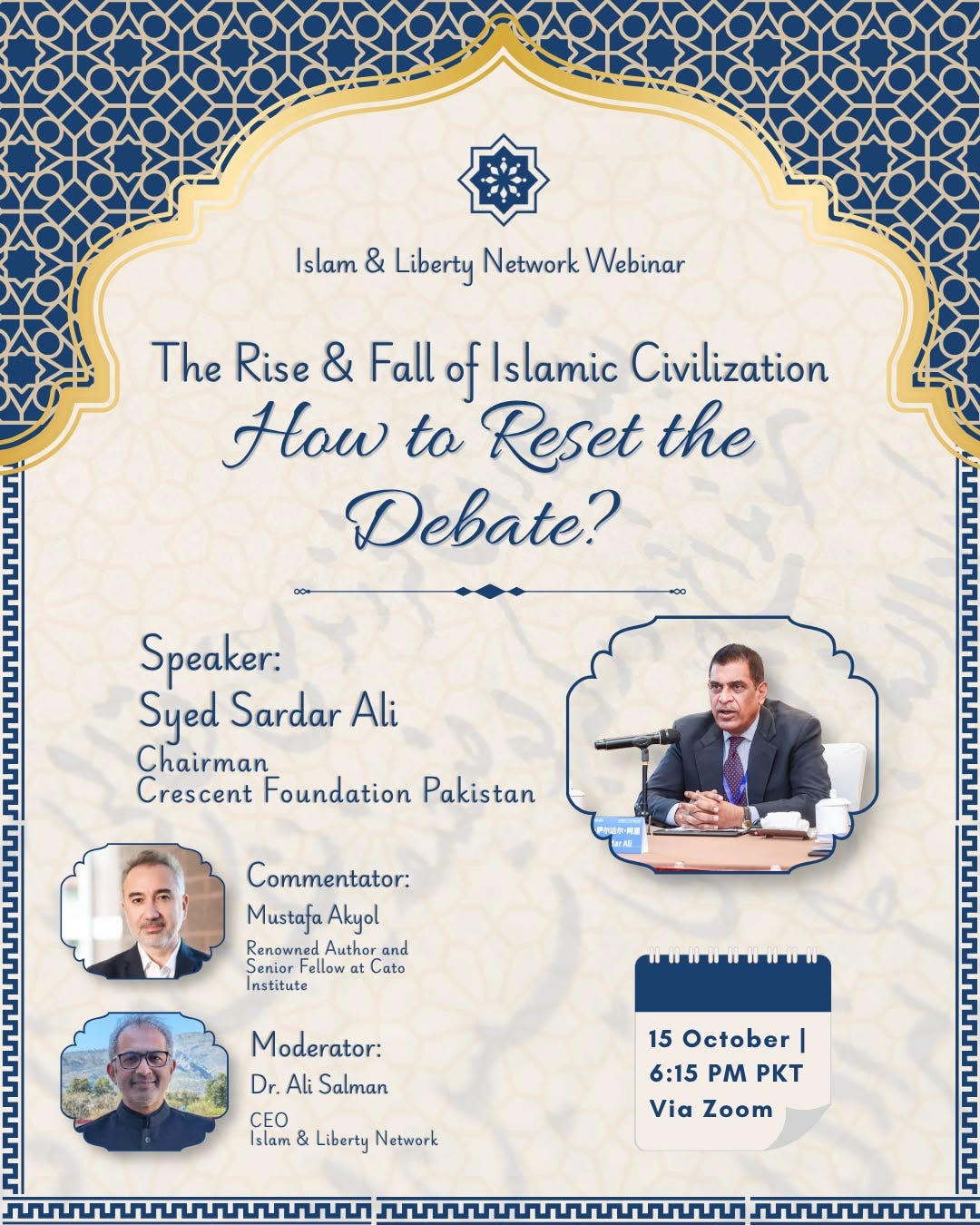
For over three centuries, Muslim thinkers and statesmen have been trying to implement military, political, legal, economic, and educational reforms to reverse the “decline” of their civilization vis-à-vis the West.
What if the Islamic civilization is facing a challenge far greater than a reversible cycle of “rise and fall”? Join Syed Sardar Ali, author of What Is to Be Done: Modernity, Islam and Pakistan, in conversation with Dr. Ali Salman, featuring commentary by Mustafa Akyol, renowned author and Senior Fellow at the Cato Institute, as they explore this alternative perspective on Islam, modernity, and the Muslim world.
Thursday, 15 October 2026
6:15 PM PKT
Live on Zoom
Register here: https://zoom.us/meeting/register/eitn4UfkSmm_RuTk6K1rxw
Upon registration, you’ll receive a confirmation email with the webinar access link and discussion brief.