

This newsletter covers the pressures of war and repression in Palestine and Afghanistan, institution-building and federal tensions in Somalia, and raises questions around education, migration, press freedom, and the reach of state power in Pakistan and Bangladesh. Developments in Indonesia highlight the relationship between institutional accountability and individual rights, while the Asia Liberty Forum in Sri Lanka questions the roots and universality of liberty debated across the region.
Edraak is our newsletter that honours the Muslim world’s diversity, reflected in the multitude of its socio-economic conditions and political institutions spanning across the continents. Traced back to its Arabic origins, إدراك encompasses timely and thorough insights into the developments of the Muslim-majority countries.
We organise the Muslim-majority countries into four zones as per their current conditions of conflict, transition, stability, and development.
Zone I: Experiencing War, Conflict, Oppression, Genocide
Women Now Head Nearly One in Four Households in Gaza
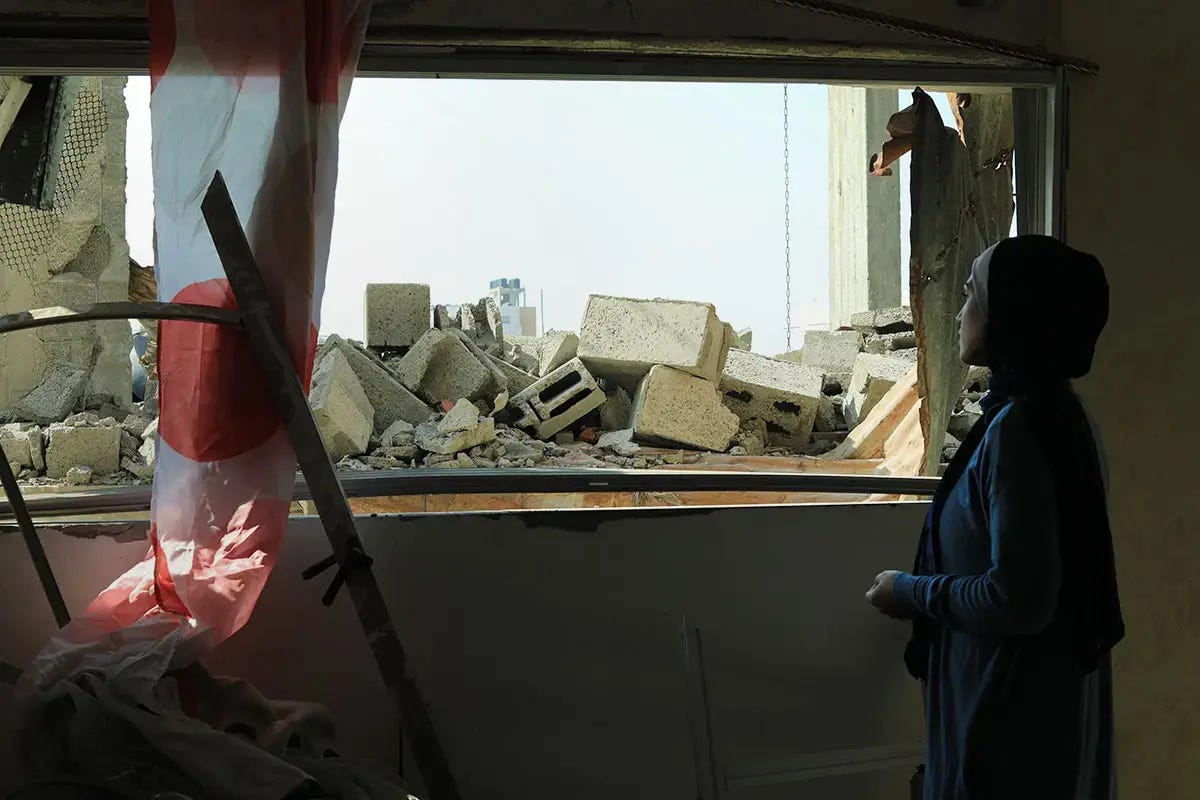
UN Women reported on September 8 that women now head almost one in four households in Gaza, roughly double the pre-war proportion, a shift driven by deaths, displacement, detention, and the disappearance or injury of male household members. The figure is a demographic snapshot of how the war has restructured Gazan family and economic life, with women increasingly holding sole responsibility for household survival amid ongoing scarcity.
Taliban Defends Blanket Protest Ban
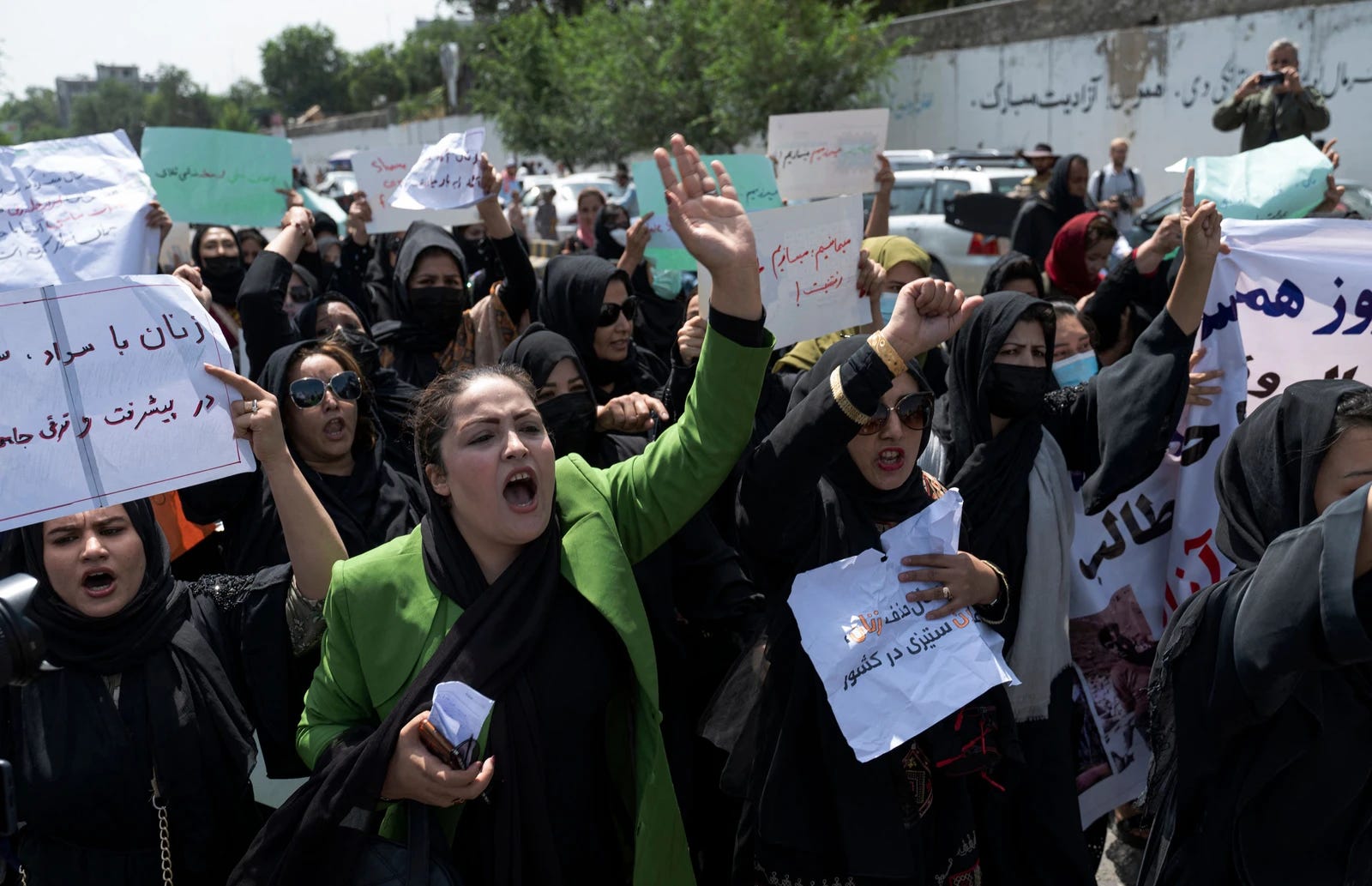
The Taliban publicly defended its newly imposed ban on all forms of protest on September 3, arguing that demonstrations have no place under its interpretation of Islamic law. The justification folds a routine tool of political liberty, public assembly, into a religious framing that forecloses debate on the ban’s legitimacy entirely.
Zone II: Transition toward Peace and Stability
Somalia’s National Security Conference Exposes the Limits of “One System” Somalia held a national conference on governance and oversight of its internal-security sector, bringing together federal institutions, parliament, federal member states, the UN, the African Union mission, and other partners to improve coordination, oversight, and financial sustainability as the country builds a more self-reliant security sector. However, two of Somalia’s most consequential federal member states, Puntland and Jubaland, did not participate, according to a Somali political-monitoring source. A national security architecture that two major regions opt out of discussing is, by definition, not yet national, and the absence says as much about the state of federal-regional trust as the conference agenda does about security reform.
Zone III: Stable but Economically Struggling
Pakistan Orders Expulsion of Afghan Medical Students
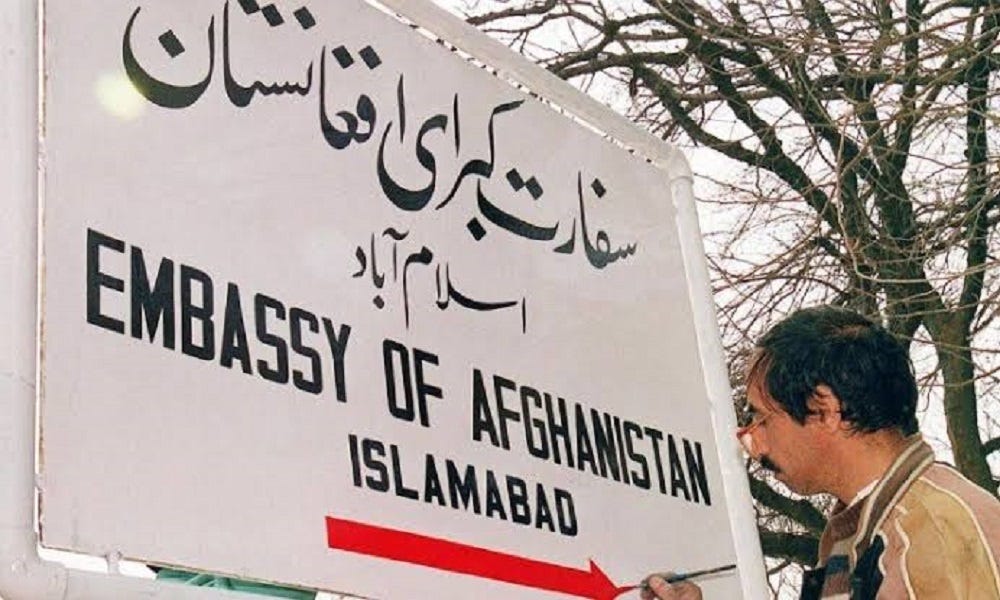
Pakistan’s Medical Regulator Board ordered all medical and dental institutions to expel enrolled Afghan students and halt new admissions, with Lahore’s King Edward Medical University giving 20 students, including 4 women, 24 hours to leave. The Human Rights Commission of Pakistan estimates up to 100 Afghan medical and dental students in Lahore alone are affected, 20 to 40 of them women. HRW noted that for Afghan women specifically, deportation “ends their chances of ever becoming doctors or dentists,” since the Taliban bars women from university and medical training entirely. Pakistan’s former special envoy to Afghanistan, Asif Durrani, called the move “not just an administrative matter” but “a question of humanity, compassion and Pakistan’s own moral responsibility.” A Lahore High Court intervention has since paused the expulsions amid public outrage.
Bangladesh’s Cyber Protection Act Amendments Threaten Press Freedom Proposed amendments to Bangladesh’s Cyber Protection Act would criminalize online reporting deemed “unsubstantiated or unverified,” carrying prison terms of up to 10 years and the potential loss of a news outlet’s operating licence. The vague “unverified” standard gives the state enforcement discretion over the kind of early, developing reporting a free press depends on being able to publish before every fact is locked down.
Zone IV: Developed or Emerging Economies with Peace and Stability
Indonesia’s Military Court Cuts Acid Attack Sentences, Reinstates Officers The Jakarta High Military Court II-06 reduced the prison sentences of two soldiers convicted in the March 2026 acid attack on KontraS activist Andrie Yunus and overturned their dishonorable discharge, reinstating both to military service. Yunus suffered burns across roughly 20% of his body and permanent damage to his right eye. Civil society groups renewed longstanding criticism that military courts, the only venue Indonesian law permits for prosecuting soldiers, structurally under-punish crimes against civilians; lawyers for the Indonesian Legal Aid Foundation are pushing the Constitutional Court to grant civilian jurisdiction in such cases.
Asia Liberty Forum Convenes in Colombo, with ILN Represented on Both Sides of the Stage
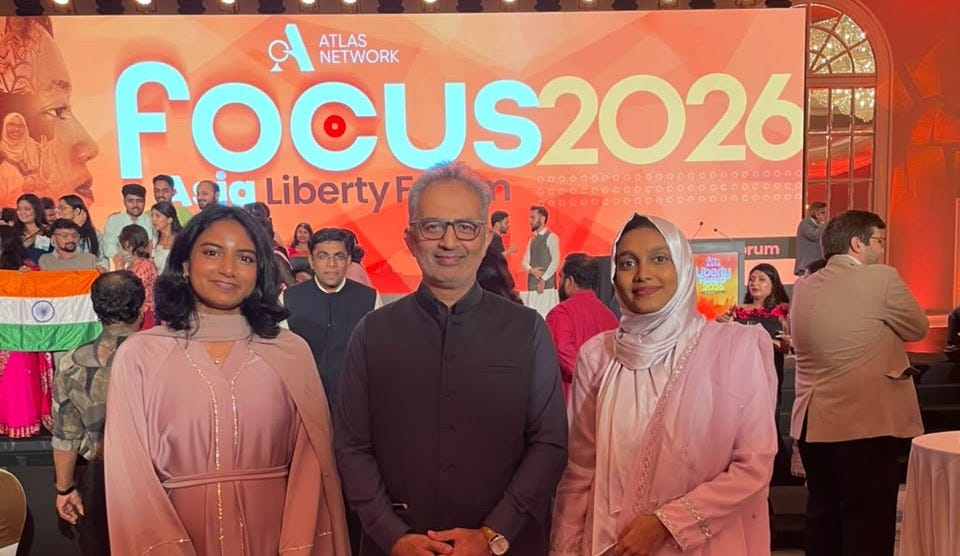
Atlas Network’s Asia Liberty Forum 2026 brought together roughly 250 think tank leaders, policymakers, and civil society figures from across Asia to Colombo, Sri Lanka, for two days of sessions on economic opportunity and individual rights across the region. As part of Atlas Network Academy’s flagship Fundraising 360 training, ILN’s Noor Netusha Nusaybah was named a finalist in the programme’s Elevator Pitch Competition, where she made the case for funding ILN’s work advancing religious, political, and economic freedom in Muslim societies.
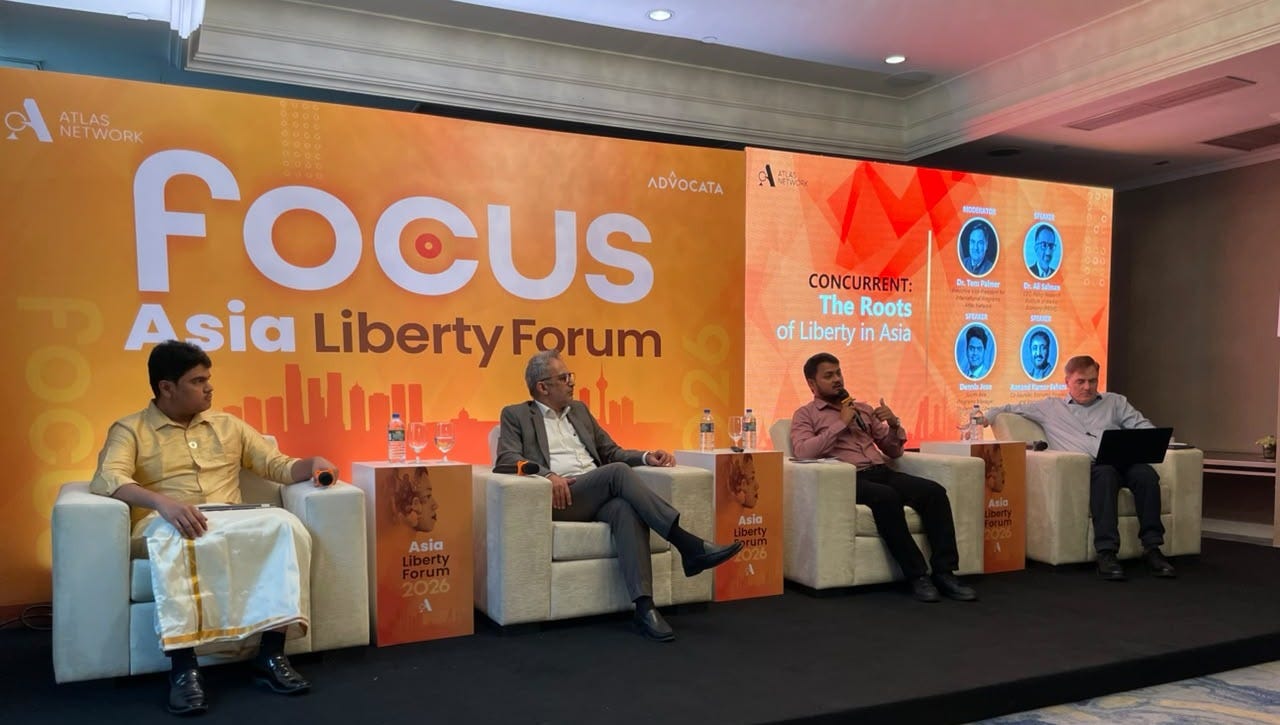
ILN CEO Dr. Ali Salman joined a panel titled “Roots of Liberty in Asia”. Ali Salman highlighted that while liberalism as a comprehensive philosophy may have Western origin, liberty as a lived experience has universal roots. The session pushed back on the assumption that liberty is a Western export, asking whether individual agency, limited power, tolerance, and pluralism are uniquely Western ideas at all, and arguing that Asia’s own philosophical, religious, and cultural traditions have long wrestled with the same questions, an argument with obvious resonance for ILN’s own project of locating liberty within Islamic intellectual tradition rather than importing it.
Article Pick
