


The end of Islamism?
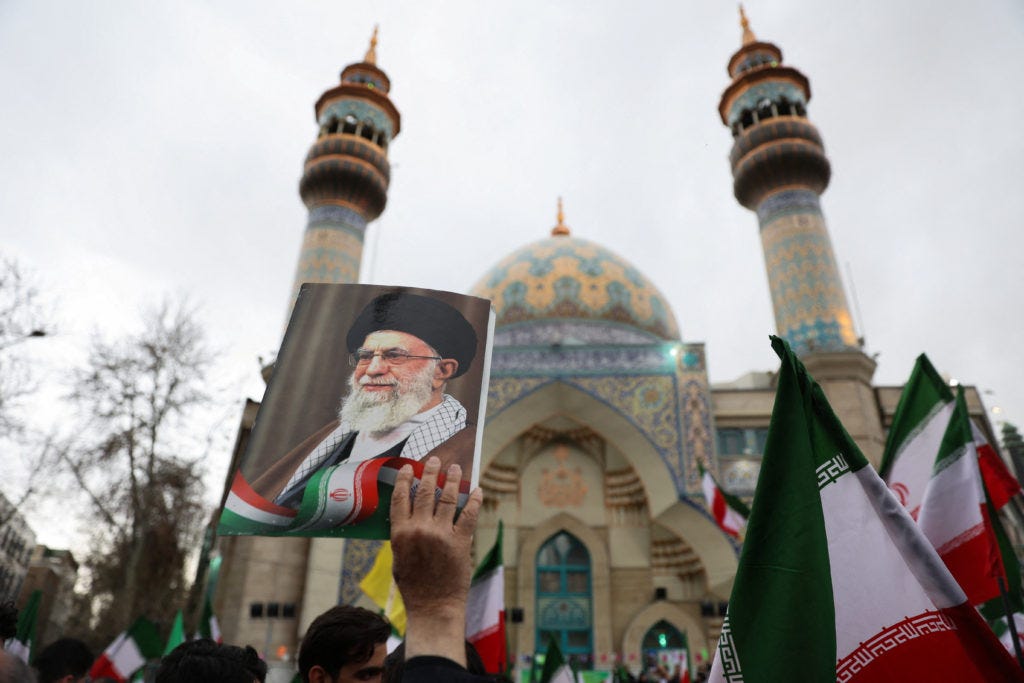
The shocking assassination of Iran’s Supreme Leader Ayatullah Khamenei during the onset of the attack on Iran by US-Israel provides us an opportunity to revisit the ideology that Khamenei, and modern Iran, represented. Iranian sociologist Asef Bayat referred to it as Islamism and considered post-1979 Iran the culmination of Islamism. It may also be referred to as Political Islam. Bayat defined Islamism as a set of “ideologies and movements that strive to establish some kind of an “Islamic order” – a religious state, shari‘a law, and moral codes in Muslim societies and communities.” He also added the element of social justice and a focus on the poor in this ideology. Iran is the only example of a religious, or rather a theocratic state, in the modern world in the 20th century, where religious clergy dictates and controls politics, defence, and economy.
Rise of Post-Islamism
Islamism or Political Islam could not be expanded beyond Iran as a state system, though it continued to inspire political and violent movements. During the 1990s, Asef Bayat started arguing the rise of what he called “Post-Islamism” which he contrasted with Islamism. In his words, post-Islamism differs because “it represents an endeavor to fuse religiosity and rights, faith and freedom, Islam and liberty… It wants to marry Islam with individual choice and freedom …, with democracy and modernity, to achieve what some have termed an “alternative modernity” … Whereas Islamism is defined by the fusion of religion and responsibility, post-Islamism emphasizes religiosity and rights. Yet, while it favors a civil and nonreligious state, it accords an active role for religion in the public sphere.”
Post-Islamism has several demonstrations. The rise of AKP in Türkiye, the emergence of the Arab Spring in the Middle East and North Africa, the democratisation of the Muslim Brotherhood in Egypt, and the transformation of Tunisian political party Annahda from Islamic Democrats to Muslim Democrats. Asef Bayat produced an edited volume, “Post-Islamism: The Changing Faces of Political Islam,” published in 2013, in which he provided a comprehensive review of these trends. The reversals since then, especially of the Arab Spring, indicate that the contest is far from over. In many places, Islamism and Post-Islamism live side by side.
Sans economics: The reversal of some post-Islamist movements
The failure of the post-Islamist movement, for example, in Tunisia, was largely a result of the lack of appreciation of economic factors, which underlie the democratic transition. Annahda, when it came to power, could not present a credible plan to transform economic governance and to control corruption, which became a part of a pervasive state during authoritarian times. The recent protests in Iran, triggered by “bazaari” (merchant class), which were then brutally suppressed by Iran’s government, were also mainly triggered by deteriorating economic conditions- and in particular inflation and depreciation. In other words, economics did not get a prominent place in the post-Islamism thesis.
Islam and Liberty as a new path?
Islam and Liberty Network, which was founded in 2011 in Istanbul as a network of Muslim scholars, researchers, and thinkers, offers a path for peace and prosperity to the Muslim world. In a way, this can be understood as a post-Islamist non-movement, using the words of Asef Bayat. Its intellectual framework has three pillars- economic freedom, religious freedom, and political freedom (in no particular order).
This intellectual framework of a free society draws inspiration from the Islamic civilizational history and a liberal interpretation of the religious text, and it is not the same as embracing the West. I am not being oblivious to the hegemonic powers and their designs of the world. In fact, I consciously recognize religious symbols being invoked in the current war, especially in the US and Israel. However, as someone who believes that faith and freedom can co-exist, I am of the opinion that we need these three pillars: economic, religious, and political freedom to evolve a society that cares for its people and provides a foundation for security, justice, and prosperity.
Liberty is a precondition for Security
The 20th century ended with a major lesson for political economy. Countries that could not offer economic security and freedom to their citizens collapsed despite credible defence capabilities. The collapse of the USSR and the fall — and disintegration — of Eastern European countries offer clear examples.
Let me make a slightly different argument. The Muslim countries, which did not allow at least some level of autonomy and freedom to their people AND demonstrated military ambitions, collapsed badly when confronted with material, military and technological challenges from regional and global hegemonic powers.
Iraq in the 1980s and later in 2000s and Libya after 2010 exhibited this failure. These dictatorships first failed domestically first and then succumbed to external threats. Afghanistan is also on the same path. With the fall of religious leadership, and significant asymmetry in defence capabilities, Iran may be the next case of a closed society, military ambition and a collapse.
On the other hand, Muslim majority countries with strong defence systems and with relatively open economic and political systems have done well on both liberty and security. Türkiye has stood its ground, as a strong country and strong economy. Pakistan, although struggling economically, has established its military prowess in recent times and has also demonstrated its credibility as a responsible nuclear state overcoming significant obstacles.
Interestingly, both Türkiye and Pakistan have struggled with the political ambitions of their militaries. Türkiye adopted a tougher stance where its political leadership, backed by its economic successes in the first 10 years of this century, managed to secure its authority. In Pakistan, we believe more in negotiation rather than an open contest between powerful stakeholders. We may find our own balance in due time. I wrote here in 2015, that Pakistan is now a post-Islamist state and no more than a bogeyman of Islamism despite its constitution’s religious orientation. Thus both Türkiye and Pakistan are examples of post-Islamism.
The lesson for post-Islamist world should be clear. We need a pro-liberty stance. We should build on liberty to achieve security, and we need economic security to guarantee our freedoms. This is our only insurance against internal strife and external threats.
The author is a founding member and CEO of Islam and Liberty Network (L) Foundation. This article is written in his personal capacity.
Read here a latest interview by Asef Bayat: https://www.bostonreview.net/articles/iran-after-khamenei/
Khamenei was actually representing a new structure referred to as the Wali Faqeeh. A religious supreme body which acts as a religious regulator, not interfering unless limits are breeched. Till that time involvement is only advisory. This system will continue as there will be a new Wali to replace the earlier one. But in this particular case there were other social tools adopted under a paralyzed economy to grow referred to as "Baseej" infact institutionalized. Whose role went beyond wars and engaged the youth mostly for the coordinated efforts. Very difficult to ascertain success of that system because of the geo-regional forces chocking economic freedom and allowing markets to work. We should evaluate the same system in a country which might had equal opportunities as a counterfactual and see the outcomes to be optimal in most cases.