

This newsletter travels across seven countries to document a week in which the Muslim world was simultaneously legislated against, organised for, and quietly struggled to educate its own. In occupied Palestine, the Knesset passed a discriminatory death penalty law on Land Day. In Syria, a UN inquiry documented fresh atrocities. In India, bulldozer politics demolished another Muslim shrine. In Indonesia and the UAE, the data expose a shared paradox: educated and capable Muslim women are being structurally excluded from the economic systems they could transform. And in Malaysia, a new Islamic capital market lab launched with an ambition to make Islamic finance a tool of economic inclusion, not just certification. Seven stories. One world.
Edraak is our newsletter that honours the Muslim world’s diversity, reflected in the multitude of its socio-economic conditions and political institutions spanning across the continents. Traced back to its Arabic origins, إدراك encompasses timely and thorough insights into the developments of the Muslim-majority countries.
We organise the Muslim-majority countries into four zones as per their current conditions of conflict, transition, stability, and development.
Zone I: Experiencing War, Conflict, Oppression, Genocide
This zone includes countries where violence, civil war, and mass atrocity crimes dominate daily life.
Israel’s Knesset passes death penalty law for Palestinians
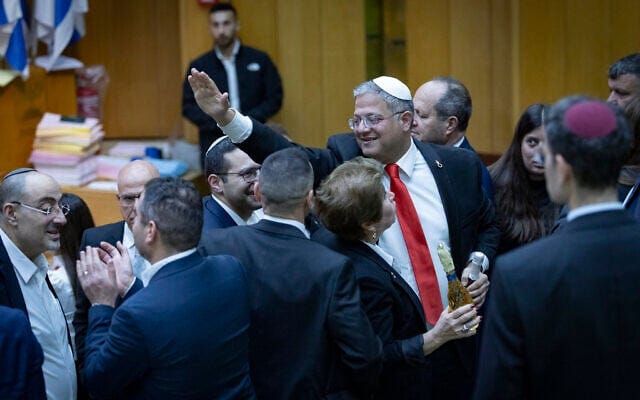
On 30 March 2026, the Knesset voted 62–48 to mandate death by hanging as the default punishment for West Bank Palestinians convicted of deadly attacks by military courts. The law, championed by far-right National Security Minister Itamar Ben-Gvir, who opened champagne in the chamber, removes the longstanding requirement for a unanimous three-judge panel, allowing a two-thirds majority instead. Critically, it applies to Palestinians but not to Israeli settlers convicted of equivalent crimes. A death penalty applied to one population under occupation, with no equivalent for the other, is discriminatory justice by definition. The UN, EU, and the foreign ministers of France, Germany, Italy, and the UK condemned the legislation as discriminatory and illegal under international law.
Zone II: Transition toward Peace and Stability
Countries in this zone are emerging from conflict or undergoing volatile transitions. They are in the process of political reconstruction and institution building.
UN Commission documents Syria’s war crimes
The UN’s Independent Commission of Inquiry released its latest Syria report this month, marking 15 years since the 2011 uprising. While 1.5 million refugees have returned since Assad’s fall and Syria has established two new bodies on transitional justice and missing persons, the Commission documented that government forces killed over 1,400 Alawite civilians in coastal regions in March 2025, and over 1,500 Druze and Bedouin in Suweida in July 2025. Syria is escaping one era of mass atrocity while producing another. Political liberty in post-authoritarian transitions requires that the new authority not reproduce violence in new sectarian forms. For Alawite, Druze, and Kurdish communities, the 2030 horizon still feels distant.
Zone III: Stable but Economically Struggling
These countries enjoy relative peace and order, yet face fundamental economic, governance or social challenges.
BJP demolishes the Masoom Baba shrine in Uttar Pradesh
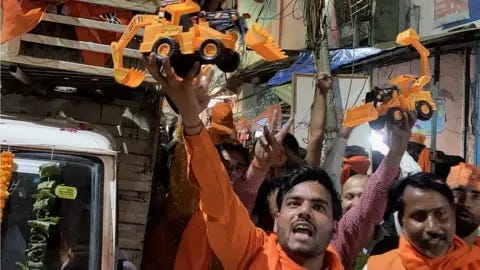
Authorities in Gorakhpur, Uttar Pradesh, demolished the Masoom Baba shrine, associated with Hazrat Baba Jafar Ali Shah, citing a drainage canal widening project. The demolition continues a well-documented pattern: in BJP-ruled states since 2022, hundreds of mosques, shrines, and Muslim-owned properties have been demolished under anti-encroachment or development campaigns. Chief Minister Yogi Adityanath’s bulldozer has become a literal campaign symbol, shown at political rallies. When a bulldozer becomes a campaign symbol, it signals which communities the state regards as its primary constituents. The right to maintain religious heritage and equal application of state power are both eroded when demolitions follow these lines.
Indonesia’s educated women outperform men
A March 2026 analysis by Kiroyan Partners reframed Indonesia’s female labour gap as an economic emergency rather than a social issue. Women’s labour force participation reached 56.7% in 2025, but it still trails men’s by 27 percentage points. Nearly 63% of working women remain in the informal economy without social protection. The 2022 ILO survey found 71% of workers experienced workplace harassment. McKinsey estimates the gender gap costs the economy $135 billion annually. When structural barriers, not individual choice, determine who participates in the economy, that is an economic liberty deficit encoded in social norms and weak institutional protection. A 71% harassment rate is not background noise; it is a systematic exclusion mechanism.
Bangladesh’s new government is in power
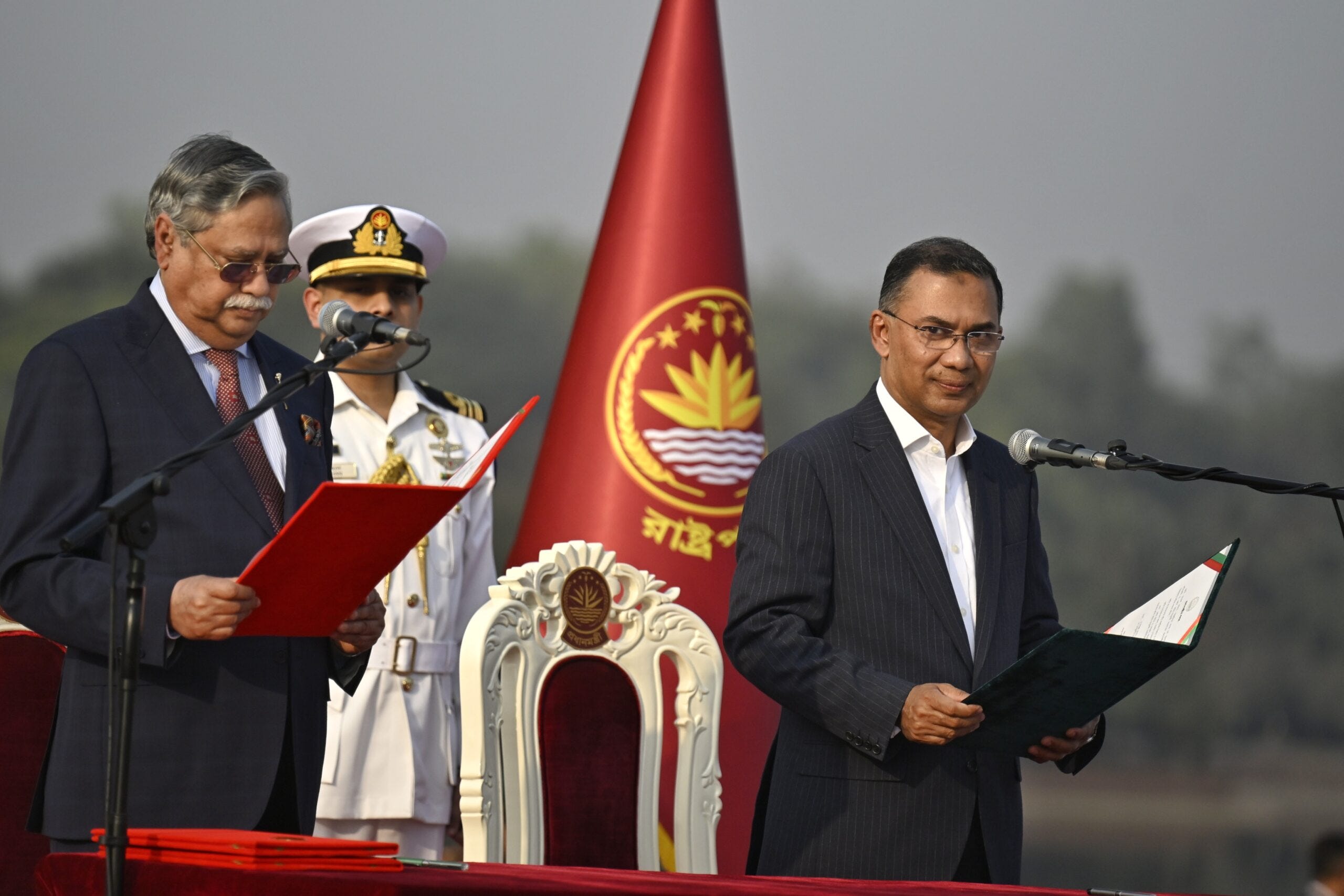
Bangladesh’s newly elected government, led by Tarique Rahman, has officially been sworn into power, marking a significant political transition for the country. Almost immediately, the administration has been confronted with pressing challenges, most notably a deepening energy crisis that has strained the electricity supply and economic activity. At the same time, humanitarian concerns, including conditions faced by Rohingya refugees, remain urgent. The government’s early days have been defined less by long-term reform and more by crisis management, as it seeks to stabilize essential services while setting the tone for its broader policy agenda.
Zone IV: Developed or Emerging Economies with Peace and Stability
Zone IV encompasses those countries that have achieved a baseline of political or security stability, and which are now focused on economic growth, globalisation and strategic alignment.
Malaysia launches FIKRALab
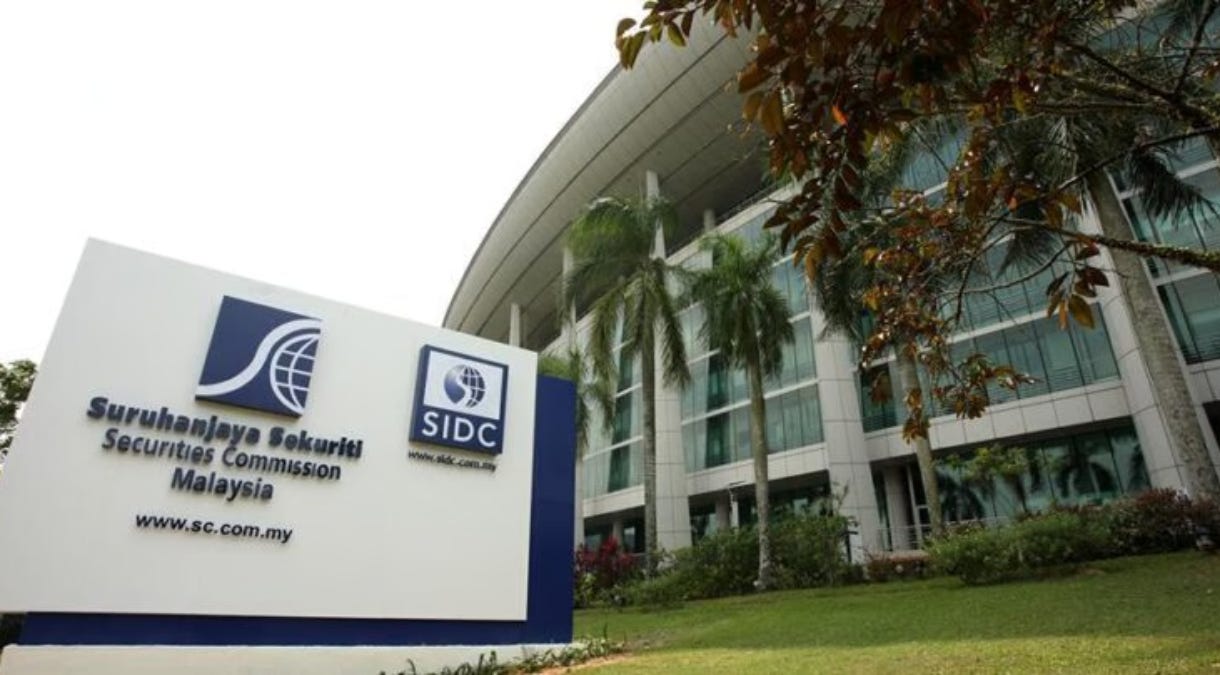
Malaysia’s Securities Commission launched FIKRALab on 26 March 2026 under its Capital Market Masterplan 2026–2030. Built on Maqasid al-Shariah, the lab develops financial instruments delivering ethical objectives and economic impact simultaneously. Malaysia holds 24% of global Islamic finance assets, a market projected to reach $5.96 trillion in 2026. The lab directly targets the country’s RM101 billion SME financing gap, positioning Islamic finance as a tool of economic inclusion, not merely a compliance checkbox for global halal markets. FIKRALab asserts that economic systems can be designed from within an Islamic value framework.
UAE women outperform men in AI course completion
A Coursera report released in March 2026 revealed a sharp paradox in the UAE’s AI education landscape: women complete Generative AI courses at rates 2.4 percentage points higher than men and yet represent only 24% of total GenAI enrolments, a share declining 1% annually. This runs counter to global trends, where women’s GenAI participation rose from 32% in 2024 to 36% in 2025. The UAE’s overall GenAI enrolment surged 344%, making it one of the world’s fastest-growing AI learning markets. As 92% of UAE firms prioritise AI skills while facing documented talent shortages, the structural exclusion of women from entry is a competitiveness failure. The barrier is course design and access pathways, not capability.
Article Pick
Read “Is Islam a Religion?” by Asma T. Uddin (A. Uddin - www.profuddin.com) , where she argues that labeling Islam as a political ideology rather than a religion is a growing strategy used to justify denying Muslims constitutional protections in the United States.
She highlights how this framing, seen in Texas controversies and political rhetoric, threatens broader religious freedom by allowing governments to selectively decide which beliefs deserve protection.
Thanks for sharing my piece!