

This edition of Edraak News covers two weeks that held almost everything simultaneously when the Taliban and the OIC read the same Islam differently; Esposito left the world insisting Islam be understood on its own terms; Syria writing its own constitution; the Central Bank replacing Assad’s face on the currency with wheat and roses; and Uzbekistan advancing Islamic finance frameworks, establishing an institutional council for the first time.
Edraak is our newsletter that honours the Muslim world’s diversity, reflected in the multitude of its socio-economic conditions and political institutions spanning across the continents. Traced back to its Arabic origins, إدراك encompasses timely and thorough insights into the developments of the Muslim-majority countries.
We organise the Muslim-majority countries into four zones as per their current conditions of conflict, transition, stability, and development.
Zone I: Experiencing War, Conflict, Oppression, Genocide
Taliban bans make-up, perfume, rings, and hair extensions at weddings as OIC’s 32-nation resolution declares these restrictions “inconsistent with Islamic values”
The Taliban issued a fresh directive banning women from wearing make-up, hair extensions, and perfume at weddings and engagement parties, declaring the exchange of rings a Western import forbidden under Islamic law. Simultaneously, OIC member states passed a 32-point resolution calling on Afghanistan to ensure “full, equal, and meaningful participation of women and girls in public life”, explicitly stating that Taliban restrictions are inconsistent with Islamic values. The same Islamic tradition invoked by Kabul to justify the bans was invoked by Islamabad, Ankara, and Kuala Lumpur to condemn them. The OIC resolution removes the Taliban’s most convenient justification that restrictions on women derive from Islam itself. When 32 Muslim-majority states formally declare those restrictions inconsistent with Islamic values, the theological claim is contested at its source.
El-Obeid: 500,000 civilians trapped under RSF drone siege
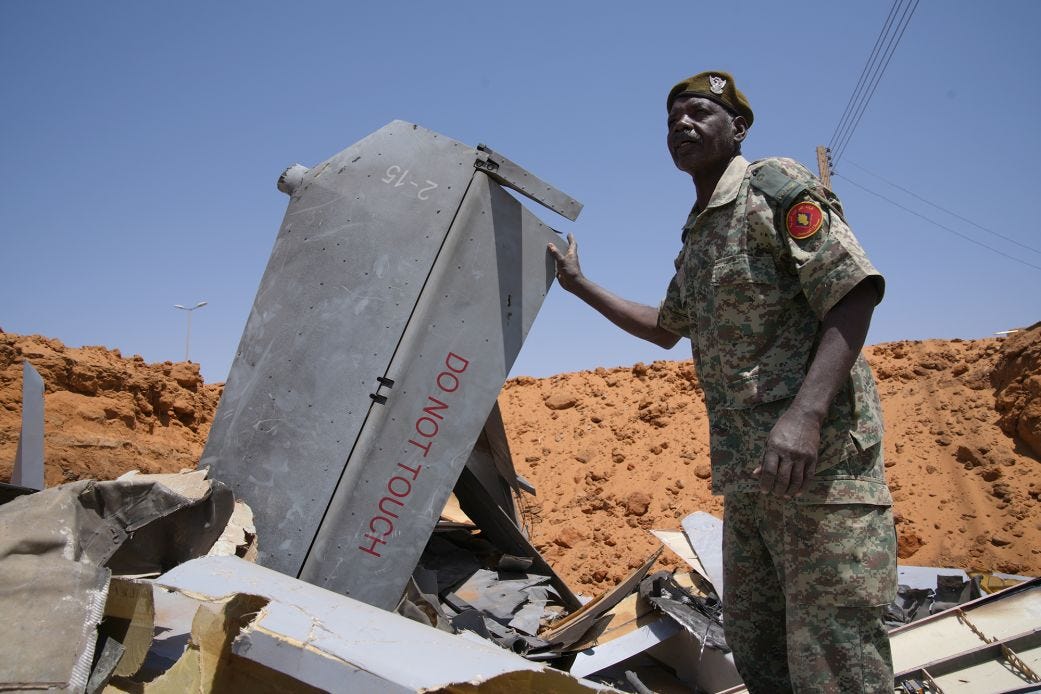
UN Human Rights Commissioner Türk’s office documented 15 drone strikes on El-Obeid, capital of North Kordofan, Sudan, killing at least 45 civilians. RSF drone strikes have hit the city’s main power station, fuel facilities, and the main highway out. On 24 July, 15 more civilians were killed in an RSF attack on Burbur south of El-Obeid. The UN warns conditions may soon match El-Fasher, where over 6,000 people were killed in the first three days of its fall. Half a million people, including 105,000 already displaced, have nowhere to flee.
Zone II: Transition toward Peace and Stability
Syria writing its own new chapter
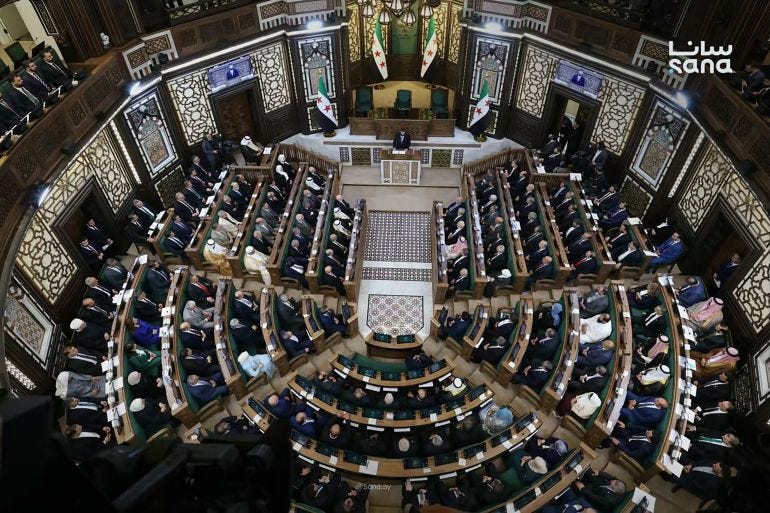
Syria is at the dawn of a new morning. The 210-member People’s Assembly convened in Damascus for its first session since Assad’s fall. The parliament will serve a 30-month transitional term, draft a permanent constitution, and approve the country’s budget, making it the first genuine legislative body Syria has had in over five decades. The Central Bank confirmed in July that approximately 80% of old Syrian currency had been replaced since January 1 with redesigned notes carrying roses, wheat, olives, and oranges. Two zeros were removed from the denomination; Assad’s portrait was removed from history. The old pound ceases to be legal tender after 31 July. Above all this, the arrival of UN Secretary-General António Guterres in Damascus on 25 July, the first visit by a UN chief in 17 years, confirmed what the parliament and the currency together signal; calling it “the pillar of stability of the Middle East,” Guterres urged full international reconstruction support, visited Saydnaya Prison, reaffirmed that the Golan Heights “cannot be taken away,” and declared the country stands at “a moment of possibility.”
Zone III: Stable but Economically Struggling
HRW documents systematic criminalisation of Indigenous land defenders in Indonesia, charged with “spreading communism” for contesting company land grabs
HRW’s 40-page report Grabbed Land, Silenced Justice documents how Indonesian police respond to complaints filed by company officials and politicians by opening criminal cases against the Indigenous villagers and activists who contested the land seizures in the first place. Charges range from defamation to “spreading communism” to trespass. In one documented case, a villager who reported illegal deforestation was prosecuted for criminal defamation after the logging company whose activities he reported filed a complaint. Indonesia’s criminal code and electronic information laws have become the primary tools for converting land rights claims into criminal exposure.
Uzbekistan establishes first Islamic Finance Council under the Central Bank Uzbekistan established a dedicated Islamic Finance Council under the Central Bank this week, making it the first institutional body in the country specifically tasked with coordinating the development, regulation, and supervision of Islamic financial services. The move follows Uzbekistan’s Islamic Finance Law signed in March 2026 and in force from June 2026, which exempts Sukuk and Islamic leasing from VAT, exempts Shariah-compliant deposits from personal income tax, and has already unlocked $1 billion in Gulf capital. Ten banks are currently preparing Islamic banking windows. The Council provides the regulatory architecture those windows will require to operate with legal clarity and investor confidence.
Zone IV: Developed or Emerging Economies
Malaysia detains over 100 Rohingya refugees seeking shelter at UNHCR, arrests made at the UN agency’s own gates
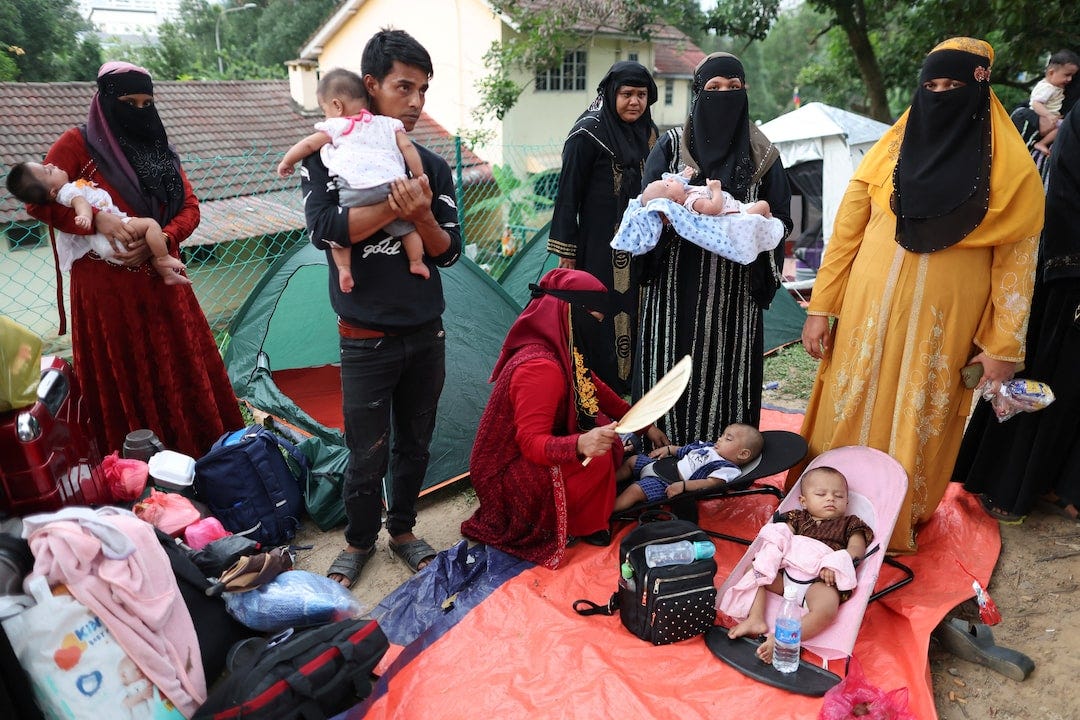
Malaysian authorities detained over 100 Rohingya refugees who had gathered at UNHCR’s Kuala Lumpur offices seeking protection and registration, arresting them outside the UN agency’s gates. The detentions raise acute concerns about refoulement: Malaysia is not a signatory to the 1951 Refugee Convention and has no domestic legal framework protecting refugees. Detainees face deportation to Myanmar, where the Rohingya remain stateless and subject to documented genocide. The arrests come weeks after Malaysia’s new digital refugee registration system replaced UNHCR-issued cards, leaving hundreds in a registration gap and heightening detention risk for those not yet enrolled in the government’s biometric database.
John L. Esposito, the scholar who spent 50 years insisting Islam be understood on its own terms, passed away
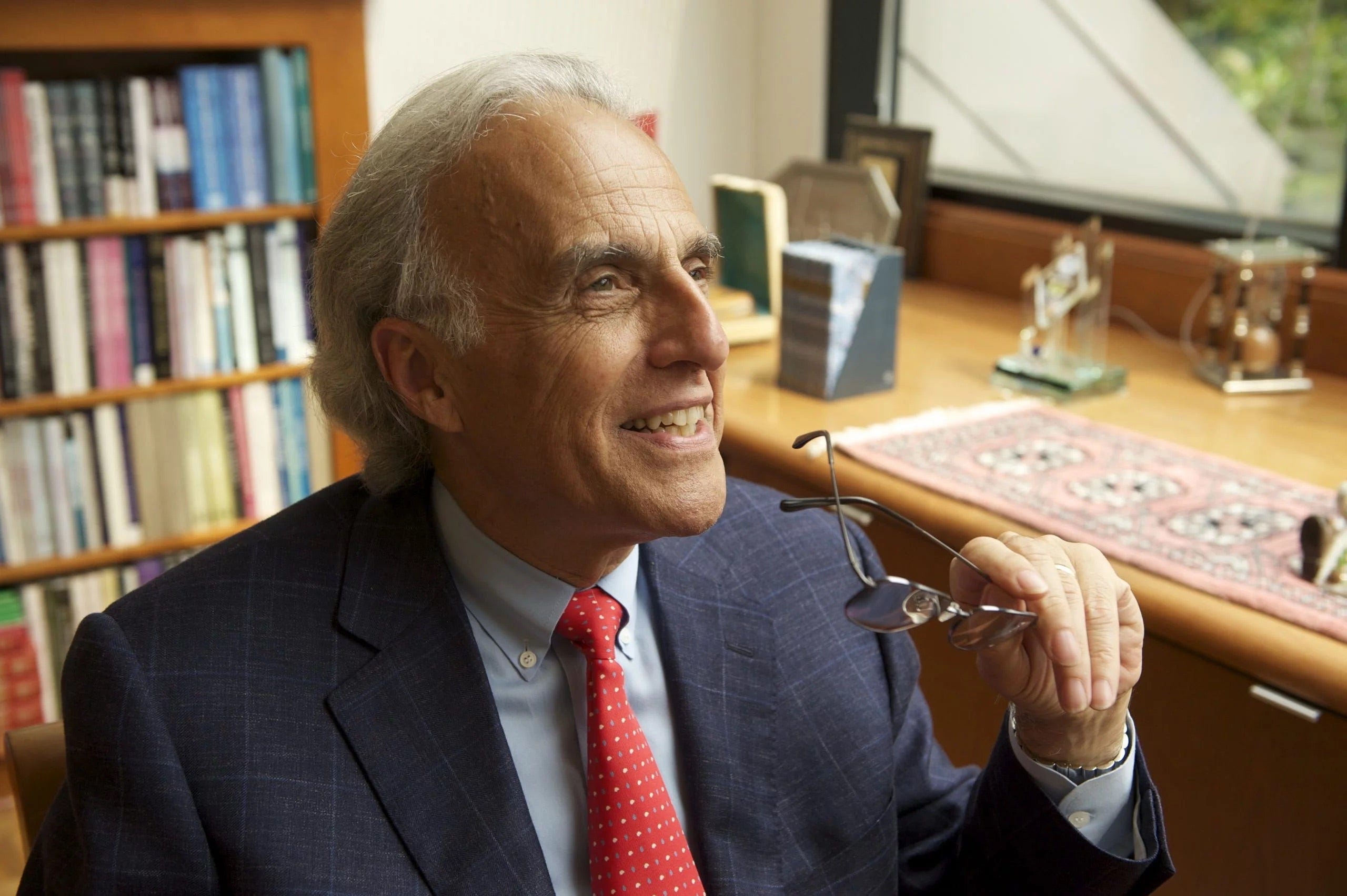
Professor John L. Esposito, the Distinguished University Professor Emeritus of Religion, International Affairs, and Islamic Studies at Georgetown, and the founding director of the Prince Alwaleed Bin Talal Center for Muslim-Christian Understanding, died on 15 July 2026 at 86, from complications from heart surgery. A towering intellectual who published more than 55 books, he uniquely shaped the modern study of Muslim societies during the late 20th and early 21st century, particularly at moments of sharpest friction: the 1979 Iranian revolution, 9/11, and the post-Gaza reckoning in his final year. Over more than five decades, he sought to correct Western misconceptions about Islam and build lasting channels of dialogue between Muslims and the societies around them. Malaysian PM Anwar Ibrahim described him as “an influential scholar who built the intellectual foundations for a deeper understanding of Islam in the West.” He directed the Bridge Initiative on Islamophobia until he departed from this world.
