

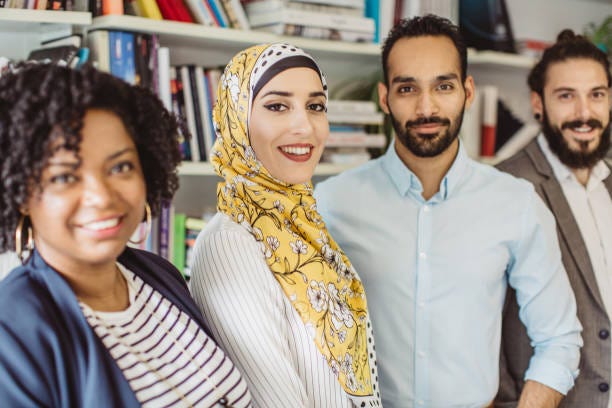
Something is changing across the Muslim world. It is not loud, and it does not always appear in political debates or official statements. Instead, it shows up in smaller spaces. University classrooms, reading groups, podcasts, late-night discussions, and sometimes even casual conversations after prayers. These spaces are increasingly becoming hubs for Muslim intellectual movements, where people are asking questions again. Not necessarily to challenge tradition, but to understand it more deeply.
This shift reflects a movement shaped by dialogue, reinterpretation, and a renewed interest in liberty. Rather than reacting only to global pressures, many Muslim scholars, students, and thinkers involved in Muslim intellectual movements are engaging in conversations about what freedom, governance, and identity mean within Islamic traditions today.
These discussions feel different from intellectual history. In the twentieth century, many Muslim thinkers were responding to colonialism, political upheaval, and identity crises. Figures like Jamal al-Din al-Afghani, Muhammad Abduh, and Muhammad Iqbal were trying to reconcile modernity with Islamic thought. Their work focused on reform and revival, laying the foundations for what would later evolve into modern Muslim intellectual movements.
Today, however, the tone feels more reflective. The conversation is no longer only about defending identity. Instead, Muslim intellectual movements today focus on rediscovering academic confidence and intellectual independence.
Revisiting Reform and Renewal
Muhammad Iqbal’s work continues to influence many of these conversations. In The Reconstruction of Religious Thought in Islam, Iqbal emphasized that Islamic thought should remain dynamic. His ideas continue to inspire Muslim intellectual movements that emphasize reinterpretation as continuity rather than rupture. For Iqbal, intellectual freedom was necessary for Muslim societies to grow.
These ideas resonate strongly today. Many scholars and students participating in Muslim intellectual movements are returning to similar questions. What does justice look like in contemporary Muslim societies? How should Muslims think about governance, ethics, and liberty?
These discussions do not always happen in formal settings. Sometimes they begin in simple ways. A student reads Ibn Khaldun and starts wondering how his ideas relate to modern political systems. Another connects those ideas to current debates about governance. Through these informal exchanges, Muslim intellectual movements gradually take shape.
Returning to Classical Islamic Thought
Another noticeable trend within Muslim intellectual movements is the renewed interest in classical thinkers. Figures such as Ibn Rushd and Ibn Khaldun are being revisited by scholars and students alike. Ibn Khaldun’s ideas about social cohesion and political decline, for example, feel surprisingly relevant today. His observations about leadership, legitimacy, and social unity often appear in discussions emerging from Muslim intellectual movements. This return to classical scholarship suggests continuity rather than rupture. Many Muslim intellectual movements today are not abandoning tradition. Instead, they are rediscovering it. Wael Hallaq, in The Impossible State, argues that Islamic traditions remain flexible because they allow reinterpretation within moral frameworks.
Digital Spaces and New Intellectual Communities
Technology has also played an important role in shaping Muslim intellectual movements. Access to knowledge has expanded dramatically. A student in Karachi can listen to a lecture from Kuala Lumpur, read an essay published in London, and join a discussion happening in Cairo.
Sometimes the conversations are simple. A group of friends discussing a book. Someone sharing a lecture. Someone else questioning an interpretation. These small interactions may seem informal, but they often contribute to the growth of Muslim intellectual movements.
This kind of intellectual exchange reflects a quieter transformation. It is not organized in the traditional sense, but it is still influential in shaping Muslim intellectual movements across regions.
Islam and Liberty Network and Edraak
Alongside these informal discussions, platforms such as the Islam and Liberty Network and Edraak have contributed significantly to Muslim intellectual movements. These initiatives focus on encouraging dialogue about governance, freedom, and social development in Muslim societies.
Edraak, in particular, represents a space where Muslim intellectual movements intersect with discussions about liberty and intellectual renewal. Rather than presenting fixed answers, the platform encourages discussion and thoughtful engagement.
What makes these platforms important is not just their content, but the conversations they generate. A reader encounters an idea, reflects on it, and begins discussing it with others. These small interactions often strengthen Muslim intellectual movements organically.
Youth-Led Conversations
Younger generations are also shaping Muslim intellectual movements. Students and young scholars are engaging with Islamic thought in new ways. They are reading classical scholarship while also engaging modern philosophy and social theory.
These discussions often begin informally. A university seminar. A podcast discussion. A reading group. Many of these youth-led initiatives are becoming important spaces for Muslim intellectual movements to grow.
This openness suggests intellectual confidence. It reflects a willingness to engage with different perspectives while remaining grounded in tradition — a defining characteristic of contemporary Muslim intellectual movements.
Liberty and Intellectual Confidence
A central theme in many Muslim intellectual movements is liberty. Not only political freedom, but intellectual openness. The ability to question, reflect, and reinterpret ideas.
Historically, Islamic scholarship encouraged debate. Multiple schools of thought developed through scholarly dialogue. Contemporary Muslim intellectual movements appear to be rediscovering this tradition.
These conversations are not always smooth. There are disagreements and tensions. Some worry about reinterpretation. Others see intellectual stagnation as a greater concern. These debates are part of how Muslim intellectual movementsevolve.
A Quiet Transformation
What makes this moment unique is how quiet it is. There is no single movement or central figure. Instead, Muslim intellectual movements are emerging through conversations happening across different spaces.
Students reading. Scholars writing. Communities discussing. These small interactions continue shaping Muslim intellectual movements.
Sometimes it starts with curiosity. Sometimes with uncertainty. But over time, these conversations shape intellectual life.
This new era of intellectual movements in the Muslim world reflects dialogue, reflection, and a growing commitment to liberty. Many of these developments are best understood as part of broader Muslim intellectual movements.
And perhaps that is what makes it significant. Because lasting intellectual change often begins quietly.