
Indonesia and Islam: Can the World’s Largest Muslim Country Model a Different Kind of Freedom?
By Zunab Zehra

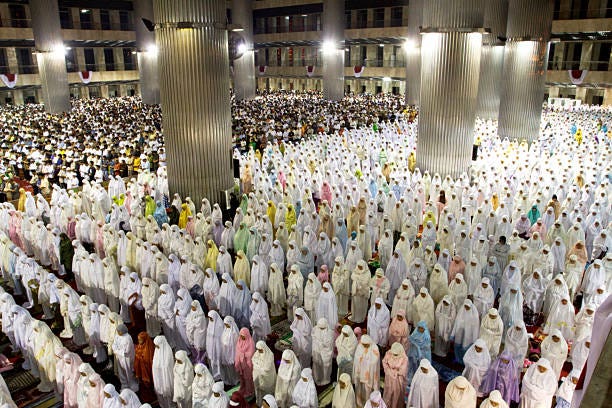
Discussions about Islam and liberty tend to start from the same assumption: that the two sit uneasily together. It’s a neat argument, but it leans heavily on a narrow set of examples. What rarely enters the conversation is Indonesia, even though it is the largest Muslim-majority country in the world and one of the few places where these questions have played out differently. For many Indonesians, this balance is part of everyday life rather than an abstract debate.
Indonesia doesn’t fit the usual labels. It isn’t a Western-style liberal democracy in the strict sense, but it also isn’t governed as a religious state. What exists instead is something less tidy, a system shaped by negotiation rather than a single defining principle. That makes it harder to categorize, but more useful to examine.
A State Built on Balance
The foundation of the Indonesian state lies in Pancasila, a framework that affirms belief in God without handing authority to any single religious interpretation. That balance matters. It allows Islam to remain visible and influential in public life without becoming the sole basis of political power.
This doesn’t mean religion is sidelined. It means it operates alongside other forces—law, institutions, and competing social interests. The result is not perfect neutrality, but a kind of equilibrium that has proven more durable than many expected.
Democracy, Without Pushing Religion Out
Indonesia’s shift after the fall of Suharto in 1998 is often described as a successful democratic transition, and in many ways it was. Elections became competitive, political participation widened, and power could change hands.
What stands out, though, is that this shift didn’t require religion to retreat into the private sphere. Islamic parties remained part of the system. Religious language continued to appear in public debate. And yet, this did not translate into a unified demand for an Islamic state.
Instead, what emerged was something more complicated: a system where religious and political ideas coexist, compete, and adjust to each other. From a liberty perspective, that matters. It suggests that freedom doesn’t depend on removing religion, but on preventing any single authority, religious or political, from becoming absolute.
Why Civil Society Matters
A big part of this balance comes from civil society. Organizations like Nahdlatul Ulama and Muhammadiyah are not small or symbolic. They shape how Muslims and Islam are understood in everyday life.
More importantly, they act as a kind of counterweight. They don’t eliminate disagreement, but they make it harder for one rigid interpretation to dominate everything else. That, in itself, is a form of protection for liberty.
Freedom here isn’t just about laws on paper. It’s about whether there are enough voices and institutions to prevent power from concentrating too easily.
Where the Tensions Show
None of this means Indonesia has resolved the question of liberty. It hasn’t.
Blasphemy laws remain controversial. Some regions enforce more restrictive local rules. Social pressure can still narrow what people feel comfortable saying or doing. These are real constraints, and they matter.
But they exist alongside open elections, active media, and visible political contestation. That contrast is what defines the Indonesian case. Freedom exists, but it is uneven and constantly being negotiated.
Moving Past the Usual Binary
What Indonesia disrupts is the simple binary that often frames these discussions: either a liberal system with minimal religious influence, or a religious system with limited freedom.
Indonesia sits somewhere in between. Not neatly, not perfectly, but consistently enough to challenge the assumption that there are only two paths.
That doesn’t make it a model in the clean sense. Its history, diversity, and institutions are specific. But it does make it evidence that the relationship between Islam and liberty is not fixed. It depends on how power is distributed and how societies choose to manage difference.
A Different Way to Think About Liberty
If there’s a takeaway from Indonesia, it’s not that it has solved the problem. It’s that it approaches it differently.
Liberty here isn’t the result of removing religion from public life. It comes from limiting how much control any single force can exercise, whether that force is political or religious.
That balance is imperfect and, at times, fragile. But it is real.
And in a conversation that often relies on sweeping claims, that alone makes Indonesia worth taking seriously.