

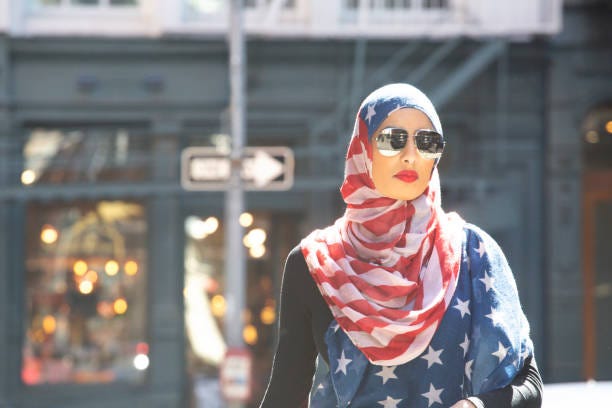
The Meaning of the Hijab
The hijab is one of those things people think they already understand. It shows up in headlines, debates, and arguments about Islam, and almost everyone seems to have a fixed opinion about it. But once you actually listen to people, it becomes clear that the meaning of the hijab is not fixed at all.
For some, it is tied to modesty and a sense of closeness to religion. For others, it feels like something shaped more by culture than faith. And then there are those who see it mainly through politics, either as a sign of control or as a statement of identity. The problem is that these interpretations are often imposed from the outside, without much attention to the lives of the people who actually wear the hijab.
Muslim Women and Everyday Choice
When people talk about the hijab, they often say they are speaking about Muslim women, but they rarely let them speak for themselves. Instead, the conversation gets divided into two extremes. Either the hijab is described as completely oppressive, or it is presented as purely empowering.
Reality is messier than that. Some women actively choose to wear the hijab because they see it as part of their Islamic identity. Others grow into it over time because of family or social expectations. And some struggle with it, moving between wanting to wear it and questioning it.
This does not mean choice does not exist. It means choice is shaped by surroundings. As Leila Ahmed, who traces how the veil has shifted in meaning across early Islamic societies, colonial debates, and modern revival movements, has shown, the hijab has carried different meanings in different periods. In A Quiet Revolution, she notes how the resurgence of veiling in the late twentieth century cannot be reduced to a single cause, but reflects a mix of faith, identity, and political context. It has not always meant the same thing, and it still does not.
Islam, Text, and Obligation
Within Islam, the hijab is often discussed as an obligation, but even here there is more than one view. Different scholars read the same text differently. Some see covering as clearly required, while others focus more broadly on the idea of modesty without reducing it to a specific form.
What often gets lost is that interpretation has always been part of Islamic thought. There has never been just one way of understanding these issues. But in many communities today, that space for disagreement feels smaller. The discussion becomes rigid, and questioning is seen as a problem rather than part of the tradition.
Gender and Pressure in Society
The debate around the hijab is also tied to gender in a very real way. Expectations about modesty are not applied equally. Women are more visible, more judged, and more likely to be told what they should or should not do.
In some places, choosing not to wear the hijab can lead to criticism or exclusion. In others, wearing it can create barriers. Laws in countries like France have introduced forms of ban on religious dress in public settings, often in the name of secular values. But these policies can limit access to education or work for those affected.
So the pressure comes from both directions. In one setting, there is pressure to cover. In another, pressure to uncover. Either way, the space for personal decision becomes smaller.
Islamophobia, Feminism, and Confusion
The conversation becomes even more complicated when it is shaped by islamophobia. The hijab is often used as a symbol to criticize Islam as a whole, which pushes some people to defend it more strongly, sometimes without acknowledging real issues.
At the same time, debates within feminism do not always agree. Some feminist voices see the hijab as something oppressive by definition. Others argue that telling women what not to wear is just another form of control. Neither side fully captures the whole picture.
The problem is when these arguments stop listening. When the discussion becomes about proving a point rather than understanding lived experiences, it stops being useful.
Beyond the Binary
It is tempting to look for a clear answer. Is the hijab a free choice or a form of pressure? But that question is too simple. In reality, it can be both, depending on the situation.
What matters more is whether women actually have the ability to decide for themselves. That includes freedom from family pressure, social judgment, and state control. Without that, talking about choice does not mean much.
A More Honest Way to Look at It
The hijab is not just about clothing. It sits at the intersection of religion, identity, and power. Treating it as a single, fixed symbol ignores how people actually experience it in their daily lives.
A more honest perspective would accept that there is no single story here. Some women wear the hijab with full conviction. Others feel pushed into it. Some remove it and face backlash. Others choose it in response to public hostility.
If there is a common thread, it is this. The real issue is not whether women wear the hijab, but whether they are given the space to decide what it means for them.