

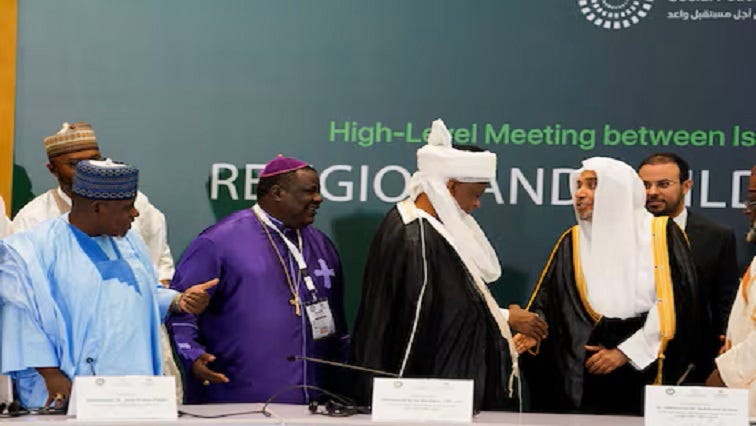
Religion is often misused by political leaders and extremists for their own gain. However, Nigeria is making history by breaking barriers and fostering religious harmony through the development of organized bodies for dialogue.
This new approach will provide a platform for religious leaders to address problems and find solutions through discussion, helping to prevent minor disagreements from escalating into major conflicts.
Nigeria is divided largely along religious lines, with the north predominantly Muslim and the south mostly Christian. In the central region, both communities coexist. Historically, politicians have exploited these religious differences to win elections, while extremists have used them to justify violence.
Despite this, there is hope for change as Muslim and Christian leaders have established a new interfaith organization aimed at promoting understanding and cooperation.
To understand why this initiative matters, let’s take a look at the history of Nigeria. Nigeria is Africa’s most populous country, with a population of over 200 million people. The population is evenly split between Christians and Muslims, and in the central region of the country, both groups coexist. This religious diversity can be a strength; however, political issues and the greed for power have complicated this relationship.
For years, extremist groups such as Boko Haram have been terrorizing the northeast region of Nigeria. Although they claim to be Muslims, they have killed both Muslims and Christians. These communities are distrustful of each other because of what they have done. Many Christians view Muslims as terrorists and Muslims view Christians as misled and blame them for the acts of the terrorists.
Many people tend to vote for a political party because of their religion, and not because of the party’s positive work. They are afraid that if another religious party is elected, then they might lose their identity. Politicians use people’s fear for their own benefit and manipulate them with religion. If, for example, a Christian party wins, Muslims may feel left out; if a Muslim party wins, Christians may feel threatened. This cycle continues on and on.
Interfaith cooperation was done after events, as the leaders were called upon to meet after the bombing or the massacre, talk about peace, take pictures, then go back home and do nothing about it. This new effort is unique in that religious leaders will not only meet once, but on a regular basis. They aim to address issues proactively, working to resolve problems before they escalate into larger conflicts.
Religious liberty is not only about being able to enter a mosque or church without fear. It encompasses the freedom to express your ideas, live your life without feeling marginalized, and participate in public discourse. This is what the new interfaith body aims to protect.
The new initiative creates a safe space for religious leaders to meet regularly. They don’t have to argue about their theological differences, nor do they need to change each other’s beliefs. However, they must agree on one important principle: to treat each other not based on their religion, but as citizens of the same country.
This isn’t the first time Nigeria has attempted to form a peace group. Previous efforts have all failed. It’s important for these initiatives to focus on rural areas, as many of the issues originate in villages rather than big cities. The initiative should involve local imams and pastors since politicians often exploit these communities for their own benefit. It may take time, but consistency is key. Engagement should continue regularly, even in the absence of crises.
Nigeria’s new interfaith body is not a miracle; it will not erase years of hatred or stop violence, but it is a crucial step. The initiative acknowledges a simple truth: people may disagree, but disagreement does not mean violence or hatred. It establishes a permanent forum where Muslims and Christians must sit together not just after a bombing or a massacre, but every week, every month, even when times are calm. That is new, and that is important.
This initiative will face resistance. Some politicians want division. Some extremists want war. But the leaders who started this body have chosen a different path. They have chosen to build instead of burn.