

This newsletter covers developments from 17 June 2026 to 24 June 2026. Israel demolished homes in 45 days that previously took five years to contest. Jordan hanged six men through a court designed for war, applied to drug crimes. Bangladesh wrote a human rights commission that cannot investigate the forces committing the violations. Uzbekistan arrested the man documenting the abuse on a complaint filed by the person he was documenting.
Edraak is our newsletter that honours the Muslim world’s diversity, reflected in the multitude of its socio-economic conditions and political institutions spanning across the continents. Traced back to its Arabic origins, إدراك encompasses timely and thorough insights into the developments of the Muslim-majority countries.
We organise the Muslim-majority countries into four zones as per their current conditions of conflict, transition, stability, and development.
Zone I: Experiencing War, Conflict, Oppression, Genocide
Palestine: Israel escalates Silwan demolitions, eviction process compressed from five years to 45 days
Israeli authorities have demolished over 50 homes in East Jerusalem’s Silwan district since October 7, 2023. In March and April of 2026, over 145 residents, including 52 children, were displaced. Of 587 total Palestinians displaced since October 7, a quarter were displaced during the Iran war. Over 2,000 more face displacement in what Ir Amim calls potentially the largest wave of East Jerusalem expulsions since 1967. A resident told HRW proceedings now take 45 days; a lawyer said sometimes one working day. One family was barred from retrieving their gold and cash from a property being demolished. The ICJ confirmed this constitutes a forcible transfer prohibited under the Fourth Geneva Convention. Impunity is the operating condition, not the exception.
Zone II: Transition toward Peace and Stability
Syria: Mob Justice in Assad-Era Crackdown
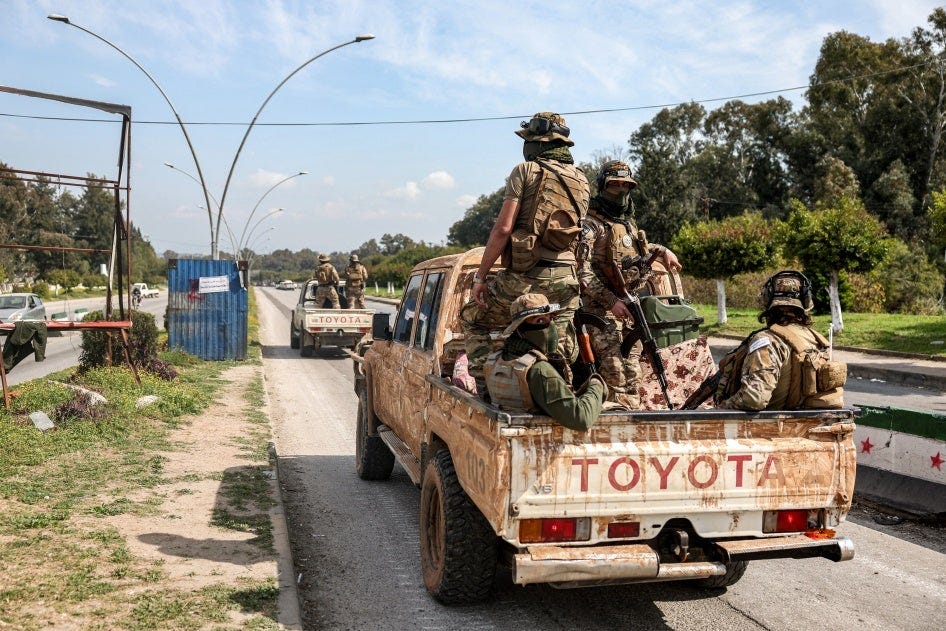
Protests demanding accountability for Assad-era crimes spread across Aleppo, Idlib, Deir Ezzor, Raqqa, and Damascus, turning violent against Alawi communities. What began as legitimate demands quickly turned into vigilante attacks on Alawi communities. Alawi communities are the religious minority historically associated with Assad’s regime. In Damascus, masked men stormed shops and beat residents. In Idlib, two men accused of pro-government ties were dragged through the streets and killed. This is precisely what happens when transitional frameworks lack legitimacy. The Syrian government holds nearly 6,000 Assad-era detainees, but without any clear legal framework for trying them. The 6,000 detainees signal that the new authorities risk reproducing the Assad-era arbitrary detention under a different banner. Revenge dressed as justice poisons any genuine accountability process.
Zone III: Stable but Economically Struggling
Pakistan’s Dr Mahrang Baloch sentenced to life imprisonment on 22 June after being tried in a “faceless court” inside Quetta Jail, two contradictory FIRs on record
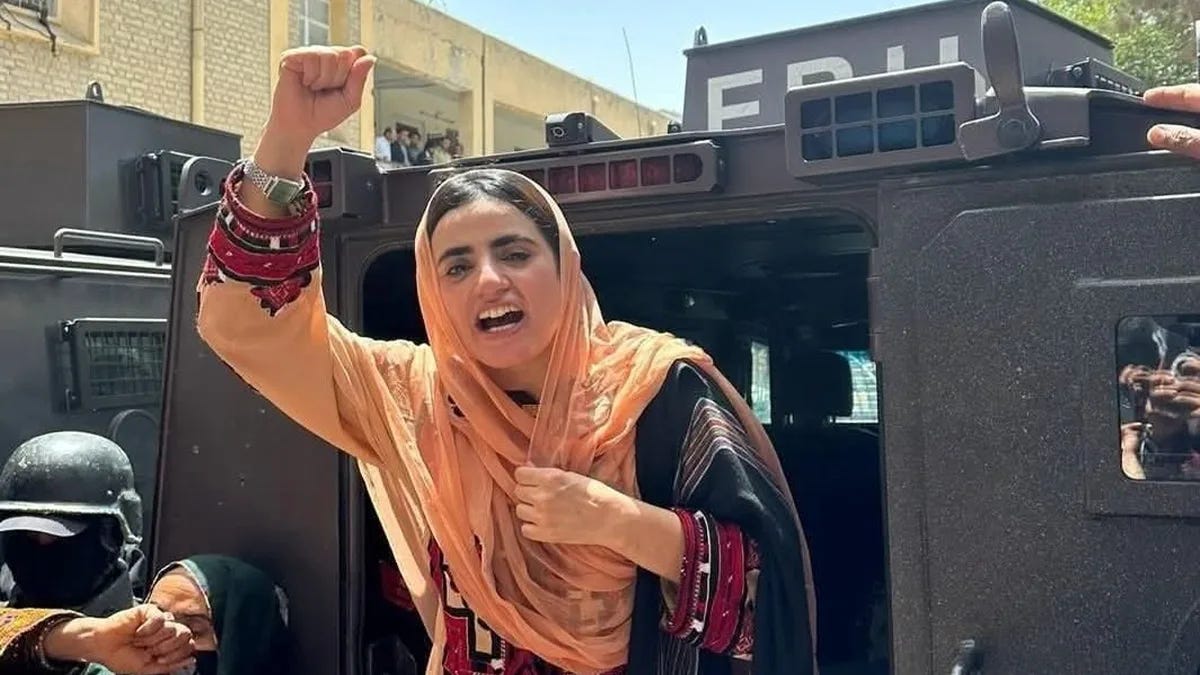
An Anti-Terrorism Court in Quetta sentenced BYC chief organiser Dr Mahrang Baloch, TIME100 Next 2024, BBC 100 Women 2024, Nobel Peace Prize nominee, to life imprisonment on 22 June, alongside Sibghatullah Shahji and two others, for the 2024 death of an FC soldier during a Gwadar protest. The trial was conducted inside Quetta Jail through a “faceless court“ with anonymous judges and undisclosed witnesses. Two FIRs in the case record the soldier’s death on different dates. The person directly accused of the killing was acquitted; those who delivered speeches were sentenced to life. Protestors in Balochistan called a complete shutter-down strike on 24 June. PEN Norway and the Narges Foundation jointly condemned the verdict. Mahrang Baloch’s only documented instruments were peaceful protests and long marches.
Bangladesh’s NHRC Bill 2026 lets security forces investigate themselves
Over 30 civil society organisations called on Bangladesh’s government to revise the NHRC Bill 2026, warning it regresses from the 2025 ordinance it replaced. The bill requires the NHRC to rely on reports prepared by “the chief of the force concerned” when investigating security force violations, which is self-investigation by definition. It removes mandatory representation of women and ethnic minorities, places ministers of law and home affairs on the selection committee, and eliminates functions including protecting human rights defenders, engaging civil society, and reviewing draft legislation. The 2025 ordinance was scrapped in April 2026; this bill replaces it. Bangladesh’s most serious documented violations involve security forces. A bill that shields precisely those actors from independent scrutiny, at precisely this moment, is a structural choice, not an oversight.
Uzbekistan’s Human rights defender Muminov suffocated with plastic bag in custody, arrested for documenting the same officials who filed the complaint
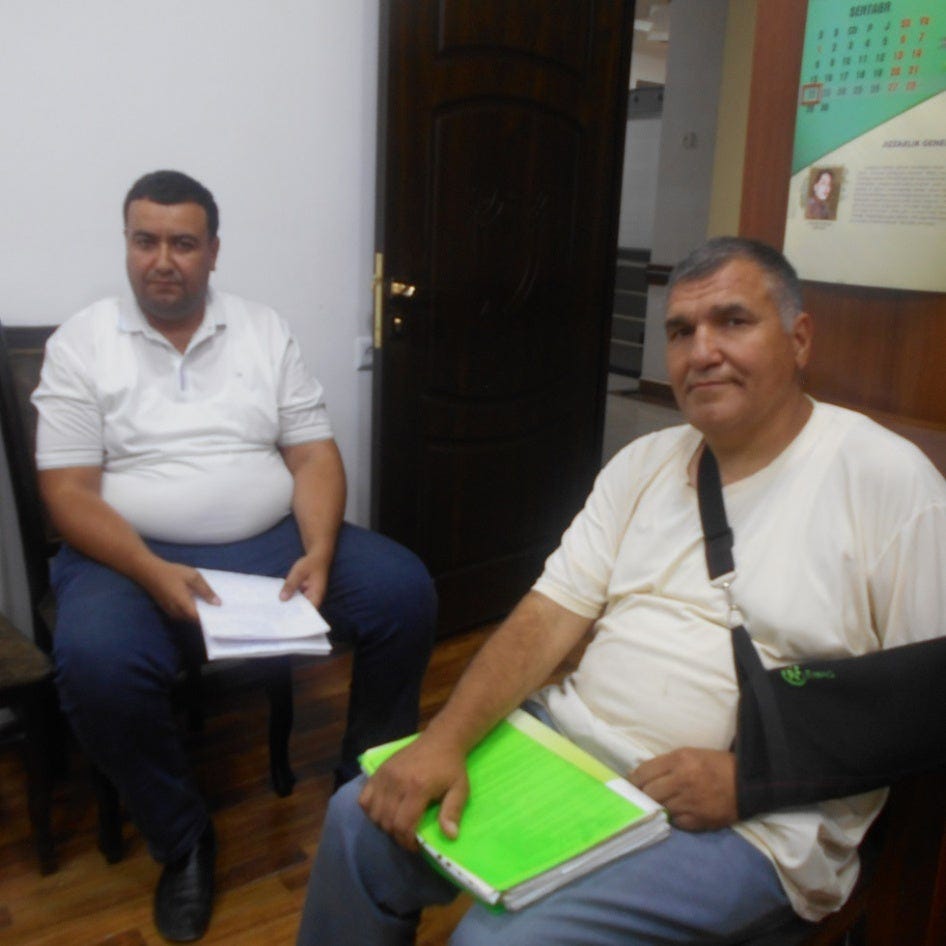
Javokhir Muminov of Ezgulik Human Rights Society was arrested on 5 June alongside farmer Djura Akbarov on an extortion complaint filed the same day by two bailiffs who had previously broken Akbarov’s arm. One bailiff transferred a medical expense payment that day; authorities called it extortion. Muminov recently told his lawyer that officers suffocated him with a plastic bag to coerce a confession. His lawyer was physically assaulted during a prison visit. No forensic examination has been ordered despite two formal complaints to the Karshi Prosecutor’s Office. The legal system is being used as a retaliatory instrument; when the complainant is a state official, and the charge is framing a medical payment as extortion, the abuse of process is complete and deliberate.
Zone IV: Developed or Emerging Economies with Peace and Stability
Jordan executes six men on 21 June, making it the first mass execution since 2017, all tried before the military State Security Court
Jordan carried out six hangings on 21 June. All were tried before the State Security Court, a military institution with jurisdiction over terrorism, drugs, and espionage. Jordan’s NCHR documented 276 people under death sentences in 2024. Executions received Cabinet endorsement and royal decree. HRW’s Adam Coogle called on Jordan to “renew its moratorium on the death penalty.” Here, the same court handles terrorism and narcotics; the infrastructure for capital punishment expands beyond its stated purpose into ordinary criminal jurisdiction.
Article Pick

Edraak Weekly Roundup:
Edraak Essay:
Edraak Blogs: