

This edition moves between extremes that the Muslim world has grown accustomed to holding simultaneously. Across seven countries, governments legislated, intervened, silenced, and occasionally invested with their own image of what order requires. Somewhere between a legal guide quietly published in India, a decree issued in Kabul, a psychiatric ward outside Almaty, and a stimulus package in Dubai, the shape of the Muslim world comes into focus, not as a headline, but as a pattern.
Edraak is our newsletter that honours the Muslim world’s diversity, reflected in the multitude of its socio-economic conditions and political institutions spanning across the continents. Traced back to its Arabic origins, إدراك encompasses timely and thorough insights into the developments of the Muslim-majority countries.
We organise the Muslim-majority countries into four zones as per their current conditions of conflict, transition, stability, and development.
Zone I: Experiencing War, Conflict, Oppression, Genocide
Burkina Faso suspends its largest student union for criticising the junta
Burkina Faso’s government suspended the country’s largest student union after it published a statement criticising the Traore junta’s governance, and a prosecutor has opened a criminal investigation into the authors. This follows Traore’s April declaration that “democracy isn’t for us,” the dissolution of the electoral commission, and the banning of all 100+ political parties. When student unions, being the last organised civic space in many authoritarian states, are suspended for issuing statements, political liberty has contracted to the point where disagreement itself is criminal. Burkina Faso has gone from military takeover to the criminalisation of academic opinion in under four years.
Zone II: Transition toward Peace and Stability
HRW outlines what rights observers are watching in Armenia’s elections — assembly, expression, and inclusion are the three pressure points
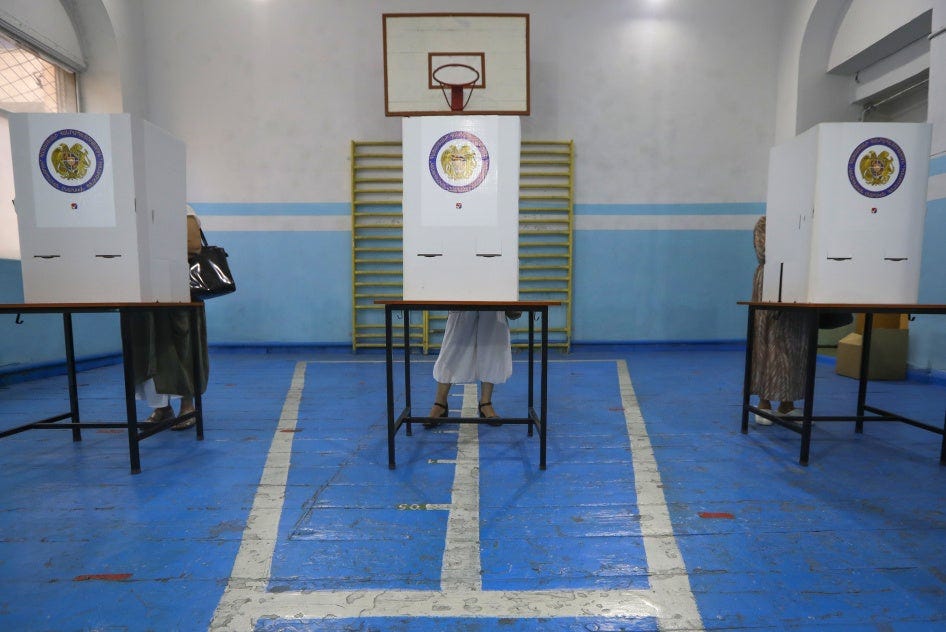
Human Rights Watch published a pre-election monitoring framework for Armenia’s upcoming elections, identifying freedom of assembly, freedom of expression, and the inclusion of minorities, particularly ethnic Azerbaijanis, as the three structural vulnerabilities most likely to be tested. Armenia’s democratic trajectory since the 2018 Velvet Revolution has been broadly positive but remains fragile: civil society space exists but is contested, and the post-2020 war trauma has produced nationalist pressures on speech. Political liberty is never static; Armenia’s elections are a live test of whether its democratic gains can be institutionalised under pressure.
Journalist Rashan Oshi sentenced to one year and fined $16,653
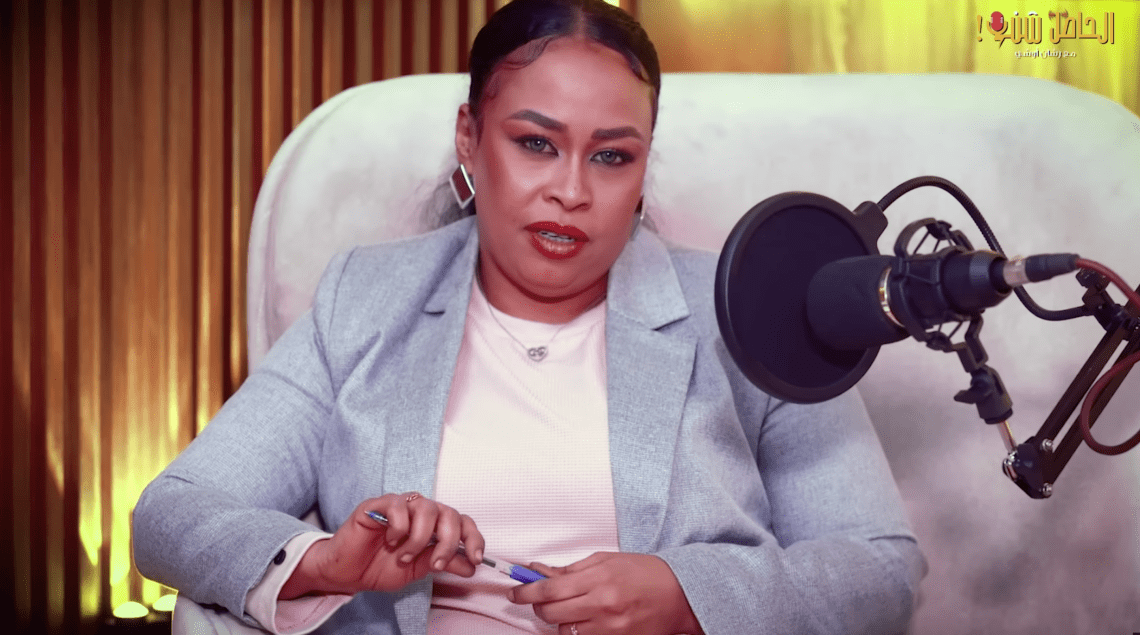
Sudanese journalist Rashan Oshi was arrested in Port Sudan immediately after a court sentenced her in absentia to one year in prison and a 10 million Sudanese pound fine ($16,653). The charges, the court proceedings, and the coordination between sentencing and arrest all occurred on the same day. This procedural pattern, CPJ has documented, is characteristic of Sudan’s use of the judiciary as a rapid-deployment suppression tool. Sudan now combines wartime media blackouts, RSF journalist kidnappings, SAF broadcaster suspensions, and civilian court sentences into a comprehensive architecture of press elimination.
Zone III: Stable but Economically Struggling
Legal Services India publishes a complete guide to Muslim women’s divorce rights under the 1939 DMMA, making legal literacy accessible
Legal Services India published a comprehensive guide to the Dissolution of Muslim Marriages Act 1939 this week, mapping all nine grounds for divorce, including cruelty, desertion, impotency, and failure of maintenance, alongside landmark judgments and Islamic jurisprudential principles. The DMMA remains the primary statutory instrument through which Indian Muslim women access divorce, but awareness of its provisions is critically low. Individual liberty requires not just rights that exist on paper but rights that are known, accessible, and actionable. A free, publicly searchable legal guide is itself a liberty instrument.
Taliban decree codifies child marriage and silent consent — 100+ rights groups demand immediate repeal, UN expresses “grave concern”
The Taliban’s new marriage and family law decree, condemned by over 100 rights organisations, recognises a “virgin girl’s silence” as legal consent to marriage, contains no minimum age threshold, and formally enables forced unions. The IEA simultaneously called on scholars to strengthen Shariah implementation and preserve jihad history. UN experts said the code “reinforces systemic discrimination and erodes the rights of Afghan women and girls.” Individual liberty, the right to refuse, to choose, to be heard, is being legislated away. Silence is not consent; making it so by decree is the codification of erasure.
Defrocked priest forcibly transferred to psychiatric facility on 25 May — HRW calls it punitive use of psychiatry against religious dissent
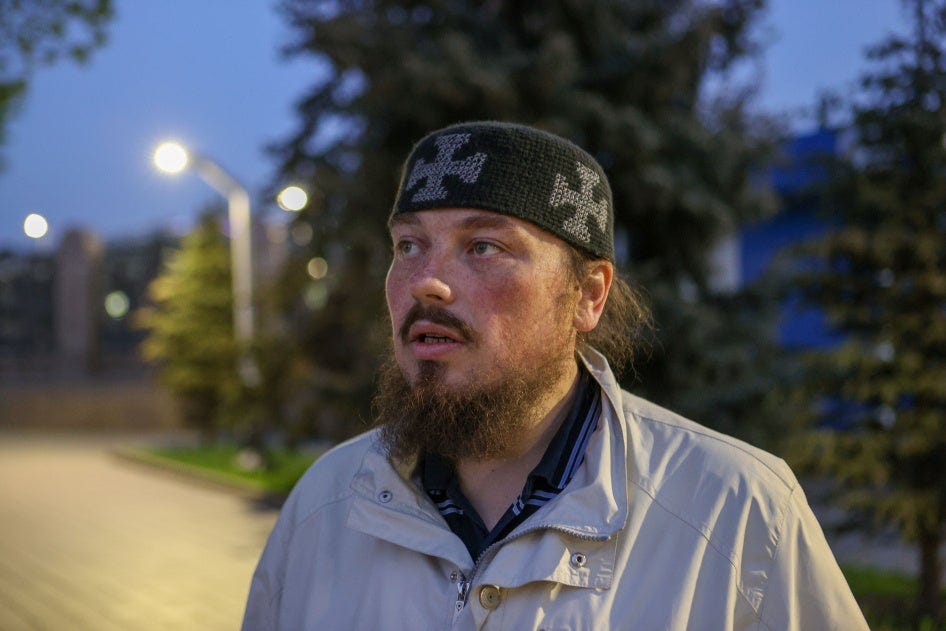
Kazakhstan authorities forcibly transferred defrocked Russian Orthodox priest Yakov Vorontsov to a psychiatric facility outside Almaty on 25 May, following a court order issued on 18 May. He had been held since February on what HRW describes as “dubious drug-related charges.” The use of psychiatric internment as a tool of political and religious suppression, a practice with deep Soviet roots, is being documented by HRW as part of Kazakhstan’s broader pattern of targeting unregistered religious figures. Forced psychiatry is not treatment; it is the medical system co-opted as a detention mechanism for inconvenient beliefs.
Zone IV: Developed or Emerging Economies with Peace and Stability
Dubai approves Dh1.5 billion stimulus, suspending hotel taxes, extending SME memberships, waiving fees across 33 sectors
On 21 May, Dubai’s Executive Council approved a Dh1.5 billion ($400 million) stimulus package covering 33 initiatives spanning tourism, trade, logistics, real estate, construction, education, and culture. Nightly hotel taxes and the 7% municipal tax on hotel and restaurant bills are suspended; government suppliers face relaxed contract and insurance requirements; SME memberships expiring in 2026 are automatically extended by two years; and cultural venues, nurseries, and schools receive fee exemptions. Dubai’s Dh1.5 billion stimulus is aimed at restoring conditions for economic recovery after devastating attacks by Iran in reaction to the US war on Iran. Dubai is known as a free port and tax haven. It is now apparent that changes in geo-strategic calculations can erode these hard-earned advantages in a matter of a few days.
Article Pick

Latest Edraak Essay
The Role of Radical-Autocratic Mentality vs. Moderate-Democratic Mentality in Reshaping Our World

One of the most determining factors for human beings in shaping our lives, hence our world accordingly, is what we call mentality, or mindset. We look at the social reality, try to understand it, interpret it, and make judgments through our mentality. In other words, mentality is our lens through which we see and understand reality, give meaning to life…