

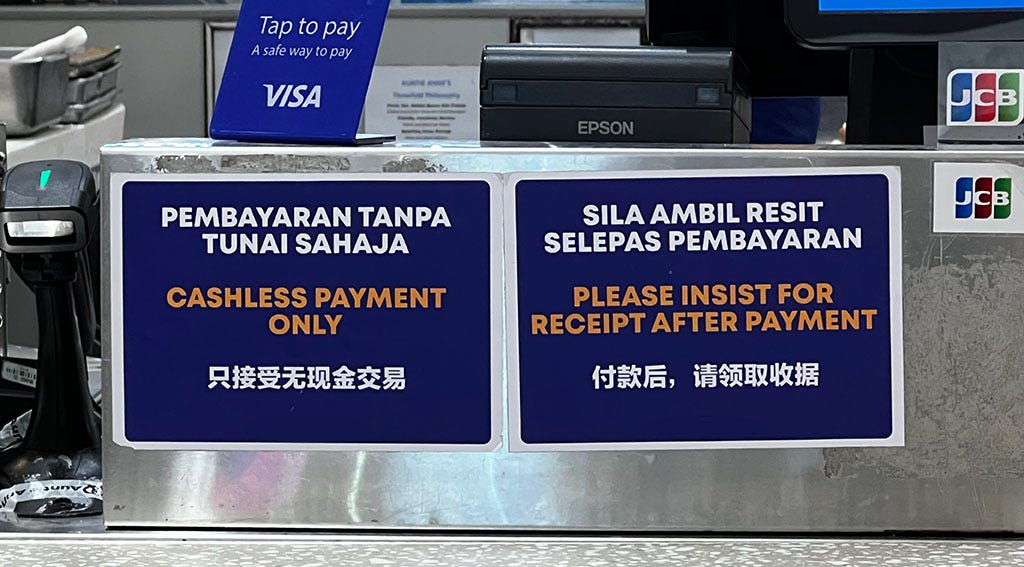
Malaysians have been seen to rely on e-wallets for everyday, routine purchases. According to Bank Negara Malaysia’s announcement last month. What was once an alternative form of payment has now become a routine for not just shopping malls but also roadside vendors. Paying with a smartphone has become easier than carrying cash.
According to the Bank Negara Malaysia, the country has experienced a gradual increase in digital payment adoption over recent years. This change, driven by online initiatives such as DuitNow QR and expanded internet access, is growing consumers’ confidence in online transactions.
For many Malaysians, this shift has proven to be overwhelmingly positive as they not only simplify transactions but also reduce waiting time and allow small businesses to enjoy financial services that previously only relied on cash. Many small business owners claim that QR payments have allowed them to reach customers without expensive infrastructure.
With digital payments becoming the norm, opting out becomes difficult. Simple actions like buying food or paying for transport assume access to smartphones, an internet connection, and a bank account. So for those lacking these tools, particularly senior citizens or rural/low-income areas, there is a serious risk of being left behind.
Globally, digital payments have been promoted by governments and financial institutions to increase economic participation. Simultaneously, this has raised questions about inclusion and resilience.
Cash requires no passwords or mobile networks. It functions without intermediaries and remains accessible regardless of age or technological literacy. Digital systems depend on certain infrastructures, and when systems fail, it disrupts daily life in the blink of an eye. Malaysia experienced this vulnerability in 2023 when technical issues affecting payment networks disrupted transactions countrywide. This shows the extent to which modern economies depend on digital infrastructure and asks if more choices mean greater autonomy or greater dependence.
Many argue that the benefits outweigh the risks. Malaysia’s National Digital Economy Blueprint aims to accelerate digital transformation and position the country as a leading digital economy in Southeast Asia. With such an ambitious vision, this country aims for greater financial inclusion, stronger economic growth, and easier access to services– all in the direction of an efficient digital strategy.
Yet technological progress has always involved trade-offs. With every new system comes opportunities and new forms of dependence. The challenge is not whether societies should embrace innovation, but also how they are willing to keep pace with those that are unable to do the same.
Malaysia’s digital revolution answers a critical question: that digital systems are not going to shape the future; they already shaped the present. But then one is prompted to ask if convenience alone is enough, as technologies are often judged by how efficiently they work. However, that alone should not be the criterion. It must also take in regard how many people it allows to participate and how many are quietly left behind.