

This newsletter covers developments from 2 July 2026 to 8 July 2026. This week, Burkina Faso forces the UN’s last independent monitoring presence out of the country. Mali suspends the one radio programme where citizens without internet access could voice their opinions. Pakistan’s constitutional religious body moves to overturn a High Court ruling that recognised a wife’s contribution to matrimonial wealth. Indonesia operationalises the world’s most ambitious halal enforcement framework, making it the one story this week where state power is being deployed toward consumer protection rather than against it. Several institutions are suppressing accountability. One institution is building it.
Edraak is our newsletter that honours the Muslim world’s diversity, reflected in the multitude of its socio-economic conditions and political institutions spanning across the continents. Traced back to its Arabic origins, إدراك encompasses timely and thorough insights into the developments of the Muslim-majority countries.
We organise the Muslim-majority countries into four zones as per their current conditions of conflict, transition, stability, and development.
Zone I: Experiencing War, Conflict, Oppression, Genocide
UN Human Rights Office closes in Burkina Faso
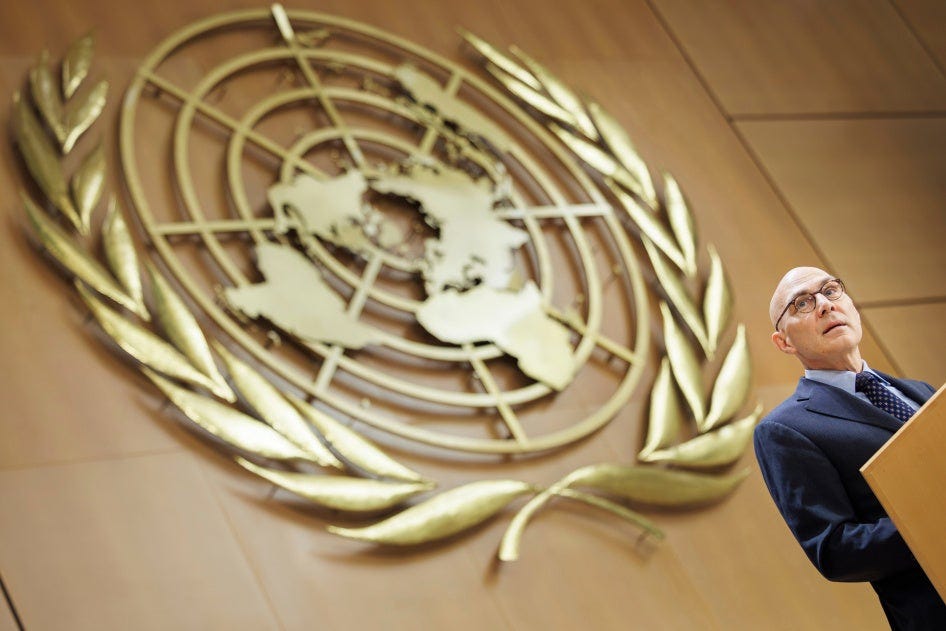
After months of silence from Burkina Faso’s military junta, the United Nations Human Rights Office announced on June 30 that it would permanently close its operations in the country. The government suspended the UN office’s local operations in February, just weeks after UN High Commissioner Volker Türk urged authorities to end the repression of civic space and abandon plans to ban political parties. By the time of closure, the junta had already dissolved 118 civil society organisations, expelled or suspended 20 foreign organisations, and expelled the UN Resident Coordinator in August 2025. Foreign Minister Traoré accused international organisations of acting as “super police” overstepping sovereignty. The closure removes the last independent international presence documenting abuses in a country where HRW has confirmed ethnic cleansing of the Fulani community, war crimes by all parties, and systematic disappearances.
Zone II: Transition towards Peace and Stability
Mali suspends Allô Klédu, one of the last public forums left in the country
Last week, Mali’s High Authority for Communication ordered the two-month suspension of Allô Klédu, broadcast on private station Radio Klédu, after the media regulator said the programme had become “a platform for listeners to vent against the government.” The suspension came amid an accelerating assault on independent media: since February, the authorities have detained three journalists under a sweeping cybercrime law. Two newspaper directors, Chahana Takiou and Abdourhamane Keïta, were arrested the day after the Pan-African Media Forum in Bamako, which had been held to celebrate press freedom. A Malian journalist told HRW: “For many, it was one of the country’s last remaining spaces where people could speak out on matters of public concern.”
Niger, Burkina Faso, and Mali formally withdraw from the ICC as all three face active war crimes allegations
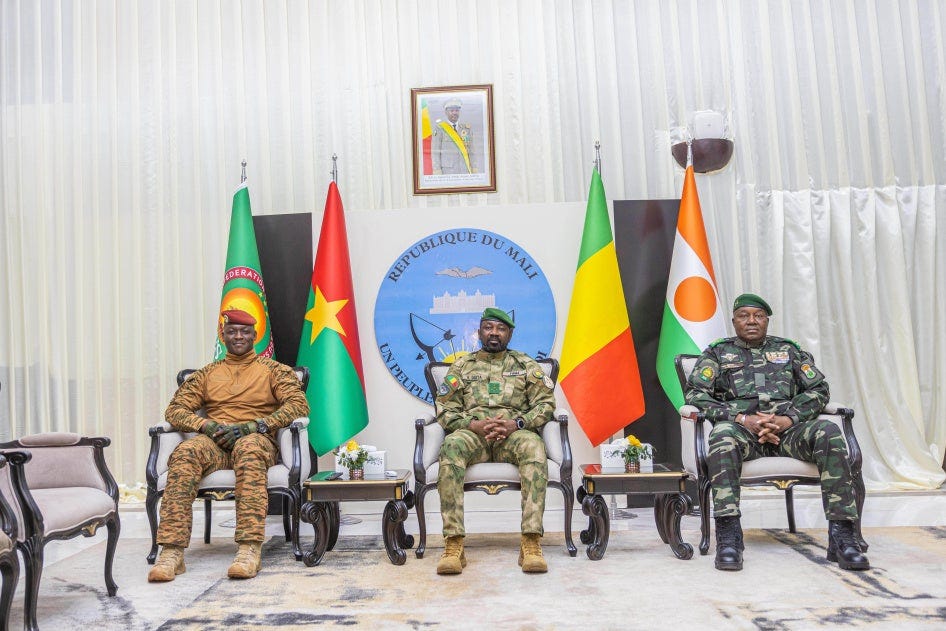
Niger notified the UN Secretary-General on 18 June; Burkina Faso and Mali followed on 24 June, formally beginning the one-year process of withdrawing from the Rome Statute of the International Criminal Court. The three Alliance of Sahel States juntas cited the ICC as “misused and exploited” and a “selective and politicised tool,” without mentioning the growing international condemnation they face for mass killings of civilians, ethnic cleansing of Fulani communities, and systematic disappearances. The ICC has investigated Mali since 2013, producing two convictions and reparation orders. The three countries had already left ECOWAS in January 2025, removing a second accountability mechanism. The ICC Assembly of States Parties expressed “regret,” recalled that obligations incurred during membership remain binding, and urged reconsideration. Amnesty International warned the withdrawal “consecrates impunity.” Three juntas simultaneously withdrawing from the only international court capable of prosecuting them is the institutional architecture of impunity being constructed in real time, rather than a sovereignty assertion.
Zone III: Stable but Economically Struggling
Egypt Ahmed al-Shal: death row for 12 years, brain tumour doubling in size, doctors told to say “nothing is wrong”
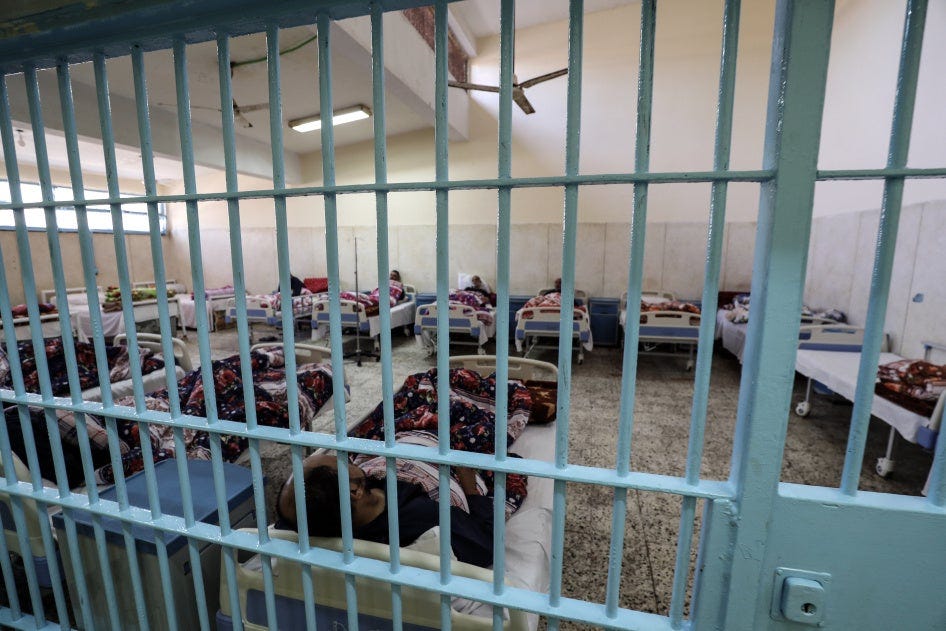
Ahmed al-Waleed al-Shal was arrested outside his university in March 2014, days after graduating from medical school at 24. He was disappeared, tortured with electric shocks and cigarette burns arranged in geometric shapes on his neck, and forced to confess to involvement in a political assassination. He has been on death row since. A 2026 brain scan showed the mass had doubled in size; a prison doctor told him he had “nothing” and that his symptoms were “psychological.” A prison guard told the family only “National Security” could authorise surgery. His family has never been given access to his medical records. The deliberate denial of medical care to a prisoner is an instrument of slow punishment. Egypt’s pattern is now documented across dozens of cases: disappearance, torture, confession, mass trial, death row, and medical withdrawal. Al-Shal’s case holds every element.
Pakistan’s CII rejects IHC’s matrimonial assets ruling and declares 50% share for wives “inconsistent with Islamic law”
Pakistan’s Council of Islamic Ideology, a constitutional body advising parliament on whether laws conform with the Quran and Sunnah, formally rejected the Islamabad High Court’s March 2026 landmark ruling granting wives at least a 50% share in assets acquired during marriage. The CII declared the judgment inconsistent with Islamic law and announced plans to challenge it before the appellate court. Justice Kayani’s ruling viewed marriage as an economic partnership, conducting a comparative analysis of Islamic jurisprudence, CEDAW, and family law frameworks in Malaysia, Indonesia, Iran, Turkey, Egypt, the UK, and Canada. The CII’s intervention sets up a direct confrontation between two Pakistani institutions interpreting the same Shariah tradition and arriving at opposite conclusions about women’s economic rights. Justice Kayani’s judgment established that Islamic law’s silence on matrimonial property is not a prohibition; legislation protecting women is permissible. The CII asserts the opposite.
Zone IV: Developed or Emerging Economies with Peace and Stability
Indonesia’s BPJPH sanctions framework for the October 2026 mandatory halal expansion is now operational
Last week, BPJPH Regulation No. 2 of 2026 on Imposition of Administrative Sanctions for Violations of Halal Product Assurance Implementation came into force, setting out structured mappings between violations and sanctions, as well as detailed rules on authority, procedures, and timelines. The October 2026 phase will extend mandatory halal certification beyond food and beverages to include cosmetics, pharmaceuticals, traditional medicines, health supplements, and certain consumer goods. Sanctions escalate from written warnings to administrative fines, revocation of halal certificates, product recall, temporary closure of premises, and public disclosure. BPJPH intends to enforce the JPH regime across the full compliance chain, not only against the certificate holder. Indonesia’s halal certification framework is one of the most consequential exercises of Islamic governance in the global economy; it regulates what 280 million Muslims consume and what 230 million Muslim consumers can access from international markets. The sanctions regulation operationalises that framework with enforcement teeth.
Article Pick