

When hunger, unemployment, and a lack of opportunities in one’s home country compel a person to cross borders in search of a better future, governments establish borders to keep people out. What choice does that person really have?
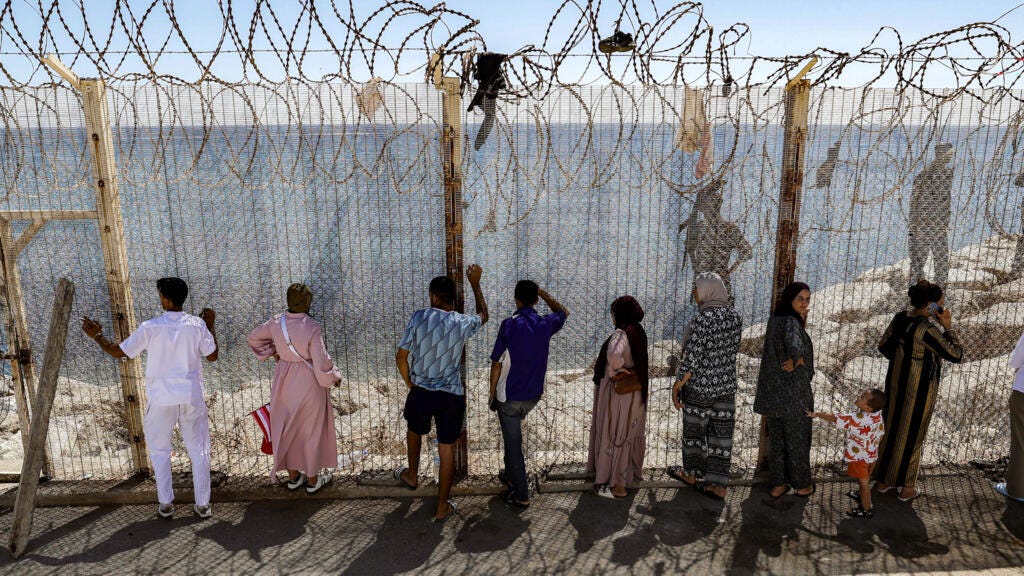
This question arises for many people attempting to cross the border between Morocco and Ceuta, a small Spanish city located at the northern tip of Africa. On August 14, 2026, Moroccan authorities arrested 111 people when a large crowd tried to cross the border. The crowd consisted of young Africans who see Europe as their only hope for a better future.
Ceuta is a small piece of land, about 18 square kilometers. For the European Union, Ceuta serves as a borderland between Africa and Europe. Migrants have been using this border to reach Europe for years. These migrants come from countries such as Mali, Senegal, Guinea, Cameroon, and even Morocco itself. They spend months travelling, crossing deserts, hiding from the police, and running out of food.
The main reasons behind the large number of migrants are varied; they do not risk their lives for fun. One of the primary reasons is unemployment in many African countries, where there are simply no job opportunities. In North Africa, the youth unemployment rate is around 30%, while in the Sub-Saharan region, the rate is even higher. Young people graduate from school and then search for jobs that do not exist. They witness their parents struggling, which further motivates their desire to migrate.
Additionally, those who do have jobs often receive very low wages. Many work full days of hard labor but earn only a few dollars, which is insufficient to support their families, pay for their children’s education, or afford necessary medications.
Moving forward, climate change and conflicts are among the biggest reasons people leave their hometowns. Many individuals migrate from their home countries where farming is no longer possible due to droughts that have dried rivers and floods that have destroyed crops. Similarly, in some regions, conflicts among authorities in different African countries have forced people to flee their homes. So, when a person from such a region tries to cross a border, it is not because they are criminals; rather, it is because they want to survive. This is often the only way they can do so.
The Moroccan government stated that they had no choice but to take a tough stance, as every government has the right to protect its borders. They cannot allow everyone to enter their territory; if they did, it would create problems for both Morocco and Spain, as well as for all of Europe.
From a legal point of view, Morocco has a valid claim under international law. Every country has sovereignty and the right to choose who can enter its territory and to protect its country by securing its borders. But people from such regions have no other way to survive and live better.
In such circumstances, the government can take several possible actions. One effective approach is to improve the system. Currently, there are very few legal options for low-skilled individuals seeking visas to work in Europe. This lack of opportunities drives many to choose illegal means of entry.
The government could create legal work programs for sectors that require labor, such as farming, manufacturing, and caregiving. Instead of allowing illegal migration to persist, they should actively recruit workers through announced visa programs. By doing so, these workers can apply and travel safely, earn money, and contribute to the economy. This approach would also allow the government to benefit from the taxes these workers would pay. It’s a win-win situation for everyone involved.
Europe can invest in Africa’s future by partnering with African governments to build schools, hospitals, and businesses instead of spending billions on border fences and security. This approach will create opportunities for young people, allowing them to remain in their hometowns instead of seeking opportunities elsewhere.
This event raised a fundamental question: What kind of world are we creating? Why have we built walls that allow only the fortunate to live in peace while countless others are dying from hunger due to failed governments and drought? We need to create bridges that allow people to move freely and safely, so they can contribute to their societies. No one chooses to be born in a country with no jobs or opportunities. The world should provide them with opportunities to work, instead of building walls that prevent their survival.