

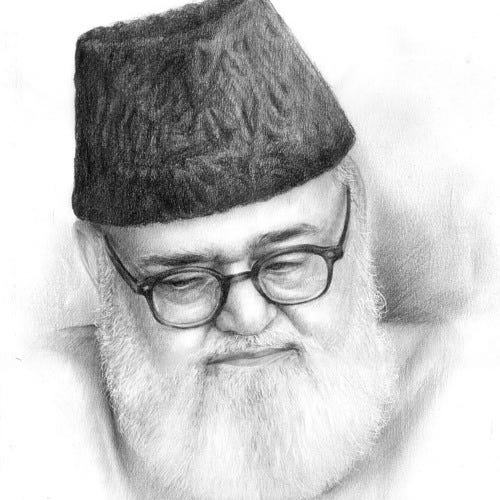
Some thinkers influence their own time. Others quietly shape generations. Maulana Maududi, a major Islamic scholar, belongs to the second category. His ideas did not remain limited to books or speeches. They entered political movements, student groups, religious discussions, and even everyday language among Muslim societies.
Whether people agree with him or disagree, it is difficult to deny that Maulana Maududi helped redefine how many Muslims think about Islam, politics, and society. Decades after his death, his ideas still echo in debates from South Asia to the Middle East and beyond. His writings were not just theoretical reflections but attempts to respond to real social and political changes affecting Muslims in the twentieth century. As a result, his work continues to feel relevant even in modern discussions.
Many of these ideas come directly from Maulana’s writings, particularly in Towards Understanding Islam and Islamic Law and Constitution, where he outlined his views on governance, society, and Islamic revival. These works became widely read not only among scholars but also among ordinary readers trying to understand Islam in a rapidly changing world.
Here are ten of Maulana’s ideas that continue to shape the Muslim community today.
1. Islam as a Complete Way of Life
One of the most influential ideas of Syed Abul Ala was that Islam is not only about personal worship. He argued that Islam offers guidance for politics, economics, education, and social life, forming a complete system of life.
As Maududi writes in Towards Understanding Islam,
“Islam is not merely a set of beliefs or rituals, but a complete way of life that guides every aspect of human existence.”
This idea sounds common today, but it was not always framed so clearly. Many modern Islamic movements adopted this understanding and began to push for Islamic values in governance and public life, not just personal practice. Study circles, youth organizations, and Islamic publications often reflect this broader understanding of Islam. For many young Muslims, this idea helped connect religion with everyday decisions and social responsibilities.
2. Sovereignty Belongs to God
Maududi highlighted that ultimate authority belongs to God, not individuals or governments. According to him, laws should align with divine guidance based on the Quran and Hadith, rather than human preferences alone.
Over time, this idea began to appear in different Muslim societies. In some places, it shaped political movements, while in others it influenced discussions about governance and lawmaking. Even in academic debates, Maulana’s framing of sovereignty became an important reference point when discussing Islamic political thought.
This concept also sparked debate. Some thinkers interpreted it differently, while others expanded on it. Yet regardless of interpretation, the idea itself became part of broader conversations about authority, law, and governance in Muslim societies.
3. Islamic State as a Moral Community
Maududi did not just talk about an Islamic state as a political structure. He described it as a moral community, part of a broader Islamic political system, where justice, accountability, and ethical leadership mattered.
His focus on moral governance continues to influence discussions about corruption, leadership, and responsibility in Muslim societies. Rather than focusing only on political power, Maududi emphasized character, accountability, and ethical responsibility. This perspective shaped many conversations about leadership and governance.
Even today, discussions about ethical leadership often echo Maududi’s ideas on moral responsibility and justice as central to governance.
4. Gradual Social Reform
Another important part of Maulana’s thought was his belief in gradual change. He did not think societies could transform overnight. Instead, he emphasized slow reform through education, discussion, and moral development.
This approach influenced many Islamic organizations, and even today, you can see its impact in student groups, educational movements, and community based initiatives. Rather than focusing only on political change, these groups often emphasize personal growth and social awareness.
Maududi believed that long lasting change required patience. This idea continues to shape movements that focus on long term reform rather than immediate transformation.
5. Role of Education in Islamic Revival
Maulana believed that education was central to reform. He wrote extensively to explain Islamic concepts in modern language so that ordinary people could understand them.
Today, Islamic study circles, youth organizations, and educational movements often follow this model. They emphasize learning and discussion as tools for social transformation. Educational programs, lectures, and publications often reflect this emphasis on intellectual growth.
Maulana’s accessible writing style also helped bridge the gap between scholarly works and general readers. This contributed to the spread of his ideas across different regions and audiences.
6. Islam and Modernity Can Coexist
Maududi did not reject the modern world entirely. Instead, he tried to engage with modern political ideas, institutions, and social realities while maintaining Islamic principles.
Even today, many Muslim thinkers continue to engage with this balance between tradition and modern life, often drawing on ideas similar to those Maududi discussed decades ago. His approach encouraged Muslims to participate in modern institutions without abandoning their values.
This idea remains relevant in discussions about globalization, technology, and modern governance. Many debates today continue to explore how true Islamic values can function within modern societies.
7. Political Participation as Religious Responsibility
Maududi encouraged Muslims to take part in political processes rather than withdraw from them. He believed political engagement was necessary to promote justice and ethical governance.
This idea shaped many Islamic political parties and movements that participate in elections and public policy debates today. It also encouraged Muslims to think about civic responsibility and participation in public life.
8. Importance of Collective Action
For Maududi, change was never just about individuals. He believed real transformation required organized effort. This is why he focused on building movements and institutions, rather than relying only on personal reform.
Many Islamic organizations today reflect this structured approach, focusing on teamwork, leadership development, and coordinated activism. Community programs, student organizations, and social initiatives often reflect this idea of collective effort.
This emphasis on organization helped shape how many Islamic movements operate today.
9. Reinterpreting Islamic Concepts for Modern Times
Maududi worked to explain traditional Islamic ideas in ways relevant to modern societies. He addressed issues like governance, economy, and social justice using both Islamic sources and contemporary realities.
This effort helped bridge the gap between classical scholarship and modern political discussions. His work encouraged Muslims to revisit traditional concepts while considering current challenges.
This idea continues to influence contemporary scholars and writers who attempt to connect classical teachings with modern realities.
10. Identity and Confidence in Muslims
Perhaps one of Maududi’s most lasting contributions in Islamic history was encouraging Muslims to feel confident in their own intellectual tradition. He believed Muslims did not need to imitate other systems blindly, but could instead develop solutions rooted in their own values.
This message continues to resonate, especially among younger generations seeking meaning and direction in a rapidly changing world. Many discussions about identity, culture, and intellectual independence reflect this idea.
For many readers, Maududi’s writings helped build confidence in Islamic intellectual traditions and encouraged independent thinking.
A Lasting Influence of Abul Ala Maududi
Even today, Maududi remains a debated and often discussed figure. Some admire the clarity of his vision, while others question parts of his political thought. Yet, regardless of these debates, his influence continues to appear in conversations about governance, identity, and social reform across the Muslim world.
His ideas continue to shape conversations about governance, identity, education, and reform across the Muslim world. In many ways, Maududi did not simply respond to his time. He helped shape how future generations would think about Islam and society.
His writings continue to be read, discussed, and debated. This ongoing engagement reflects the lasting impact of his work and the continued relevance of the ideas he introduced decades ago.